
Oswego Garage Door Guide
Off-Track Doors: What's Actually Going On
Oswego homes built between 1958 and 2003 mix original and updated track hardware, and severe cold makes off-track doors a common winter call. Here's why it happens.
- Licensed & Insured
- Same-Area Service Calls
- Upfront Pricing
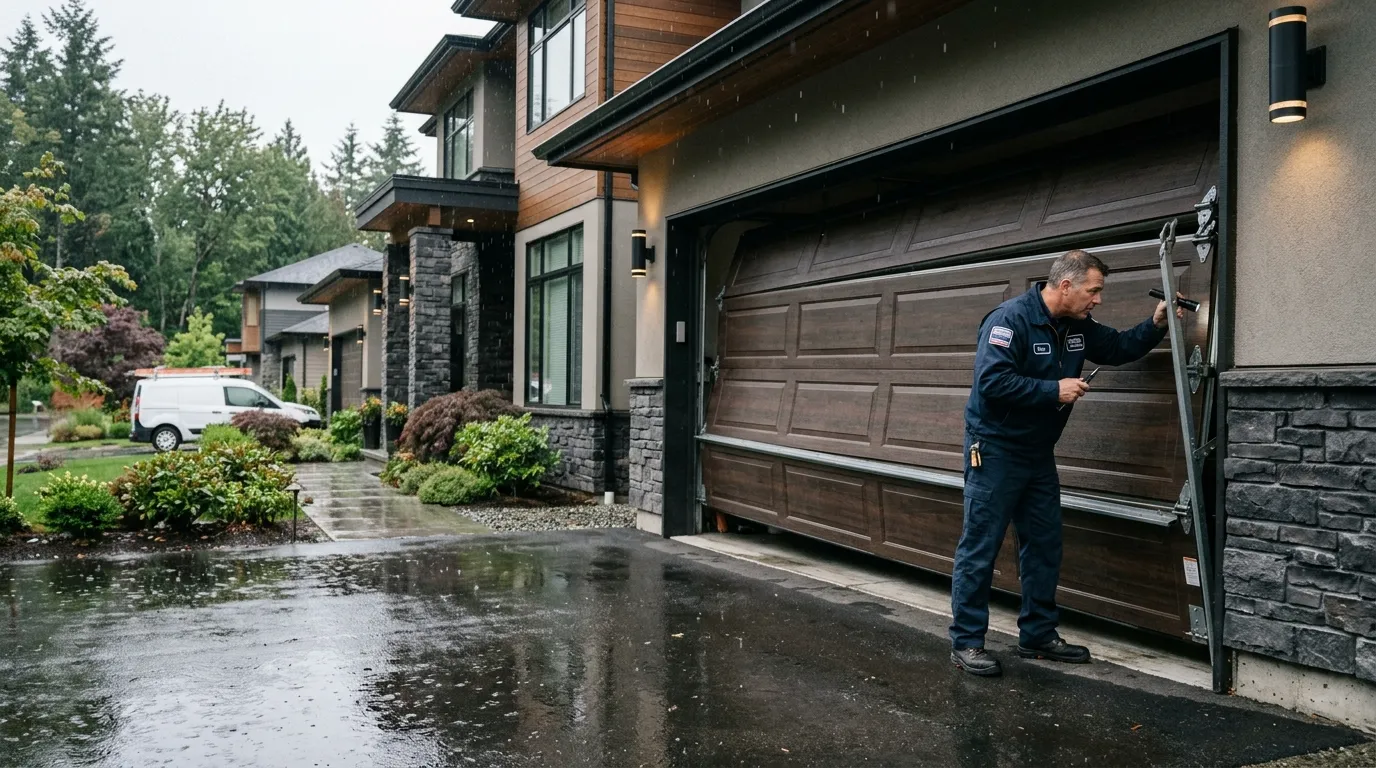
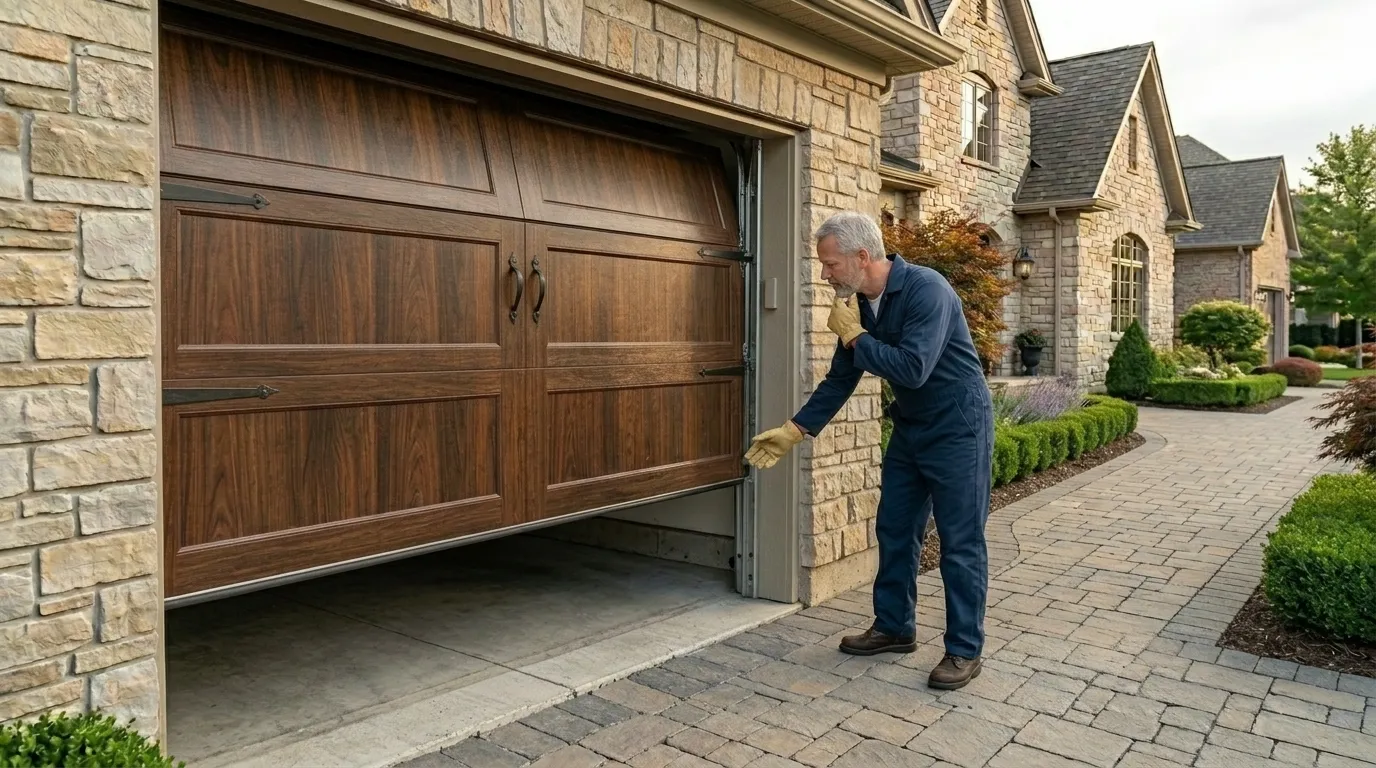
How Local Conditions Play In
Oswego sits in a severe cold climate band, and that matters more for tracks than most people think. Steel track sections contract in deep cold, and the brackets holding them to the framing don't always contract at the same rate as the wood or masonry behind them. Over a winter or two, that mismatch works screws loose a sixteenth of an inch at a time.
You don't see it happen. You just notice one morning that the door is binding on one side or grinding instead of rolling.
With most of the housing stock here going up between 1958 and 2003 (median build year 1986), a lot of garages were framed to code standards from that era, before some of the bracing details common in new construction. That's not a defect, it's just an age fact, and it means track brackets on an original 1980s install are more likely to have loosened over three or four decades of freeze-thaw cycles than something built ten years ago.
Cold also stiffens the nylon or composite rollers a lot of these older doors still run on. A stiff roller doesn't ride the track smoothly, it hops, and a hopping roller is one of the more common ways a door jumps its track on a subzero morning.
What to Look At First
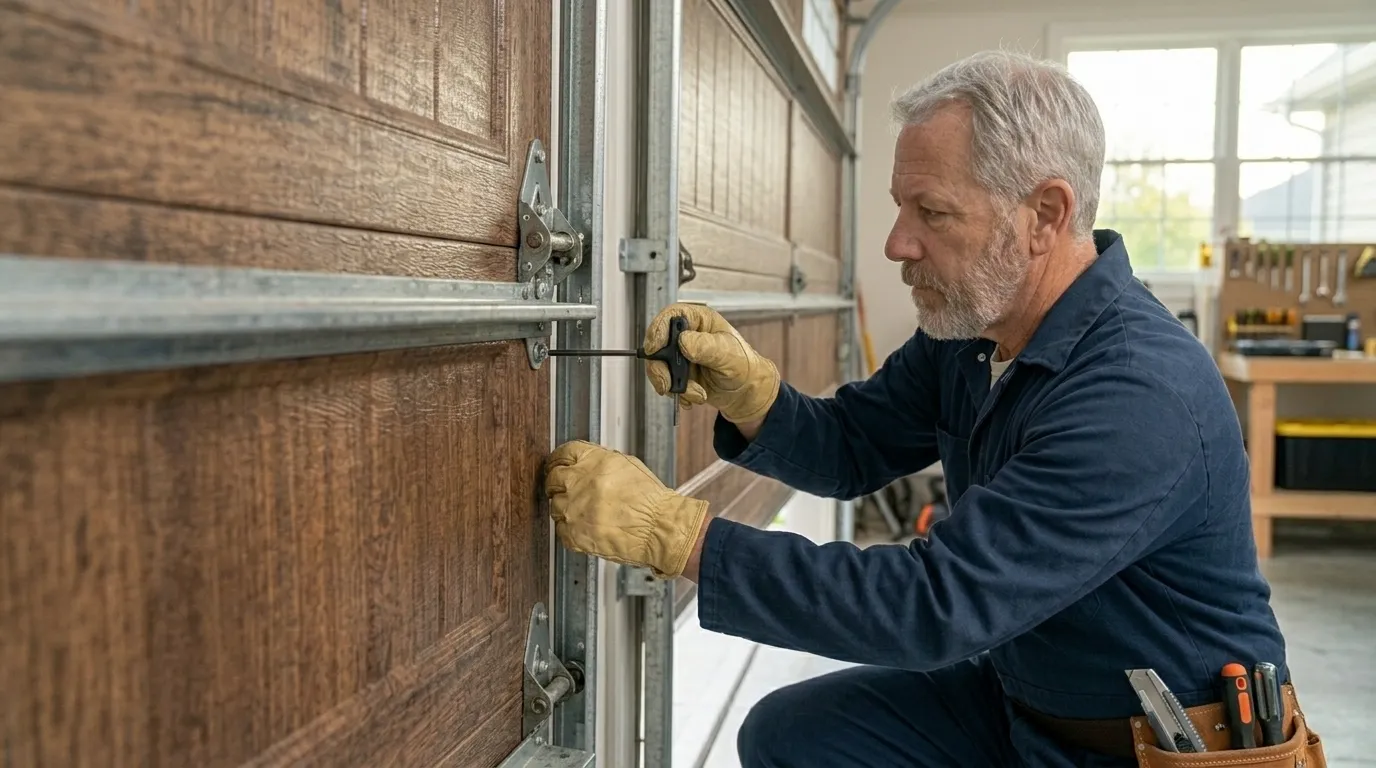
Before you assume the worst, look at the track itself. Stand back and sight down both vertical sections from the bottom.
On a lot of the 1958-2003 stock in this area, tracks were mounted directly to garage framing, and framing shifts a little over 40-plus years. If one track leans out even slightly compared to the other, that gap is enough for a roller to walk off the flange.
Next check the brackets where the track meets the wall. Loose lag screws are the single most common thing we find, and they're an easy fix if caught early. If a bracket has pulled through old wood or the wood around it has softened, that's a different job.
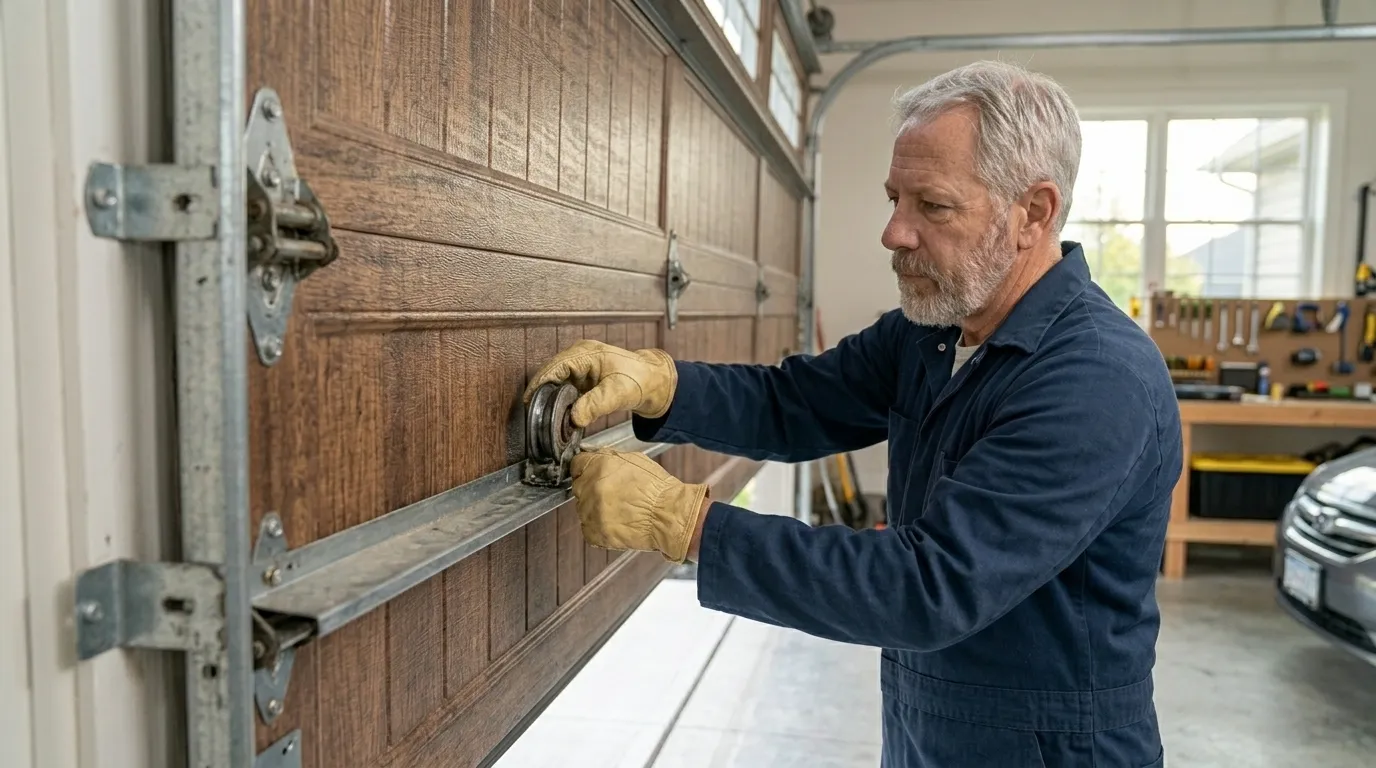
Look at the bottom roller on each side too. If the door was installed when the house was built, in the 1980s or 90s window that covers most of this area, the rollers are original more often than owners expect, and worn rollers with flat spots or cracked shells are a leading cause of a door leaving the track, especially once cold makes the material brittle. We won't tell you a roller swap fixes everything, because sometimes the track alignment is the real problem and new rollers just delay the same call.
The Situation
When a door goes off track in Oswego, it's rarely one single cause. It's usually a track that's drifted slightly out of parallel over 30-plus years of a house settling, paired with rollers that have hardened in the cold and can't absorb the small misalignment the way they could when they were new. Add a broken or unbalanced spring pulling one side harder than the other, and a door that's been limping along for months finally jumps the rail on the coldest morning of the year.
We see this pattern most in the older pockets of the service area, where original one-piece or early sectional doors are still running their factory hardware. It's less common in homes built closer to 2003, since PVC and reinforced nylon rollers age slower and bracket hardware from that period tends to be a bit more forgiving.
An off-track door is not always a full-hardware replacement. Sometimes it's a track realignment and two new rollers.
But if the track itself is bent, bent track doesn't get hammered straight and hold. That's a track swap, not a repair, and we'll tell you which one you're looking at before we start.
Season by Season
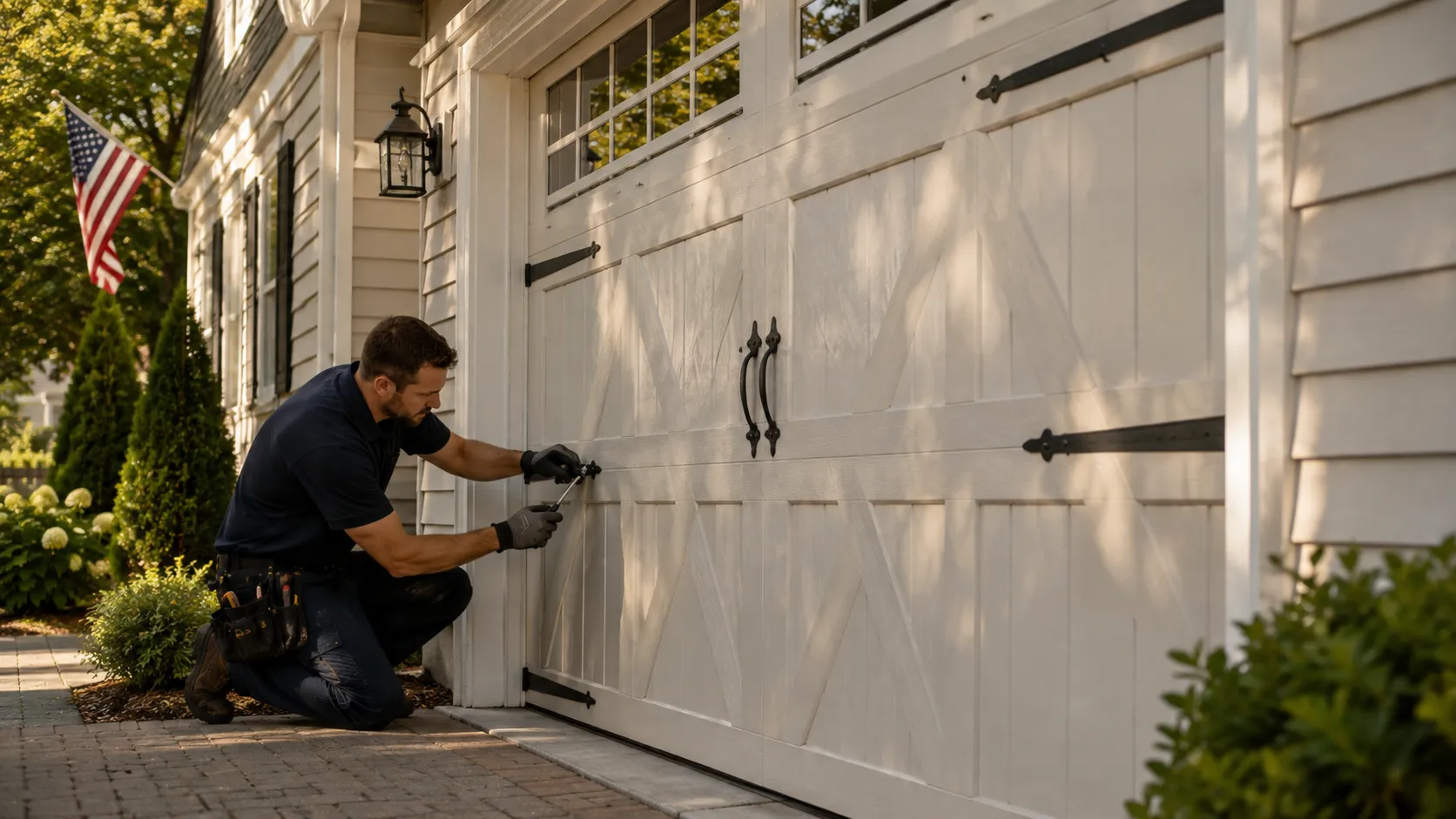
Fall is when we'd rather see a door than in January. Cooling temperatures start the same contraction that peaks in deep winter, so a track bracket that's a little loose in October is the one that lets a door jump in December. Checking bracket screws before the first hard freeze catches most of this early.
Winter is when off-track calls climb here, given the severe cold band Oswego sits in. Stiff rollers, contracted track metal, and any existing misalignment all stack up at once, and that's when a door that's been fine for years suddenly isn't.
Spring and summer are lower-risk for the cold-driven causes, but that's also when a lot of owners finally deal with a door they've been babying all winter, since warmer weather makes it easier to get parts and get the garage opened up for a full look. If your door has been walking off track more than once a season, that's not bad luck repeating, that's a track or roller problem that needs fixing once instead of nursed along four more times.
How We Can Help
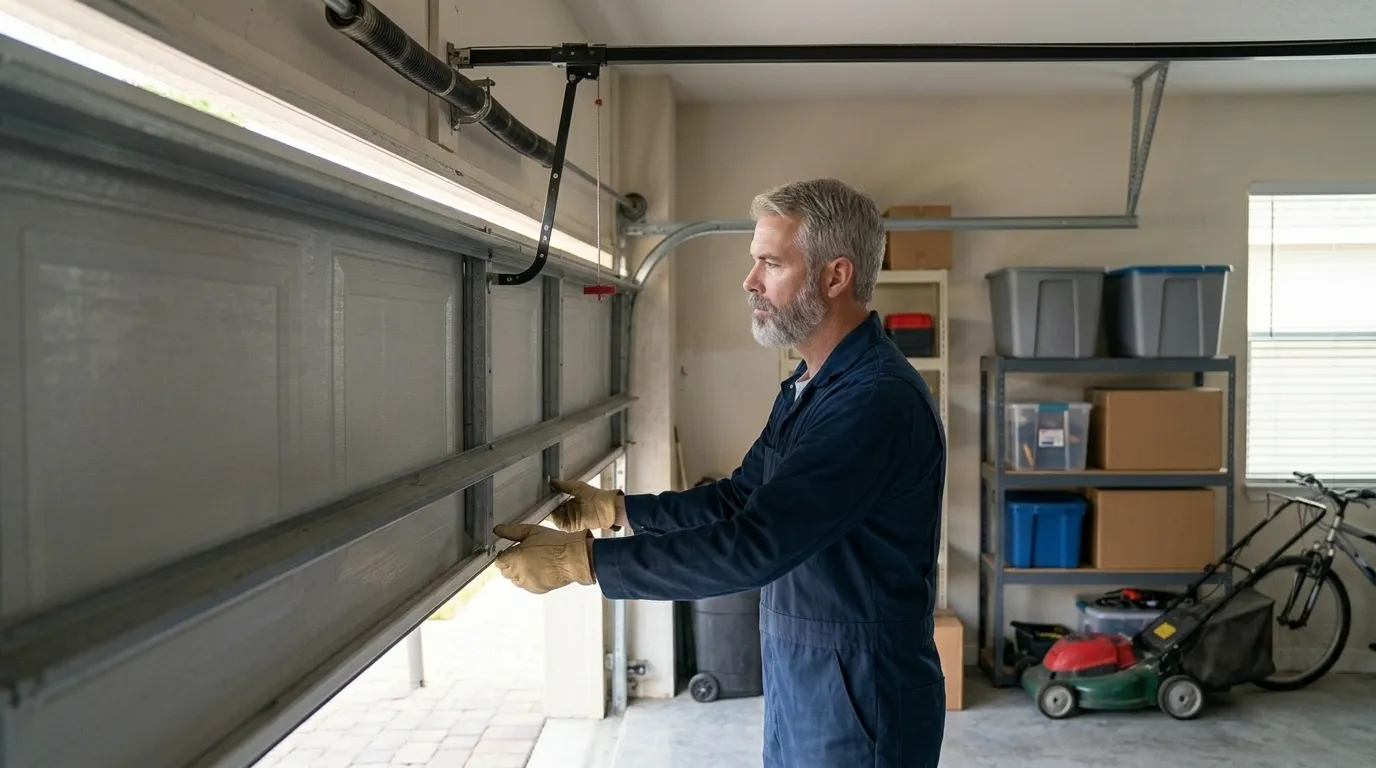
Garage Door Repair
Springs, cables, tracks, rollers, and openers fixed by a tech who explains the problem before touching anything.
Learn more →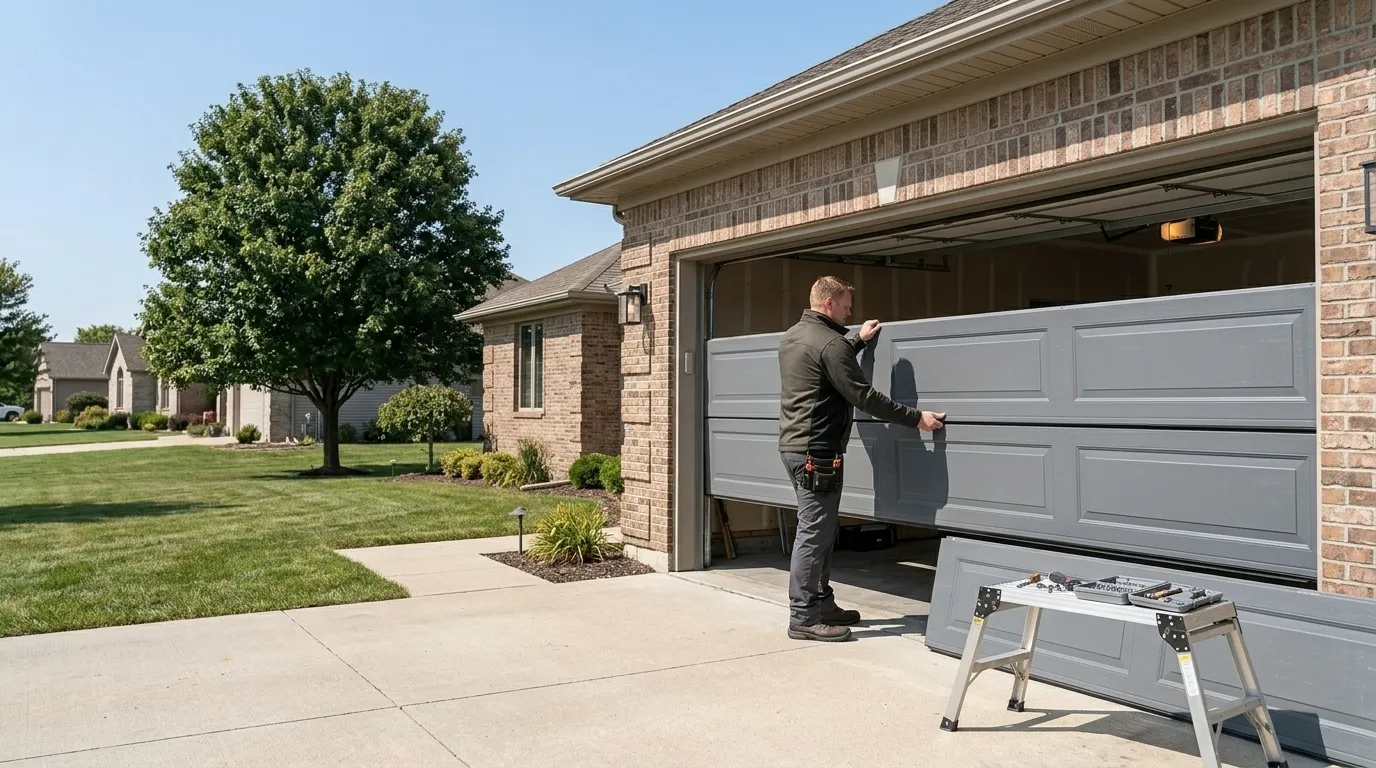
Garage Door Installation
New sectional doors sized and installed for the housing stock actually built in this area.
Learn more →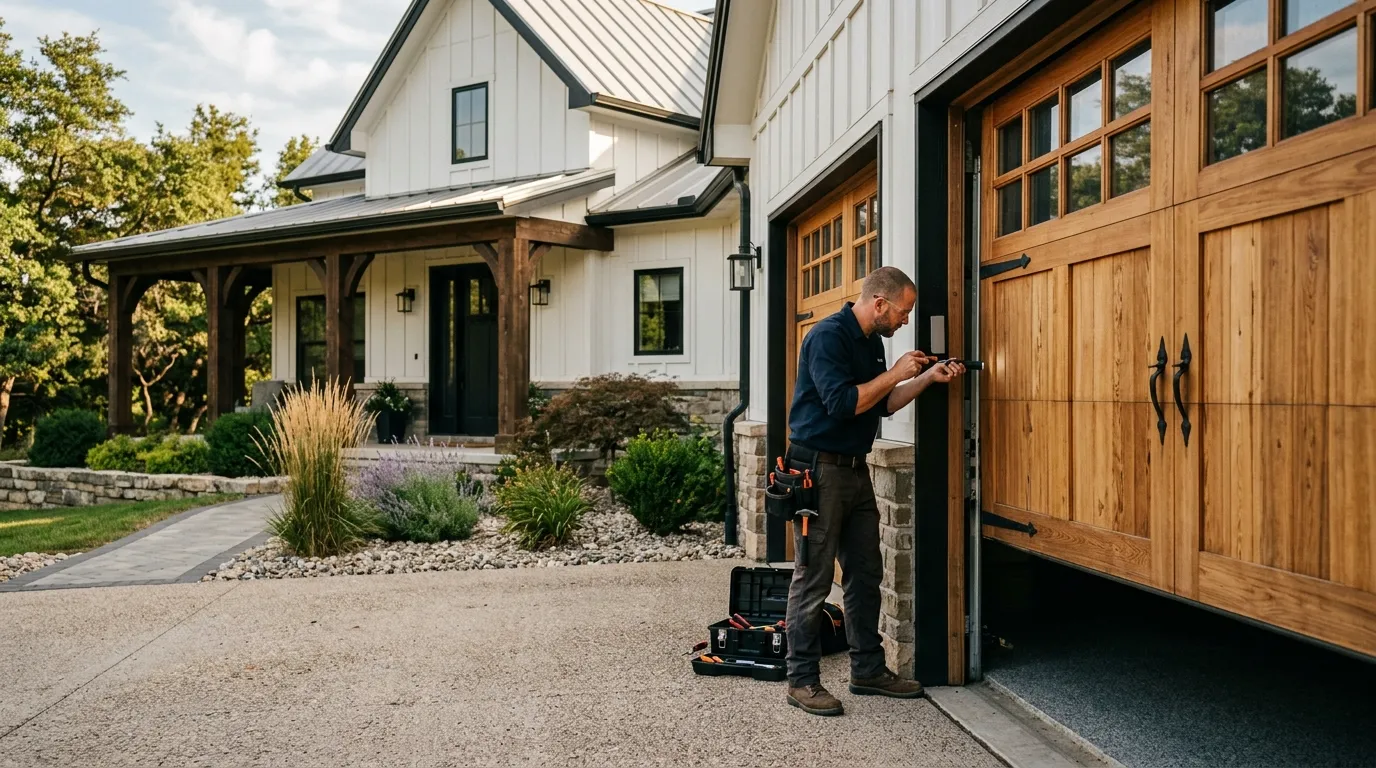
Garage Door Service
Tune-ups, lubrication, and safety checks that catch a small problem before it becomes a service call.
Learn more →Frequently Asked Questions
Why does my garage door only go off track in winter?
Cold makes steel track contract and stiffens nylon rollers, both of which reduce the small tolerance a roller needs to stay on the flange. Given Oswego's severe cold climate, that seasonal swing is often enough to turn a slightly loose bracket or worn roller into a door that jumps the rail.
Is an off-track door always a track replacement?
No. Often it's a bracket that's worked loose or rollers that have worn down, both fixable without replacing the track. If the track itself is bent, though, straightening it rarely holds, and at that point replacement is the more honest answer.
My house was built in the 1980s. Does that matter?
It can. A lot of Oswego's housing dates to the 1958-2003 range, median around 1986, so track hardware and rollers on an original install have had three or four decades of freeze-thaw cycles to work loose or wear down, more than a house built in the last ten years.
Can I push the door back onto the track myself?
We'd rather you didn't. A door under spring tension that's off track can shift unexpectedly, and forcing it back on without checking bracket and track alignment first often just sets up the same failure again within weeks.
Have a Door That Needs a Second Opinion?
Call and describe what it is doing - we will tell you what it likely is.