Oswego Garage Door Guide
What Happens When We Show Up in Oswego
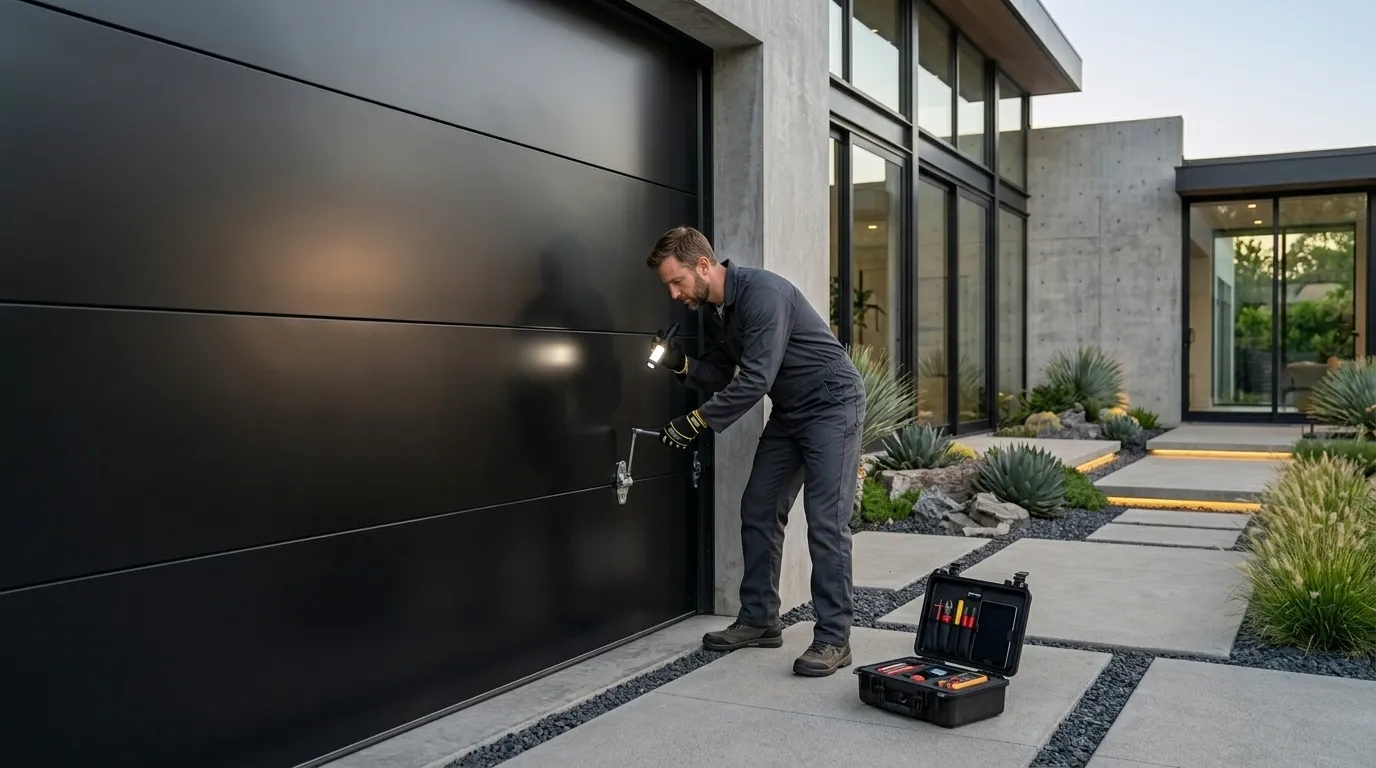
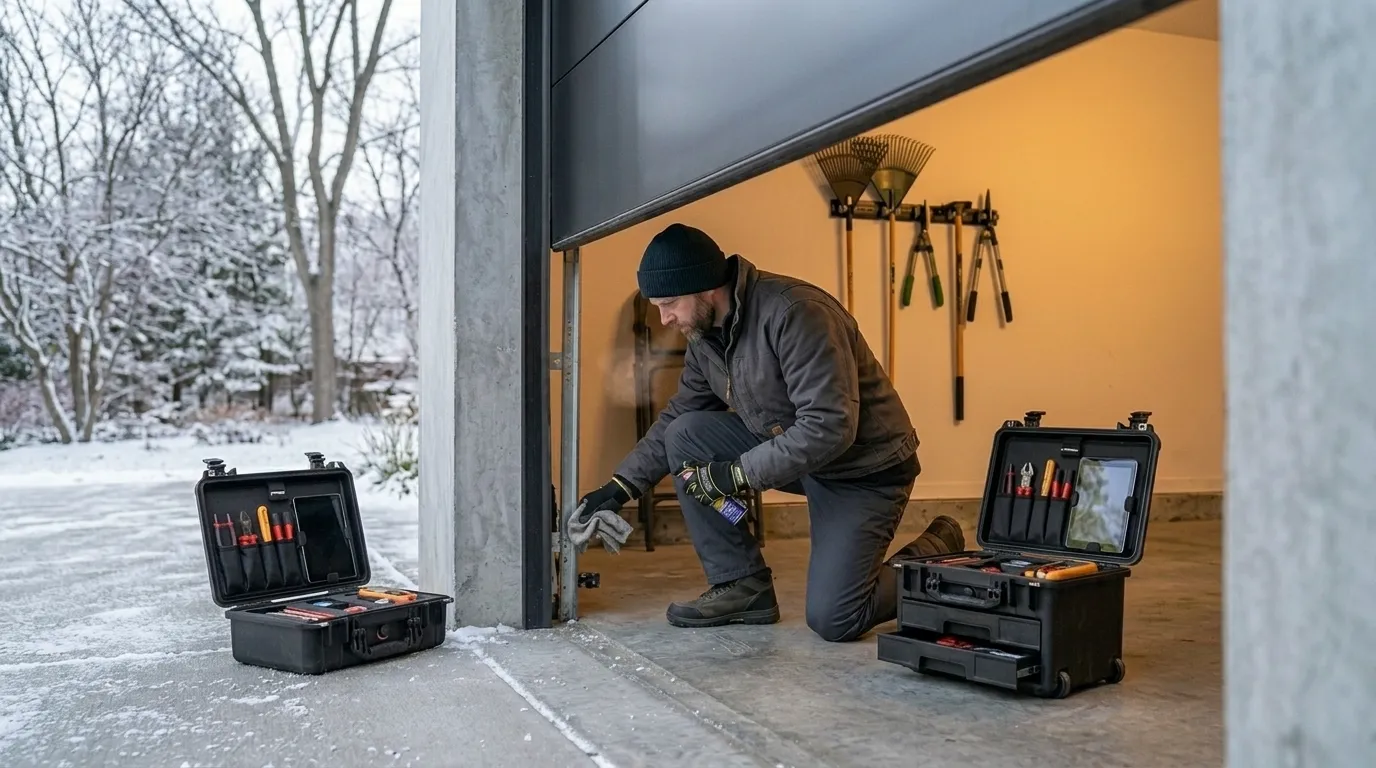
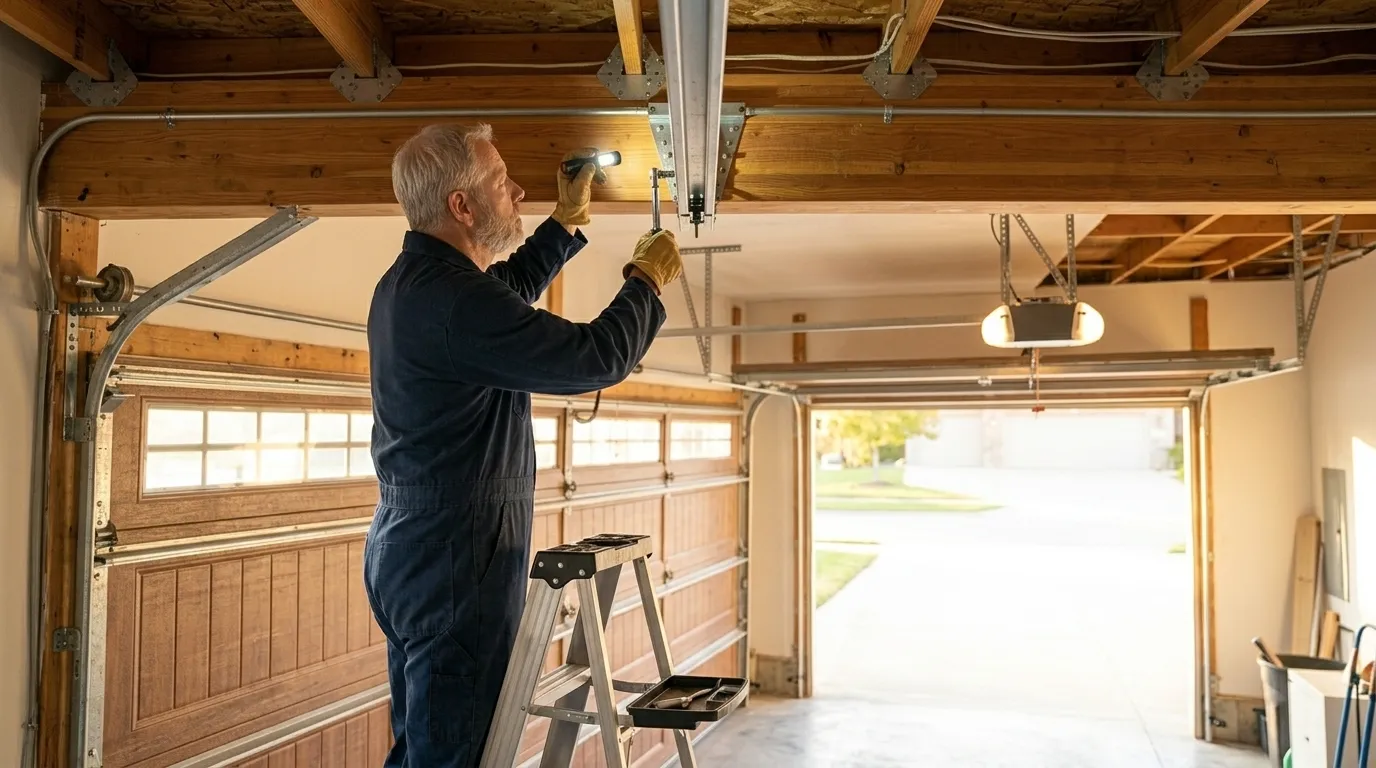
In Oswego, IL a service call means checking the torsion spring, tracks, and opener wiring built into homes from the 1958-2003 boom, tuned for hard winters.
- Licensed & Insured
- Same-Area Service Calls
- Upfront Pricing
How Local Conditions Play In
Oswego sits in a cold-severe climate band, and that matters more for garage doors than most people think. Steel panels contract in January and expand again by July, and every cycle works on the seams, the weatherstripping, and the torsion spring's coil tension. A spring rated for a mild climate wears faster here because it's doing more work per year, not because it was installed wrong.
Most of the housing stock in this service area went up between 1958 and 2003, with the typical build year landing around 1986. That means a lot of doors we open are original to a build decade, running hardware that hasn't been touched since a contractor installed it during the original construction push. The tracks are often the factory gauge from that era - lighter than what goes in today, and more prone to bending if a roller catches ice at the bottom of the door in February.
We don't treat every call the same because of this. A house from the late 1950s section of town gets a different inspection than a 1990s build, because the hinge spacing, the panel material, and the opener mounting all shifted over those four decades.
What to Look At First
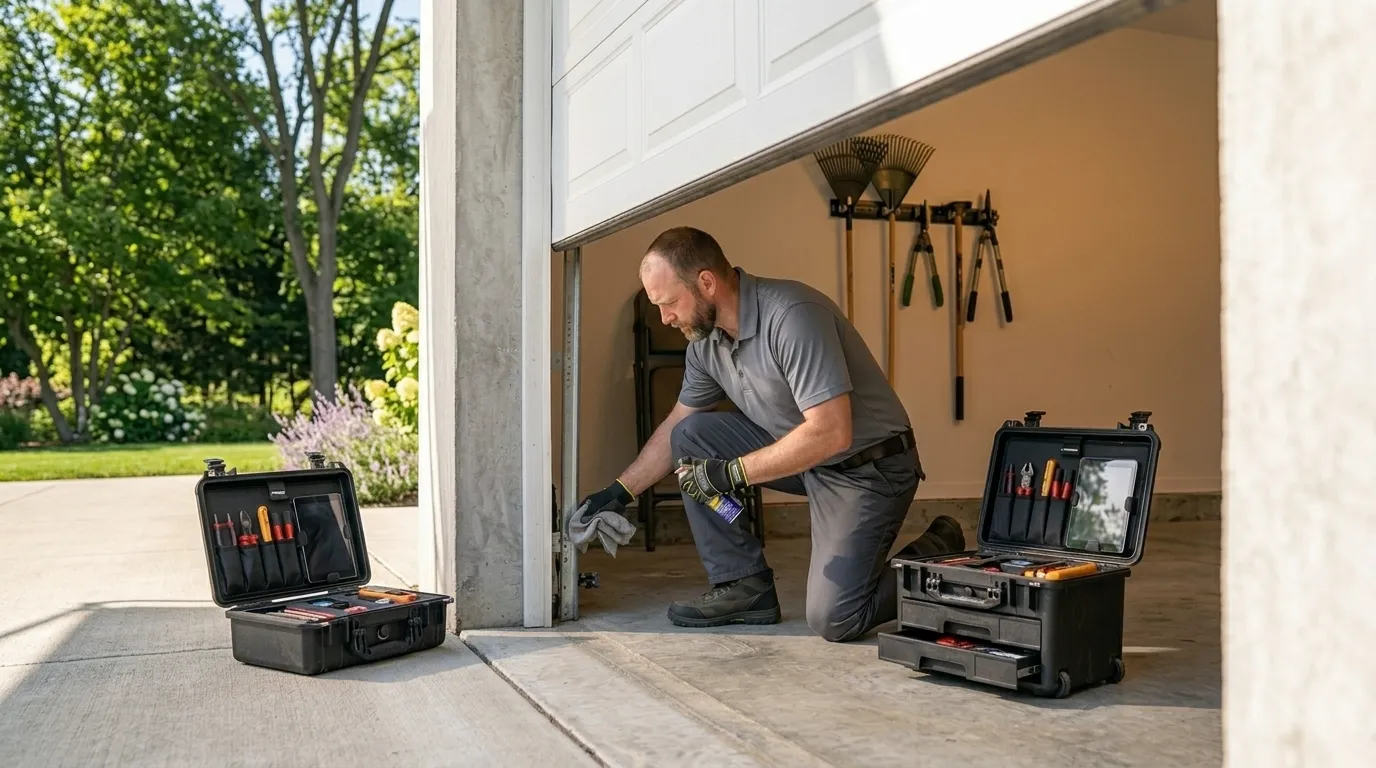
On any call, we start at the spring, not the opener, because a straining spring is what makes an opener sound like it's dying. On a 1980s or 1990s build - the most common vintage across the 32 named areas in this service area - that's usually a single torsion spring on a center bracket, sized for a door that may have been reinsulated or resurfaced since it went in, changing the weight the spring has to lift.
Next we check the track alignment and the rollers. In houses built before the mid-1990s, tracks tend to be lighter steel, and years of cold-weather contraction can pull the mounting brackets a few degrees out of plumb. That shows up as a door that binds halfway up or drifts to one side.
We also look at the opener's logic board and safety sensors, especially on homes where the opener has clearly never been swapped since the door was hung. Boards from the 1980s and 90s used simpler wiring than current units, and some of them are past the point where replacement parts are stocked - if that's the case, we say so instead of hunting for a part that no longer exists.
Last is the cable and drum setup, since those wear quietly until they don't.
The Situation
This is a service area of 175,642 households, with 96,932 of those owner-occupied houses - the kind of ownership rate that means most of these doors get maintained by the same person for years, not flipped between renters. Median household income here runs $109,064, and what we see on calls reflects that: fewer patch jobs to squeeze one more season out of a dying spring, more owners choosing full opener or panel replacement once a repair estimate starts creeping toward that range.
We run calls out from Oswego to the surrounding towns - Boulder Hill two miles out, Montgomery at three, Yorkville at five, and further out to Sugar Grove, North Aurora, Plano, and beyond. The build eras shift a little town to town, but the core issue doesn't: doors installed decades ago on hardware sized for a lighter cold-weather load than what they're carrying now.
One limitation worth being upfront about: we don't keep every legacy logic board or discontinued spring size on the truck. Some 1980s-era opener boards are out of production, and if yours is one of them, the honest call is often full opener replacement rather than a repair we can't actually complete that day.
Season by Season
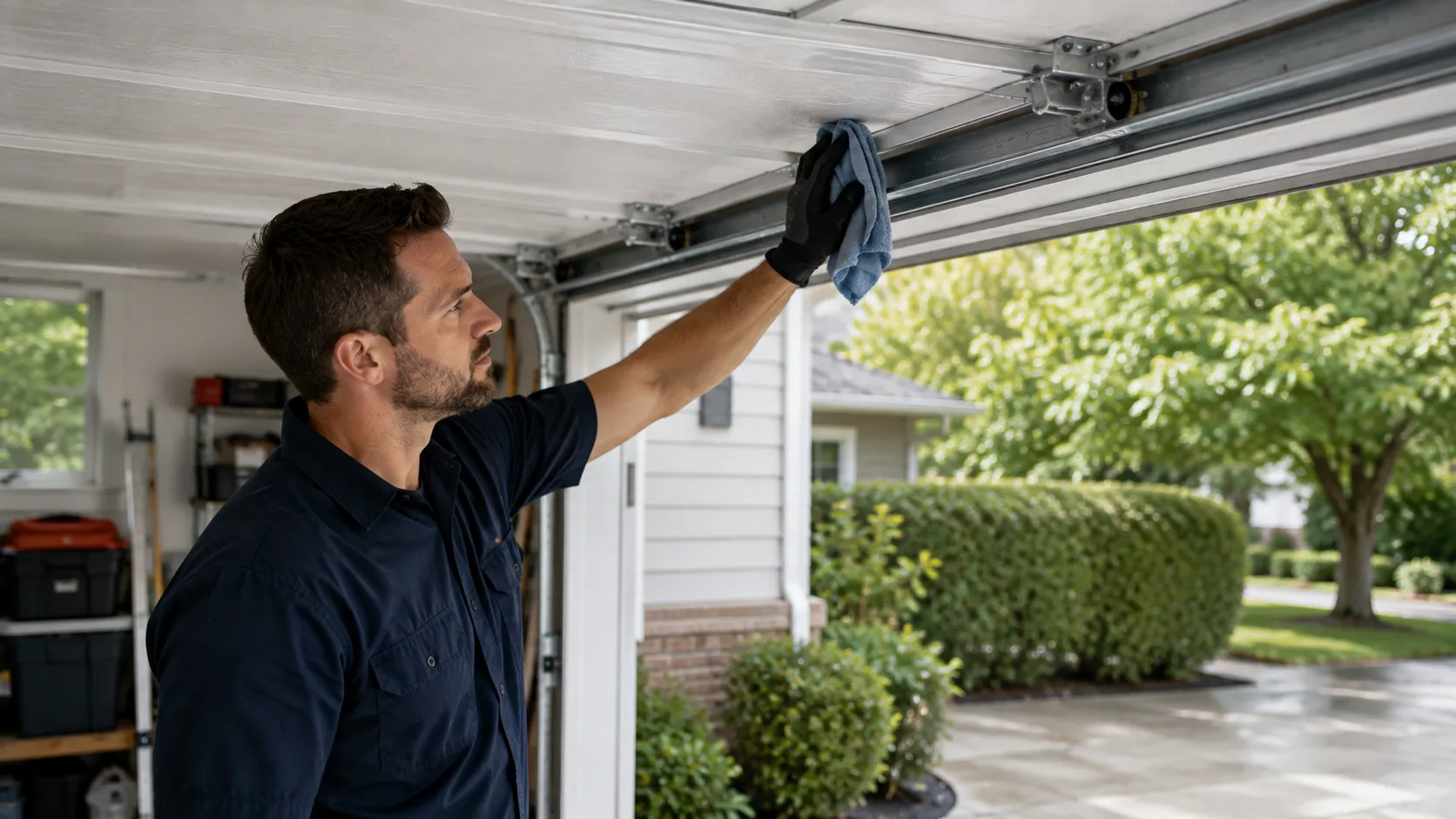
Winter is when the cold-severe climate here does the most damage. Steel contracts, lubricant thickens, and a spring that was already fatigued from a 1986-vintage install is the one that snaps on a ten-degree morning. This is also when we see the most bent bottom brackets, from rollers catching ice ridges at the base of the track.
Spring calls are usually about what winter left behind - misaligned tracks, sensors knocked out of position by seasonal humidity swings, and openers straining to lift a door whose spring never fully recovered its tension.
Summer is lighter on emergency calls but heavier on noise complaints - expansion in older panels and dried-out rollers make doors louder as temperatures climb, especially on houses from the earlier end of the 1958-2003 range where original hardware is still in place.
Fall is when we tell people to get ahead of it: a quick look at the spring and cables before the first hard freeze costs less than an emergency call in January, and on a house built decades ago, that spring has likely never been swapped.
How We Can Help
Garage Door Repair
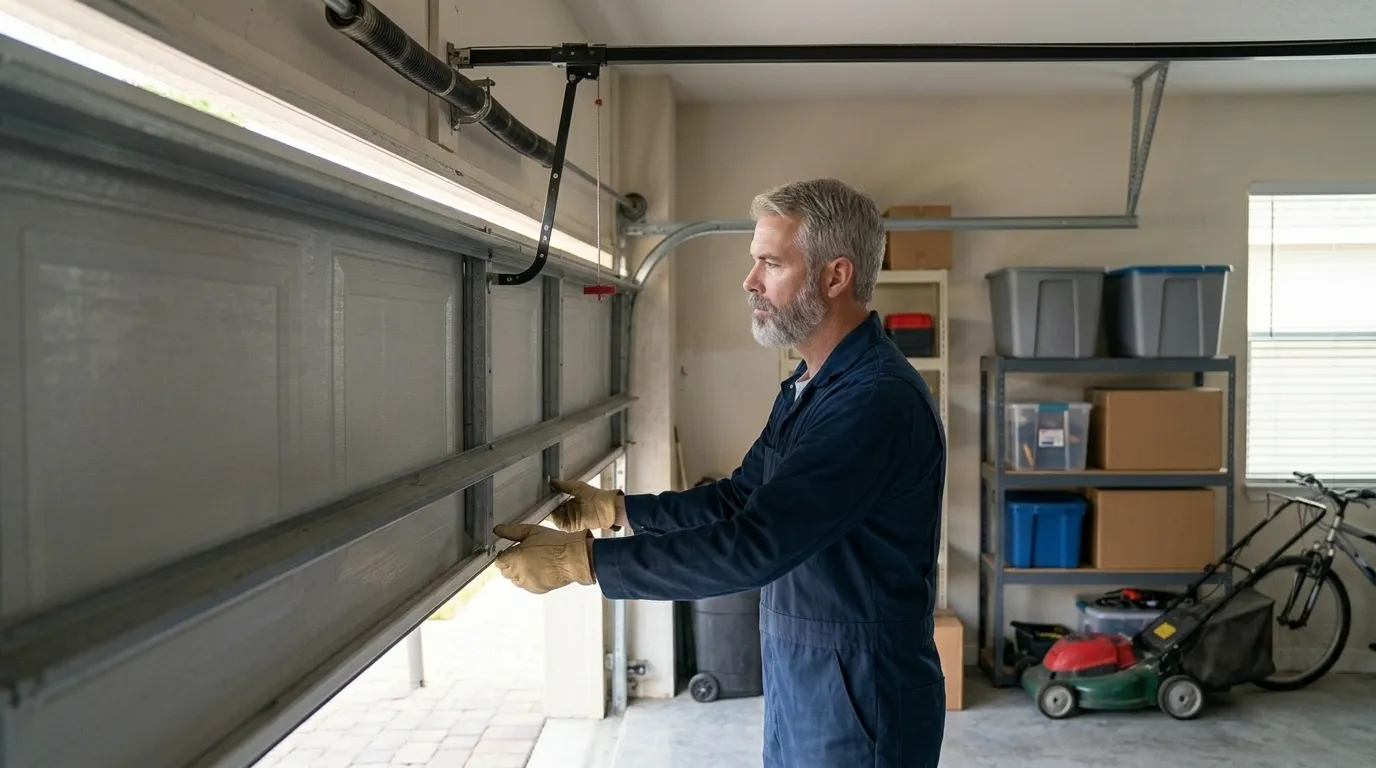
Springs, cables, tracks, rollers, and openers fixed by a tech who explains the problem before touching anything.
Learn more →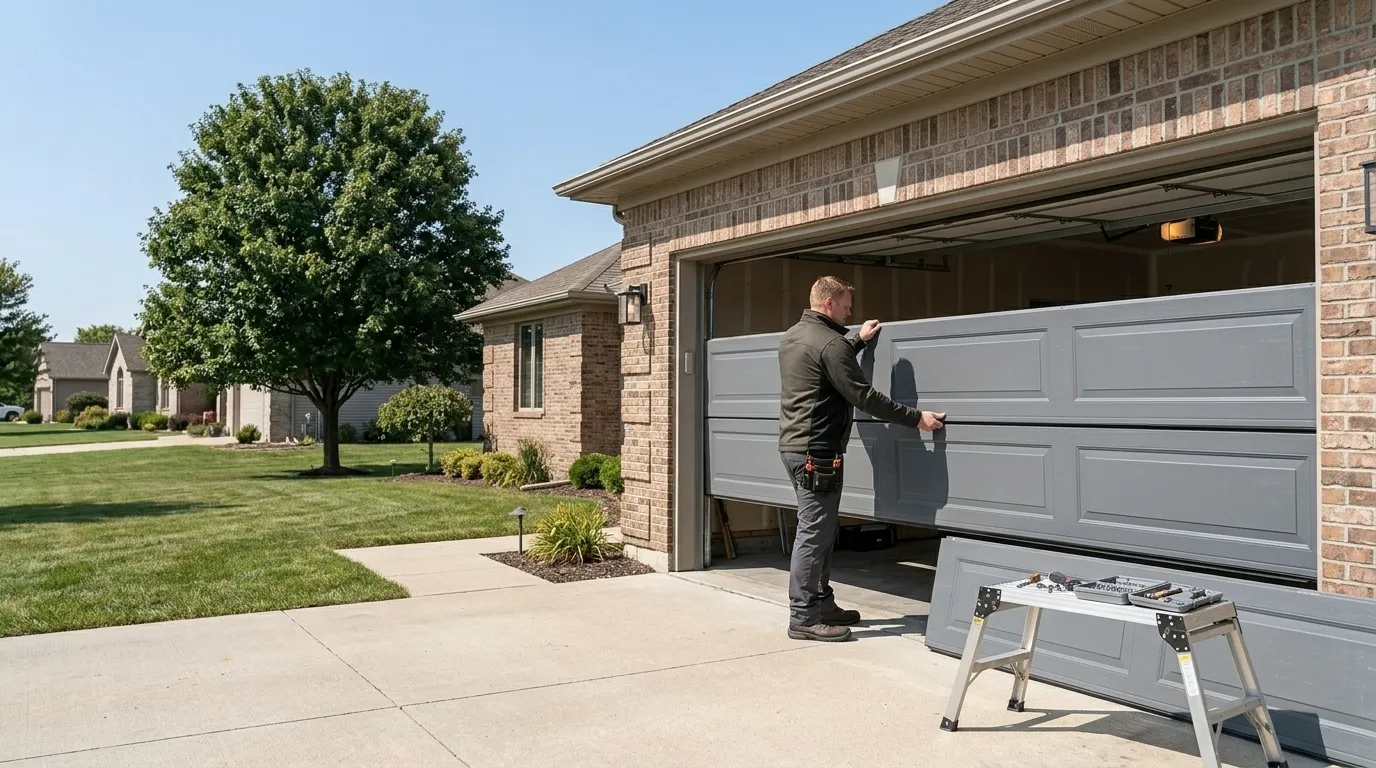
Garage Door Installation
New sectional doors sized and installed for the housing stock actually built in this area.
Learn more →
Garage Door Service
Tune-ups, lubrication, and safety checks that catch a small problem before it becomes a service call.
Learn more →Frequently Asked Questions
How old does my garage door hardware have to be before you'd recommend replacing instead of repairing it?
It depends more on the part than the age alone, but on houses from the earlier end of the 1958-2003 range we often find opener boards or spring sizes that are out of production. When we can't get the part, replacement is the honest answer rather than a repair we can't finish.
Why does my spring seem to fail every winter?
Oswego sits in a cold-severe climate band, and steel spring coils tighten and lose a little tension with every hard freeze-thaw cycle. A spring original to a 1980s or 90s build has been through decades of that cycling, so winter is when the accumulated wear finally shows.
Do you come out to Boulder Hill or Montgomery?
Yes, both are inside our regular service radius - Boulder Hill is about two miles out and Montgomery about three. We run calls further out too, toward Yorkville, Sugar Grove, and North Aurora.
Is it worth replacing an opener that still works but is old?
If the logic board is a legacy design we can't get parts for, waiting until it fails often means a longer wait for a working door. We'll tell you honestly if your board is one of the ones that's hard to source rather than pushing a replacement you don't need yet.
Have a Door That Needs a Second Opinion?
Call and describe what it is doing - we will tell you what it likely is.