
Oswego Garage Door Guide
When a Torsion Spring Breaks in an Oswego Cold Snap
Oswego homes built mostly between 1958 and 2003 carry older torsion springs that give out in sub-zero cold. Here's what to check first and how the season changes the call.
- Licensed & Insured
- Same-Area Service Calls
- Upfront Pricing
How Local Conditions Play In
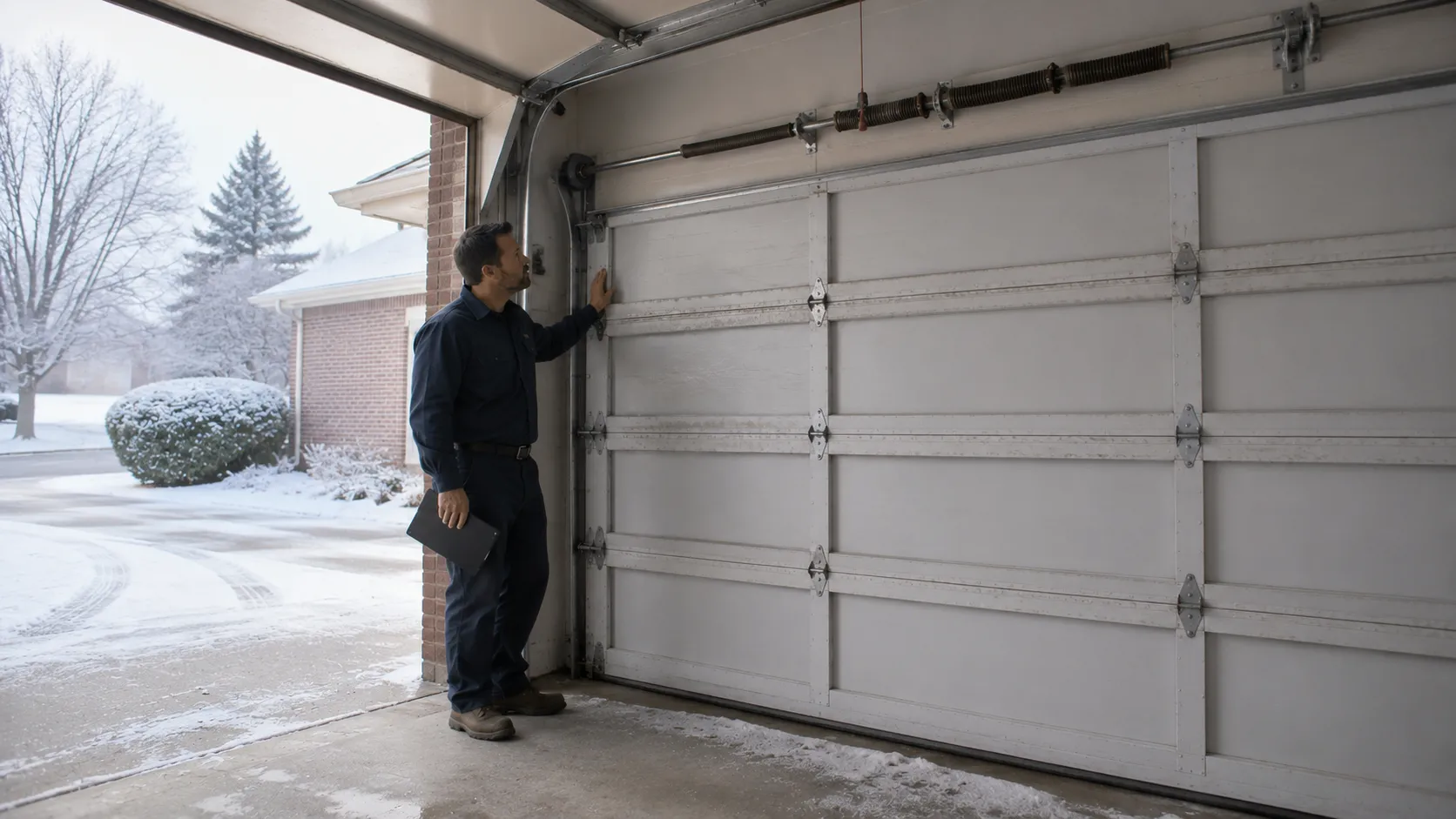
Oswego sits in a cold-severe climate band, and that matters more for a garage door spring than most homeowners expect. Steel contracts as the temperature drops, and a torsion spring that's already fatigued from years of cycling gets less forgiving right when it's coldest. The coil loses a little flex, the metal gets brittle at the stress points near the winding cone, and a spring that would have lasted another season snaps instead.
This interacts with the age of the housing stock. Most houses across the Oswego area went up between 1958 and 2003, with the bulk of that from the 1980s and 90s, spread across roughly 32 named subdivisions and areas.
A lot of those original garage door systems have been replaced once already, but plenty haven't, and the springs on 20- to 30-year-old openers weren't built for the cycle counts they've now put in. When a spring goes in cold weather here, it's rarely a fluke - it's a spring that was already near the end of its rated cycles, finished off by a hard freeze.
What to Look At First
Before you call anyone, look at the spring itself. On a torsion setup, that's the tightly wound coil above the door, usually one or two springs on a horizontal shaft. A broken one shows a visible gap in the coil, and you'll often hear the bang from inside the house when it lets go - it's loud enough that people mistake it for something hitting the house.
Check whether the door will move at all. With a broken torsion spring, the opener may still hum and try, but the door won't lift, or it'll lift a few inches and stall. Don't force it by hand and don't run the opener repeatedly trying to power through - that stresses the opener motor and the remaining hardware.
If you've got a two-car door on a single spring, that's worth knowing before anyone gives you a number over the phone - single-spring double doors put more load on that one coil, and that's often the setup we find failing first in this cold.
The Situation
Across the service area there are roughly 96,932 owner-occupied houses out of about 175,642 households total, and a good share of those sit on original or first-replacement garage hardware from the 1958-2003 building window. That's a wide span, which means the springs vary a lot by block - a house from the 1960s section may still have a spring nobody's touched since it was built, while a 1990s-era house is more likely on its second or third spring already.
We don't recommend patching a spring or re-tensioning an old one to squeeze out one more winter. Once a torsion spring has gone in cold weather, the other one on a two-spring setup is usually close behind, having taken the same cycles. Replacing both at once costs a little more up front but avoids a second call three weeks later when the second spring lets go under the extra load it's now carrying alone.
Season by Season
Late fall through the coldest stretch of winter is when we see the most spring failures tied directly to temperature. The door gets used the same amount, but the steel is stiffer and less forgiving, so a spring that was borderline in October gives out in January.
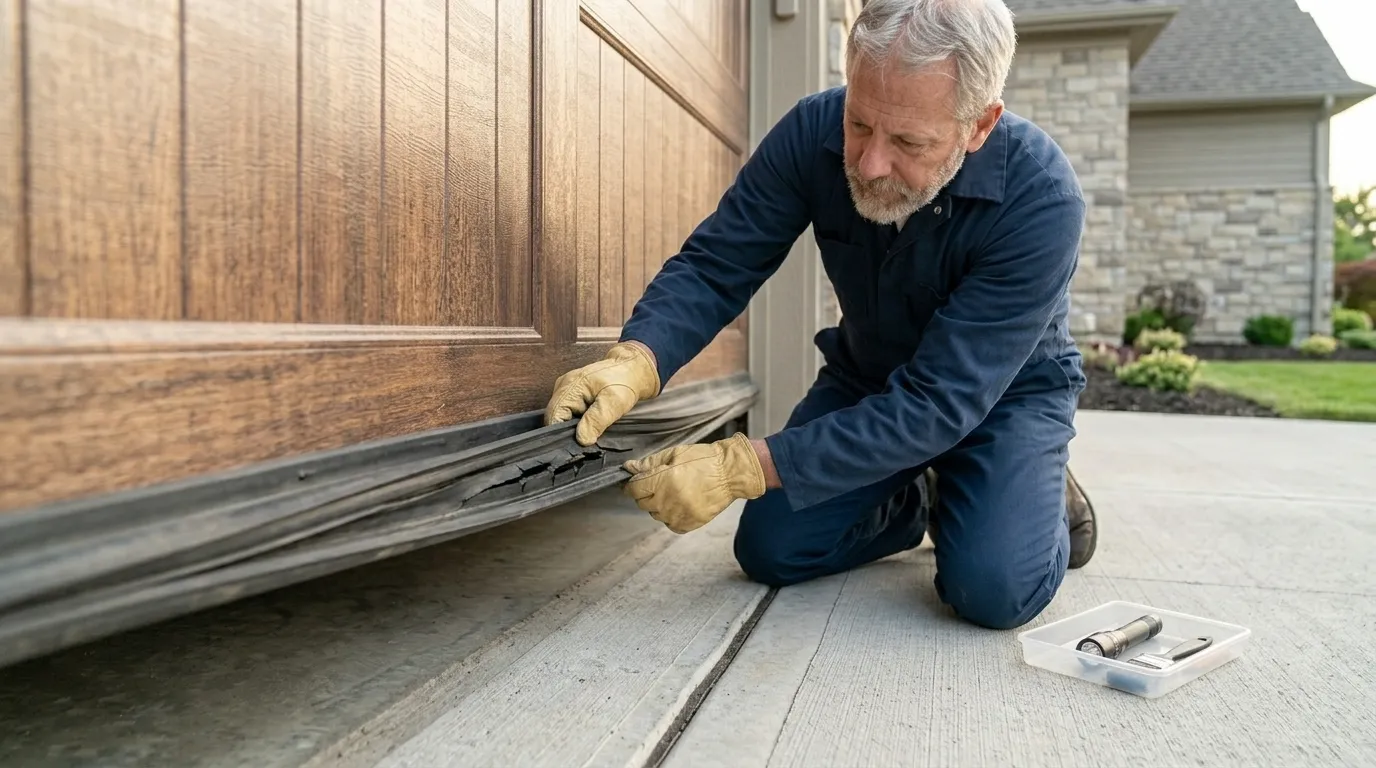
Spring and early summer bring fewer sudden breaks but more worn-out openers and tracks that took a beating over winter - ice buildup at the bottom seal, rollers that got sluggish in the cold and never quite recovered. Late summer is the quieter stretch, and it's the best time to have a spring checked and replaced on your terms instead of waiting for it to fail on a night when it's ten below and you need the car out. We don't do emergency roof or structural work if a door's come off track and damaged the frame - that's outside what we handle, and we'll say so rather than take the job.
How We Can Help
Garage Door Repair
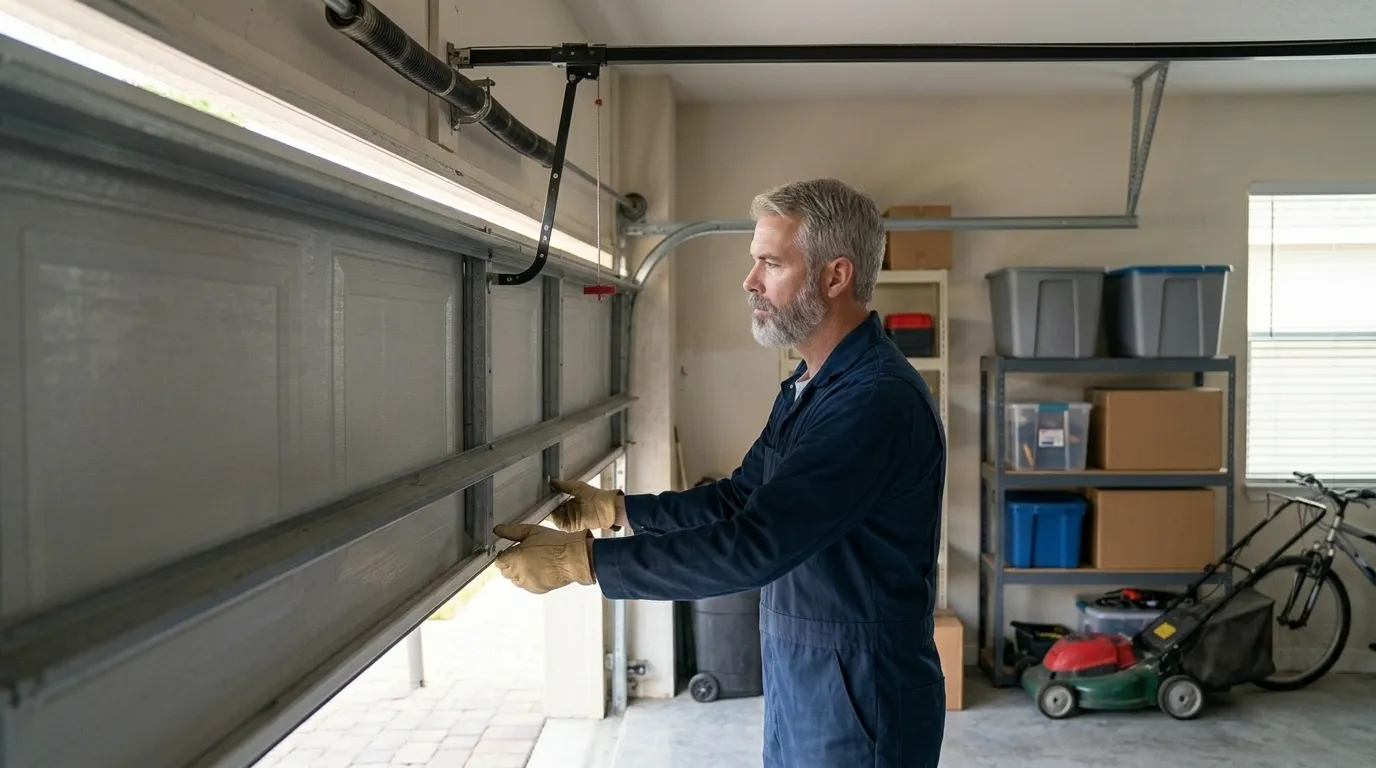
Springs, cables, tracks, rollers, and openers fixed by a tech who explains the problem before touching anything.
Learn more →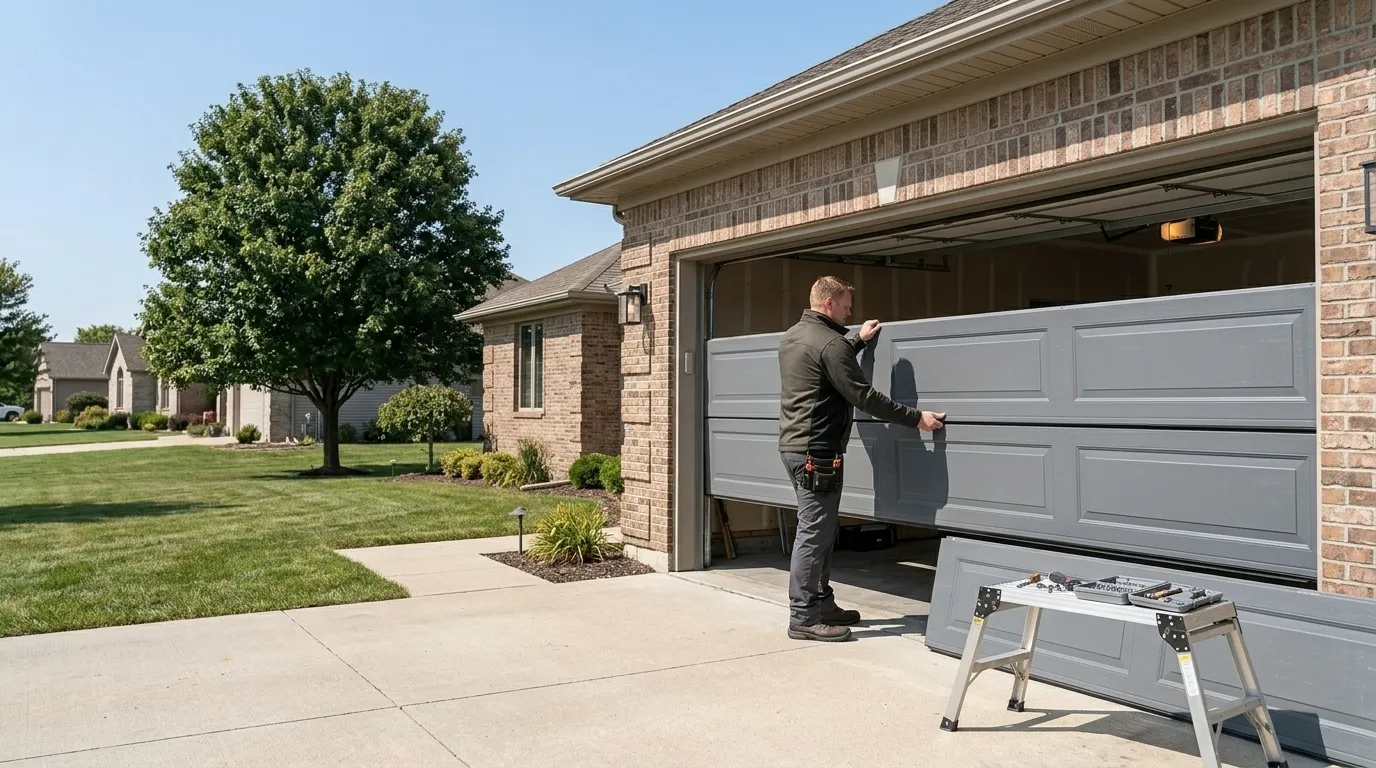
Garage Door Installation
New sectional doors sized and installed for the housing stock actually built in this area.
Learn more →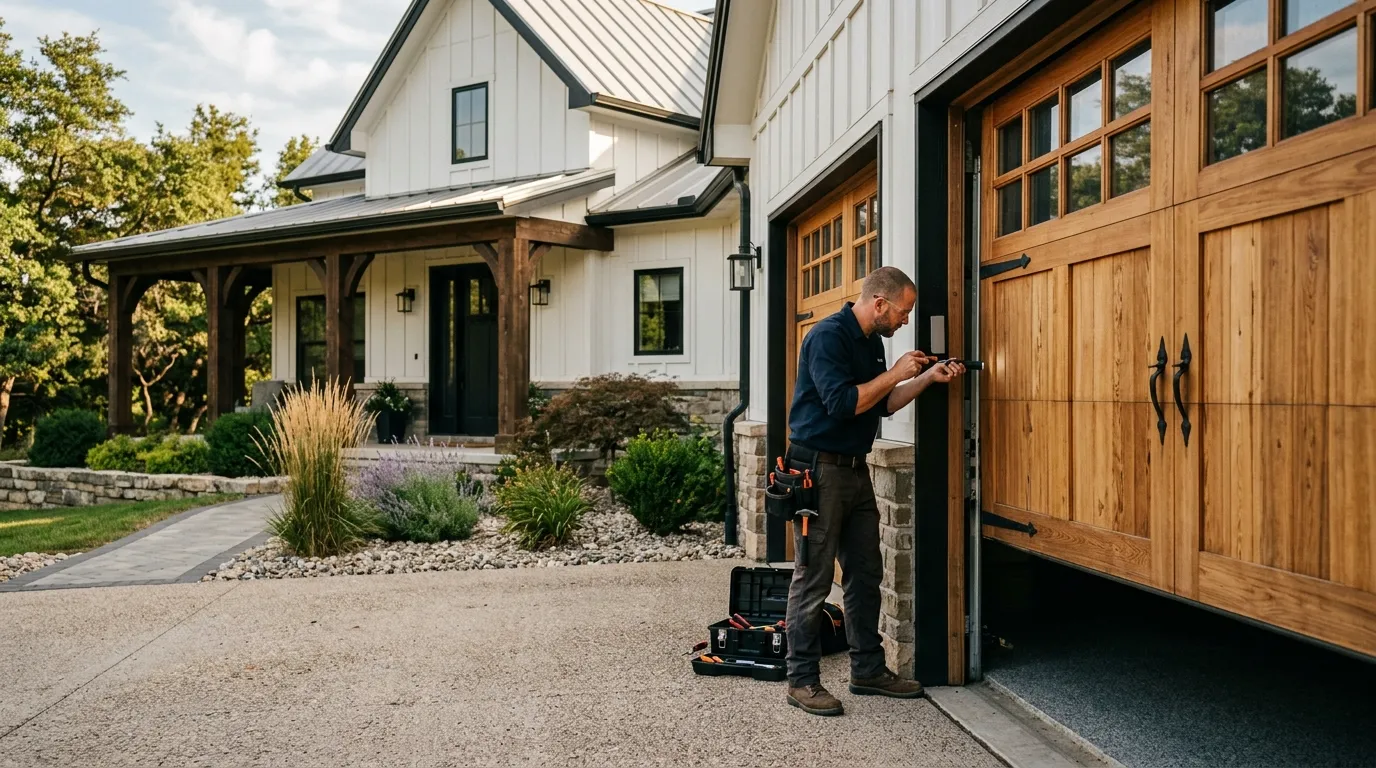
Garage Door Service
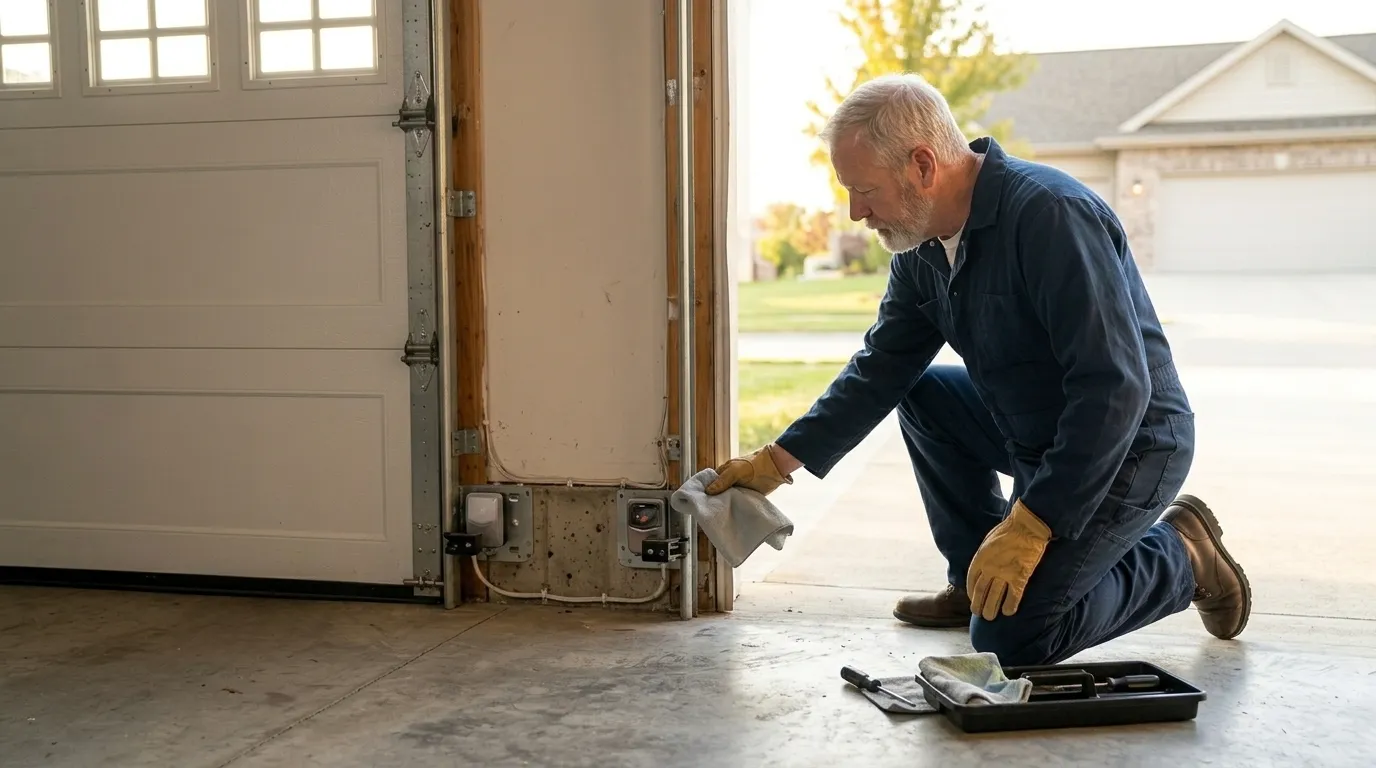
Tune-ups, lubrication, and safety checks that catch a small problem before it becomes a service call.
Learn more →Frequently Asked Questions
Why did my spring break in the cold instead of during regular use?
Cold makes steel more brittle and less flexible, so a spring that's already near the end of its cycle life is more likely to snap during a hard freeze than in mild weather. It's usually not the cold alone - it's a fatigued spring finally giving out under conditions it can't flex through anymore.
Should I replace one spring or both?
If you have two torsion springs and one breaks, the other has carried the same load and cycle count and is usually close behind. We generally replace both together rather than leave a mismatched, older spring doing the work alone - it avoids a second breakdown a few weeks later.
My house is from the 1980s - does that affect what spring I need?
It can. Houses from that era often have single-spring setups on double doors, which puts more strain on one coil than a two-spring system does. We check what's actually on your door and the door's weight before recommending a replacement, rather than assuming based on the house's age alone.
Is it safe to open the door by hand until someone can come out?
You can release the opener and lift by hand carefully, but without the spring's counterbalance the door is heavy and can drop fast. Prop it open securely if you need it up, and don't leave it half-raised unsupported.
Have a Door That Needs a Second Opinion?
Call and describe what it is doing - we will tell you what it likely is.