
Service
Garage Door Installation for Oswego Homes
New garage door installation in Oswego, IL, built around 1958-2003 housing stock and severe cold winters. Insulated doors, sized right, installed by local pros.
- Licensed & Insured
- Same-Area Service Calls
- Upfront Pricing
The Symptom
You're not calling about a broken spring. You're calling because the door is old, it's ugly next to the rest of the house, or it's letting cold air pour into the garage every time the temperature drops. Maybe the panels are dented from years of use, the insulation is gone, or the opener strains to lift a door that's heavier than it should be from warped wood or rusted steel.
In a lot of Oswego homes, the door is original or close to it, and it's finally telling you it's done. That's an installation job, not a repair - and it's worth knowing the difference before you spend money patching something that needs replacing.
Some owners wait until the door won't open at all. Others notice the utility bill creeping up because a thirty-year-old single-layer door has no insulation value left.
Either way, the fix isn't a new spring or a new cable. It's a new door, sized and built for the opening you actually have.
What Causes It Around Here
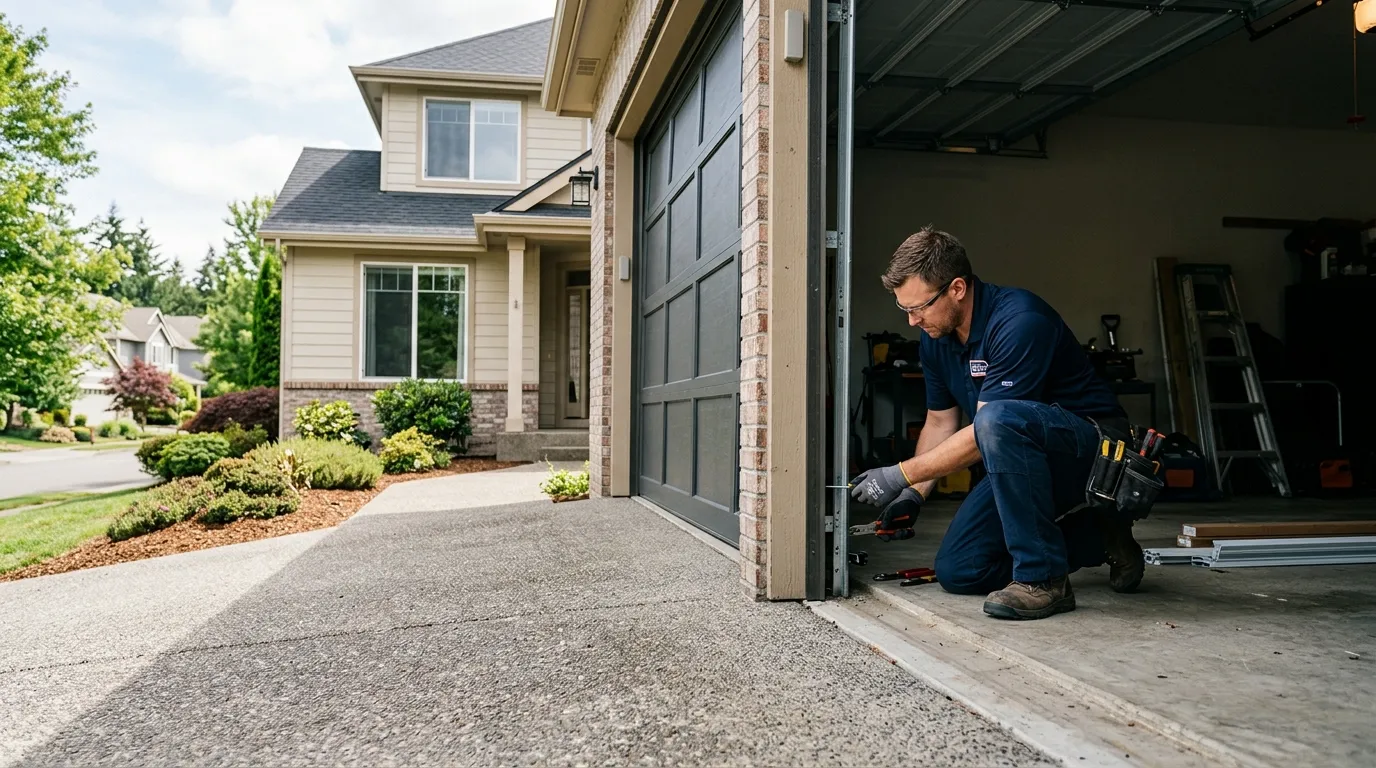
Oswego's housing stock runs 1958 to 2003, with the median build year around 1986, and most of the 32 named areas in town fall into that same 1980s-90s window. That matters for installation because doors and openers from that era were built to a lower standard than what's available now - thinner steel, single-layer construction, minimal or no insulation, and track hardware sized for lighter doors. Thirty-plus years of freeze-thaw cycles in a severe cold climate work on that hardware nonstop: steel contracts in the cold, weatherstripping cracks and shrinks, and wood-frame doors from the older end of that build range swell and stick.
So when a door in a 1986-vintage Oswego house finally gives out, it's rarely one bad part. It's the whole assembly reaching the end of a life that started under different standards than what's sold today. Replacing it with a modern insulated door built for this climate band solves the problem instead of chasing it panel by panel.
How We Fix It
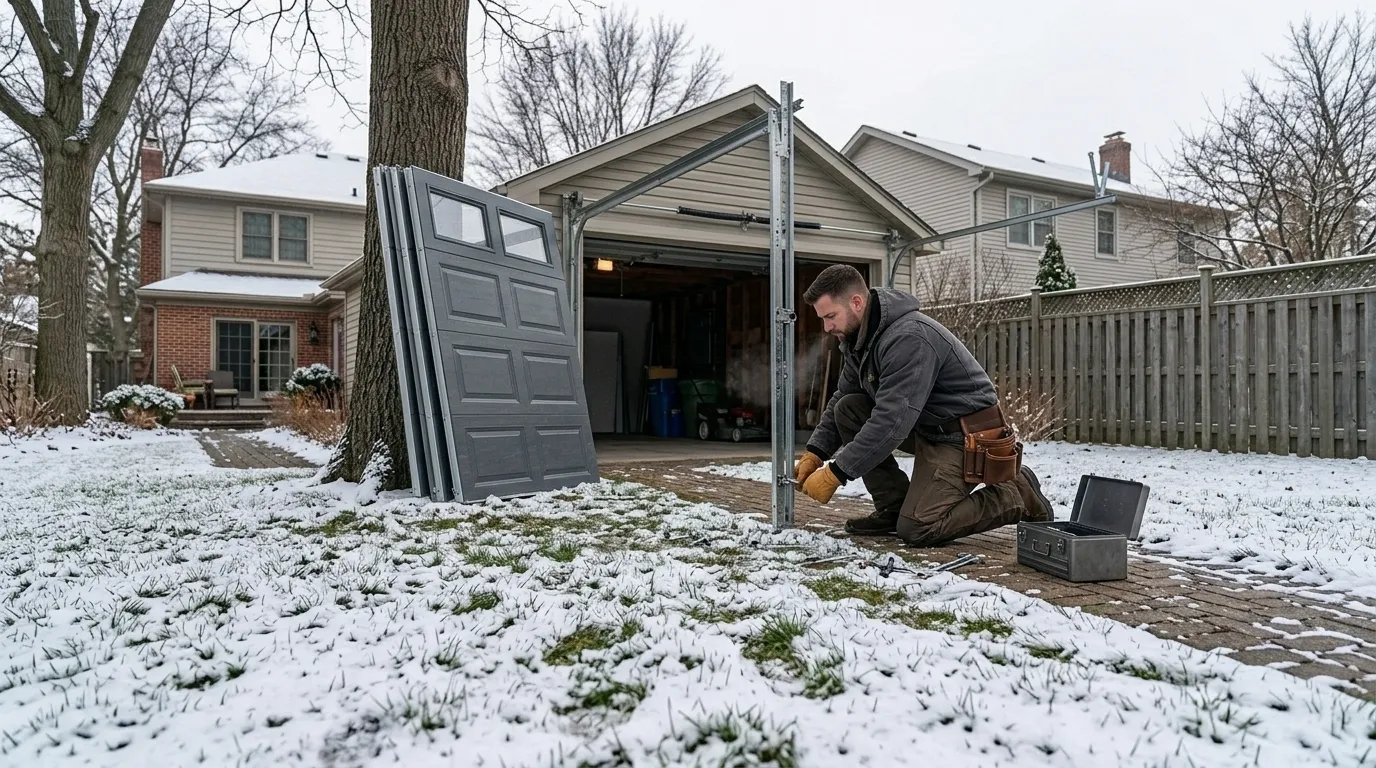
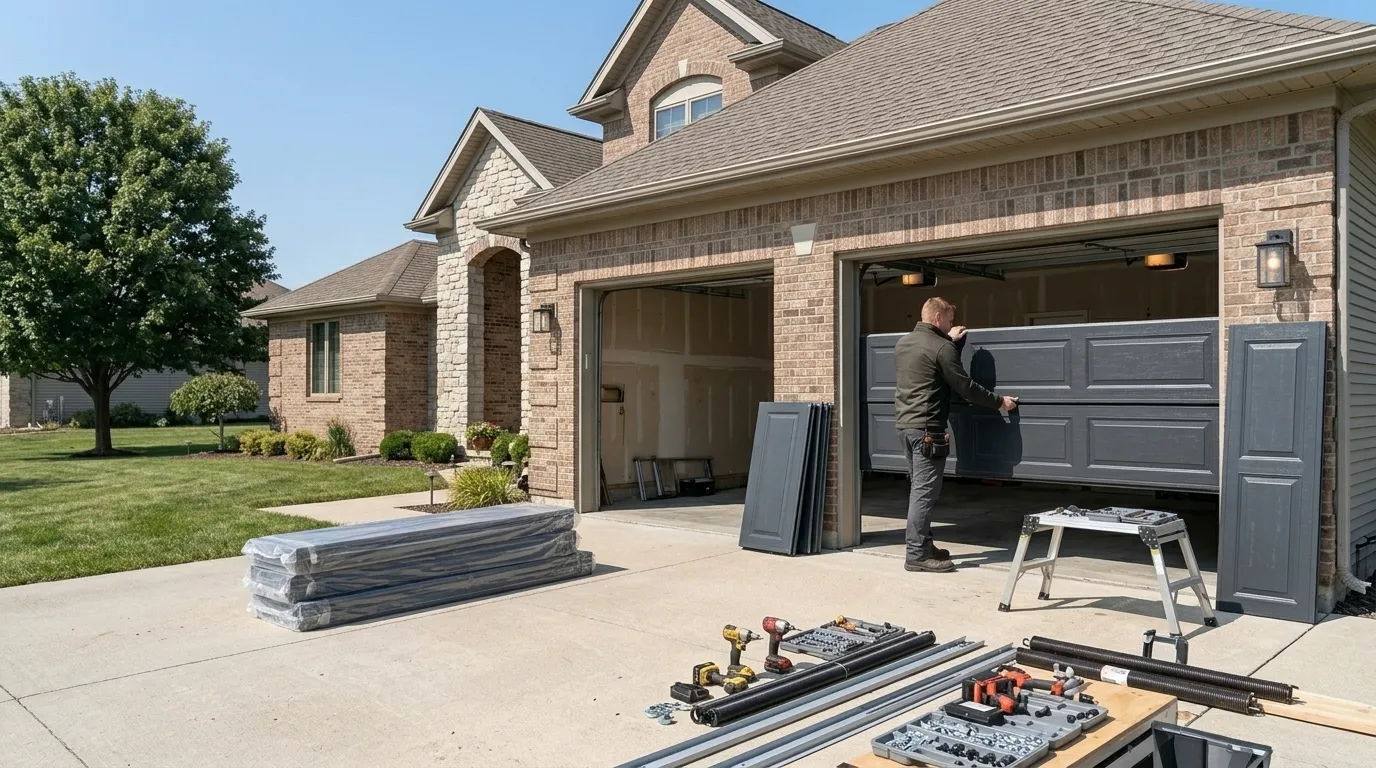
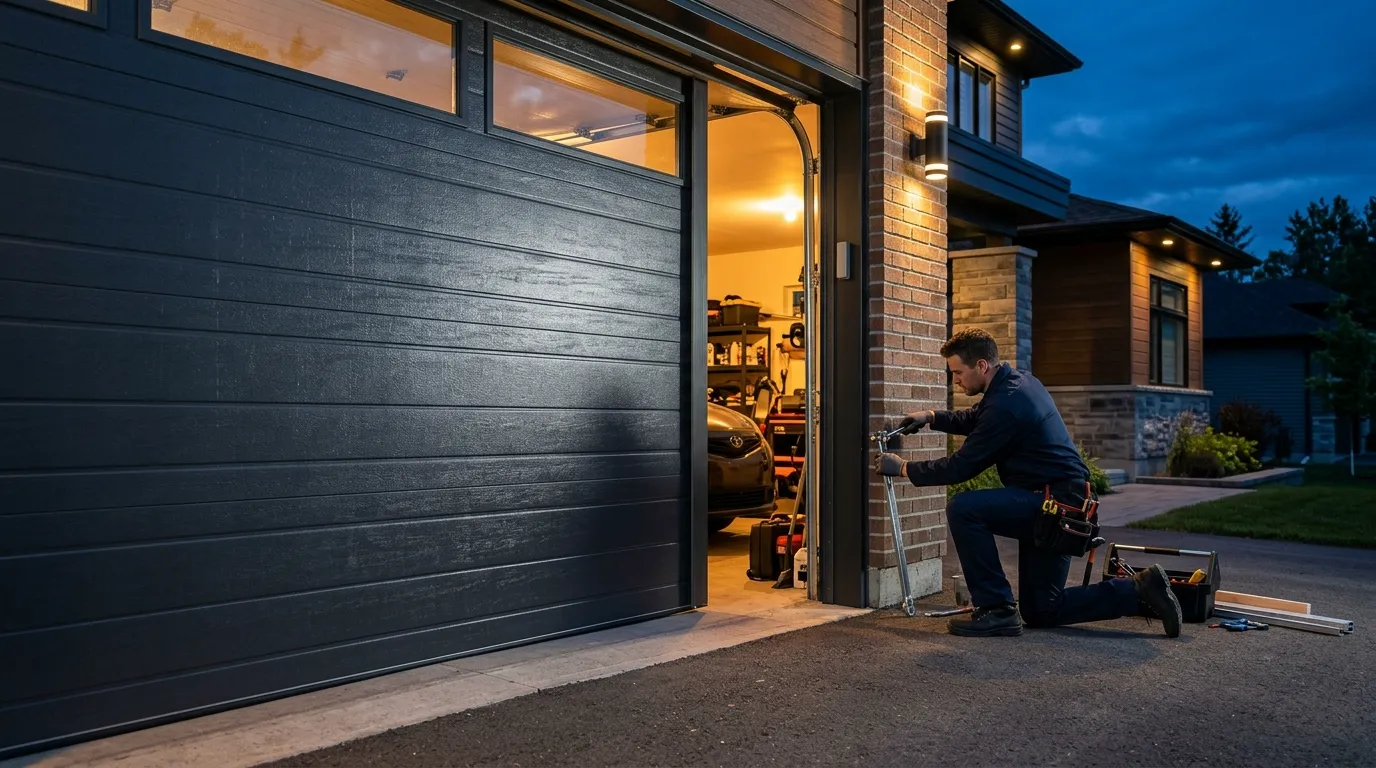
We measure the actual opening - width, height, headroom, and backroom - because homes built across that 1958-2003 range in Oswego are not standardized, even within the same subdivision. We size the door and track to the opening you have, not a catalog default. For this climate, we lean toward insulated steel doors with two-layer or sandwich construction; a single-layer door doesn't hold up well through a full Oswego winter, and it shows in the heating bill inside an attached garage.
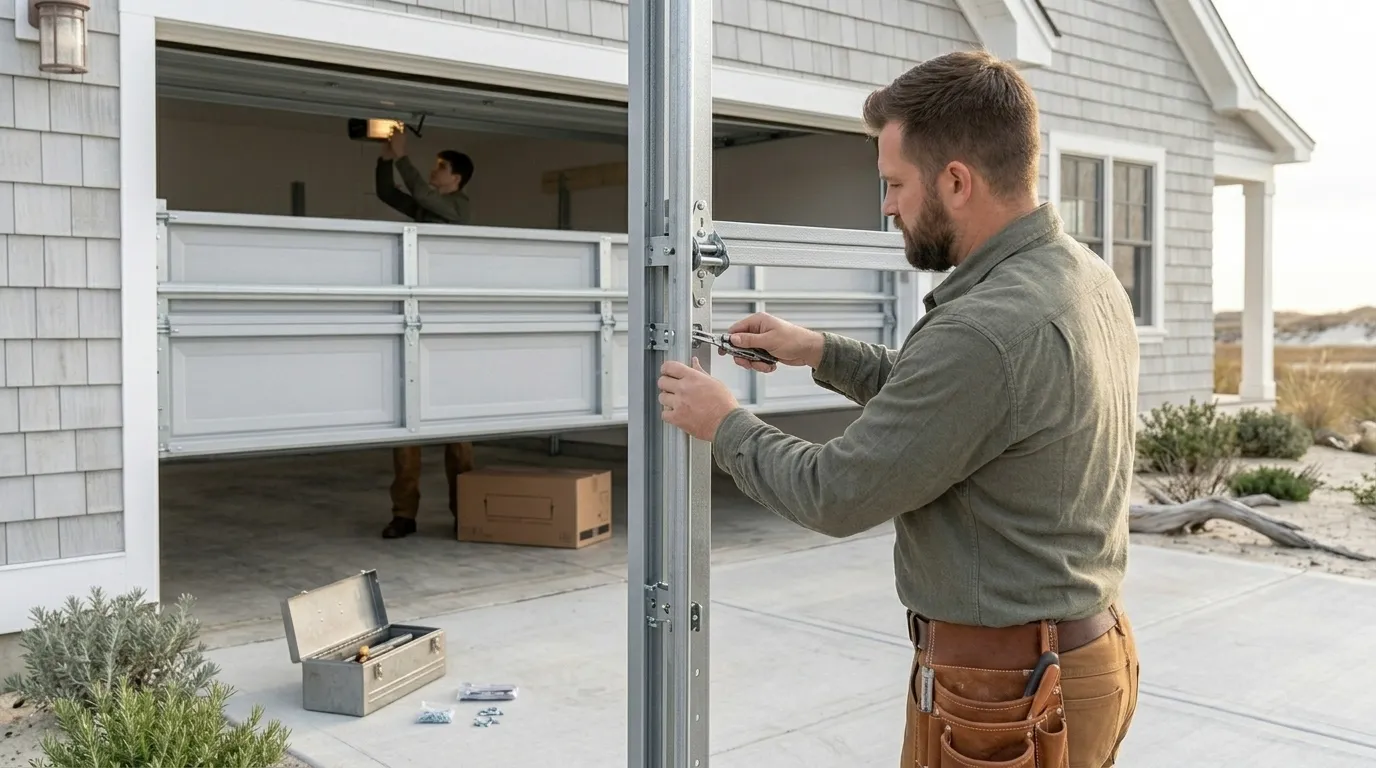
We check the header and jambs for rot or settling before we hang anything new - common in houses on the older end of that build range - and we replace track, rollers, and hinges as a set rather than bolting a new door onto worn-out hardware. The opener gets tested for lift capacity against the new door's actual weight, not assumed. When the install is done, we walk the door through a full open-close cycle and check balance by hand, not just by opener sensor.
The Complications
Not every job is a straight swap. Some of the older openings in Oswego's 1958-70s housing were framed for doors that aren't made in standard sizes anymore, which means custom framing work before the new door goes in - that adds time and cost we won't guess at over the phone. If your garage isn't insulated at the walls or ceiling, a new insulated door helps but won't fully solve a cold garage on its own; we'll tell you that straight rather than oversell the door.
We also won't install a heavy insulated door on an opener that can't lift it safely. If the existing opener is undersized, that's a second line item, not something we skip to make the quote look smaller. And if the header is rotted past what a repair job can shore up, that's carpentry beyond what we do - we'll tell you before we start, not after.
Why Oswego Calls Us
What Happens When You Call
Call or Request a Quote
Tell us what the door is doing and roughly how old the house is - that alone points us toward the likely part before a truck leaves.
On-Site Diagnosis
A tech checks the spring, cables, tracks, and opener in person and tells you plainly what is actually wrong.
Straight Price, No Surprises
You get a number before any work starts. It covers parts and labor, nothing added after the fact.
Fixed the Same Visit
Most repairs are done in one trip. If a part needs sourcing, we tell you that upfront instead of guessing.
Talk to a Technician Before You Book
Describe what the door is doing and get a straight answer on what it likely needs.
Jobs Like Yours
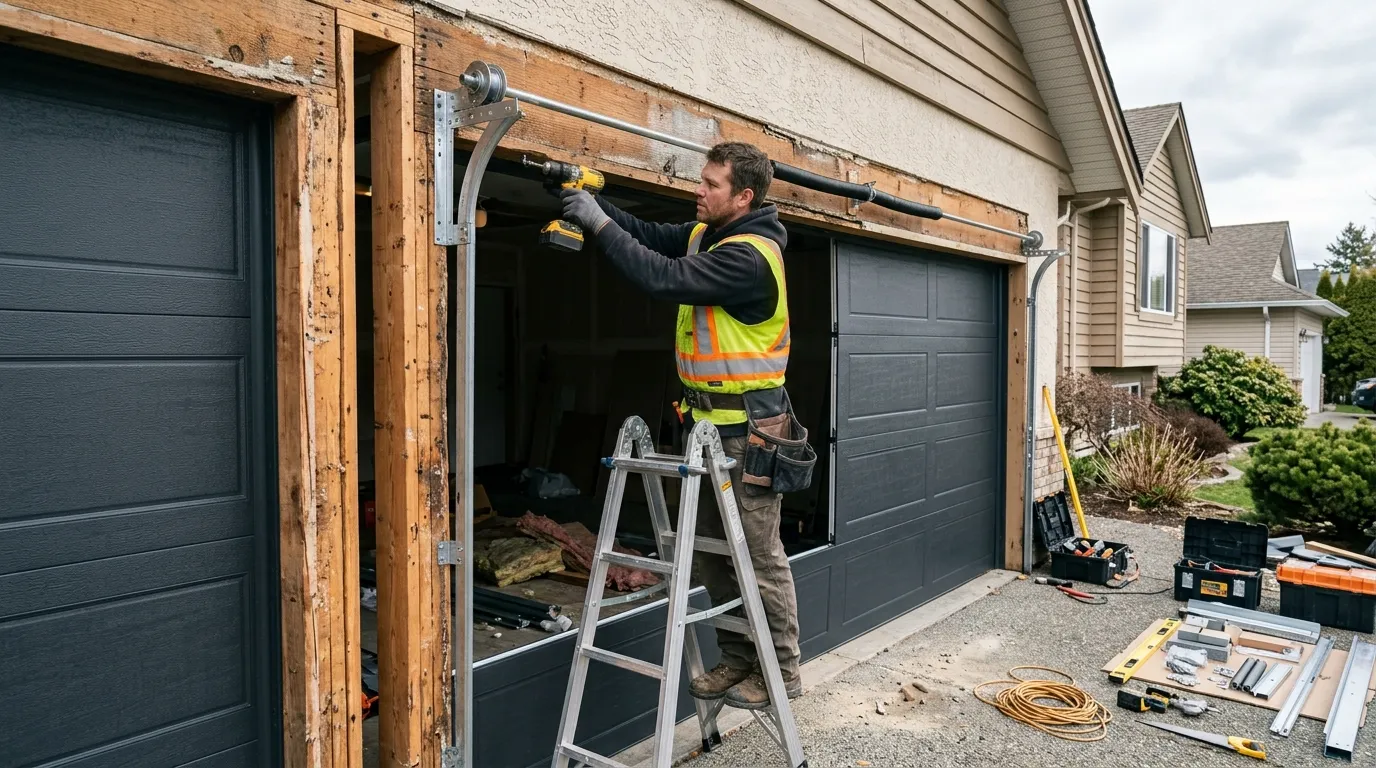
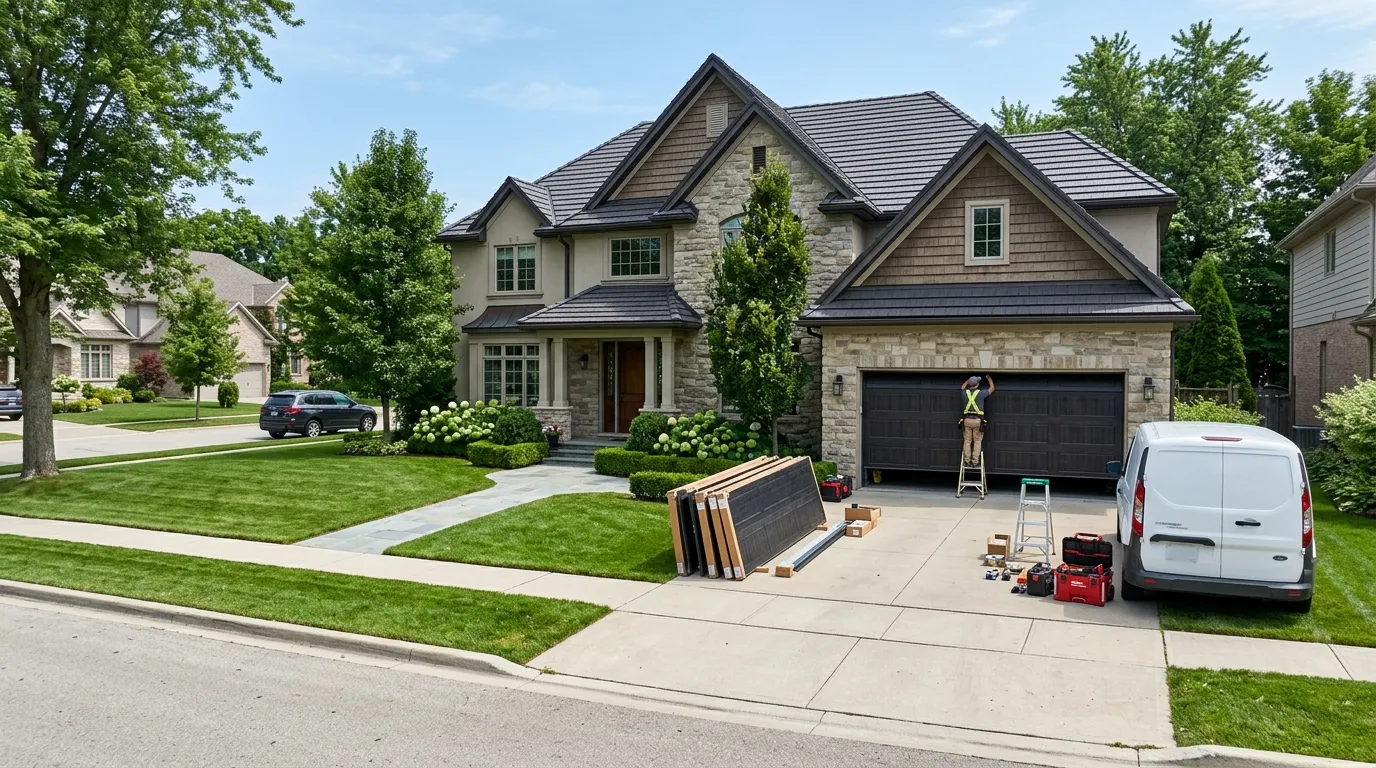
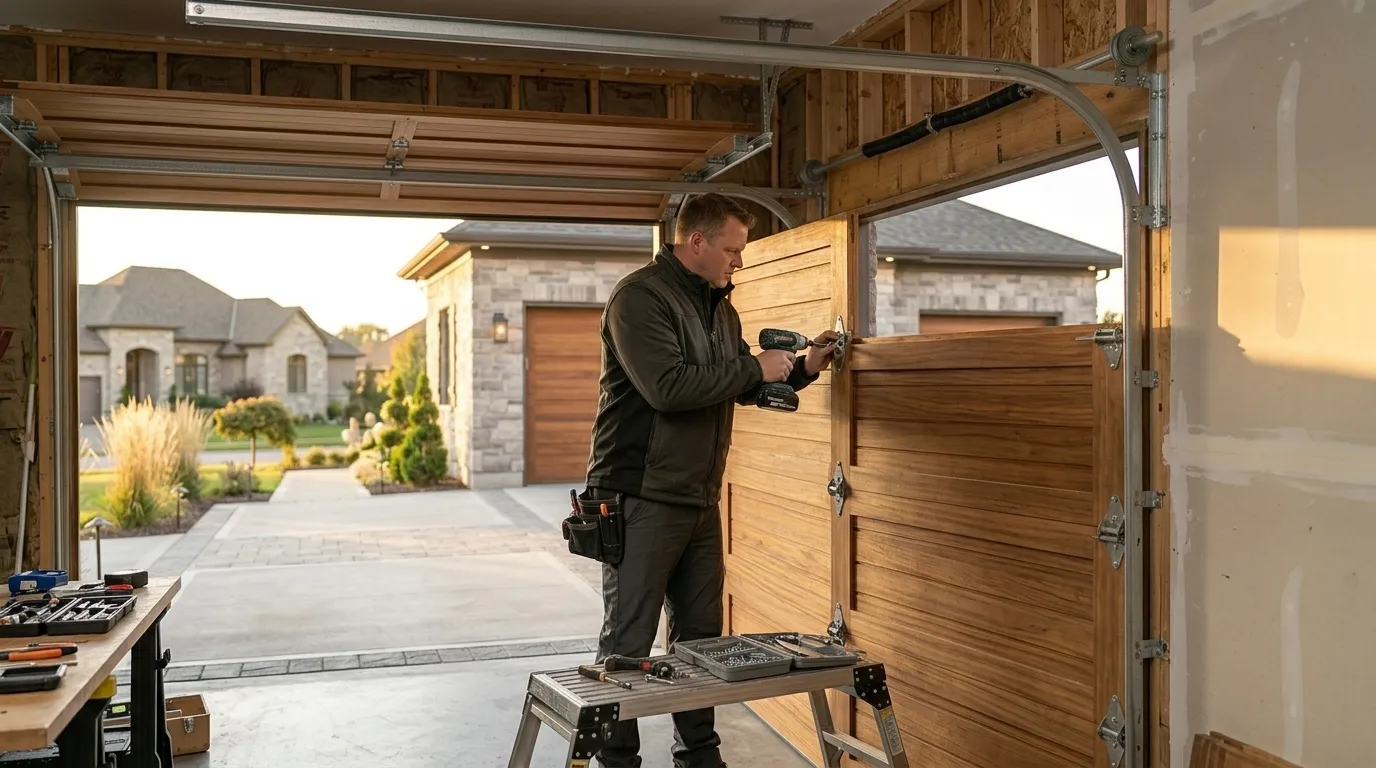
Recent work from this service line.
Other Ways We Can Help
Frequently Asked Questions
How do I know if I need a new door or just a repair?
If the door is original to a home built in the 1958-2003 range common around Oswego, has no insulation, or the panels are dented and the steel is thinning, repair usually just delays the same call. A cracked panel on an otherwise sound, newer door is a different story - that's often a repair, not a replacement.
Will a new insulated door fix a cold garage?
It helps a lot, especially against Oswego's severe cold winters, but it's not a complete fix if the garage walls and ceiling aren't insulated too. We'll tell you honestly what a new door will and won't change before you buy one.
Do you match the door to my house's age?
Yes. Openings in Oswego vary by build era - houses from the late 1950s through the early 2000s were framed differently. We measure your actual opening and headroom rather than assuming a standard size fits.
What if my opener can't handle a new insulated door?
Insulated steel doors weigh more than the old single-layer doors many Oswego garages still have. If your current opener can't lift that weight safely, we'll flag it and price the opener upgrade separately rather than installing a door your opener can't run.
Need Garage Door Installation for Oswego Homes?
Call now for straight answers on cost and timing.