
Oswego Garage Door Guide
What That Sound Coming From Your Garage Door Actually Means
Oswego houses built 1958-2003 run original hardware through severe cold winters. Here's what each garage door noise actually means before something fails.
- Licensed & Insured
- Same-Area Service Calls
- Upfront Pricing
How Local Conditions Play In
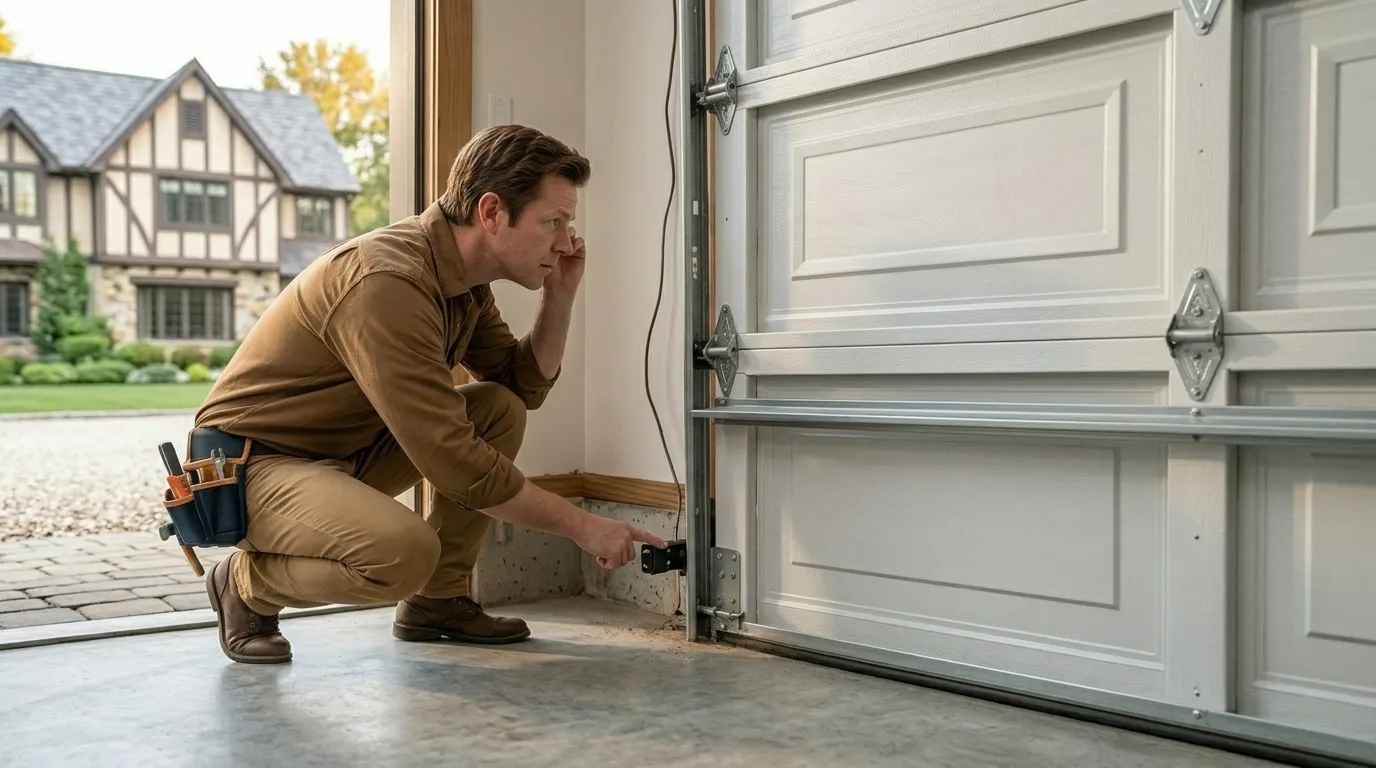
Most houses in Oswego went up between 1958 and 2003, with the typical one dating to around 1986. That puts a lot of openers, springs, and track hardware on the far side of thirty years old, original to houses that have never had a reason to touch them until something starts making noise. Age alone doesn't cause a sound.
What causes it is age plus a Fox Valley winter that swings the inside of an unheated garage from something close to 60 degrees down into single digits overnight. Steel contracts. Track brackets that were snug in August work loose by January.
A torsion spring that's been carrying the same double-car door since the house was built starts to fatigue right around the point most of this town's stock is at now. So when a door here starts to bang, pop, or groan, it's rarely random. It's usually the predictable result of original 1980s-and-90s hardware meeting a cold snap it's weathered thirty winters in a row, and this is the one it finally complains about.
That's the frame for everything below: the noise is data, not just annoyance, and where it happens on the door tells you what part is losing the fight.
What to Look At First
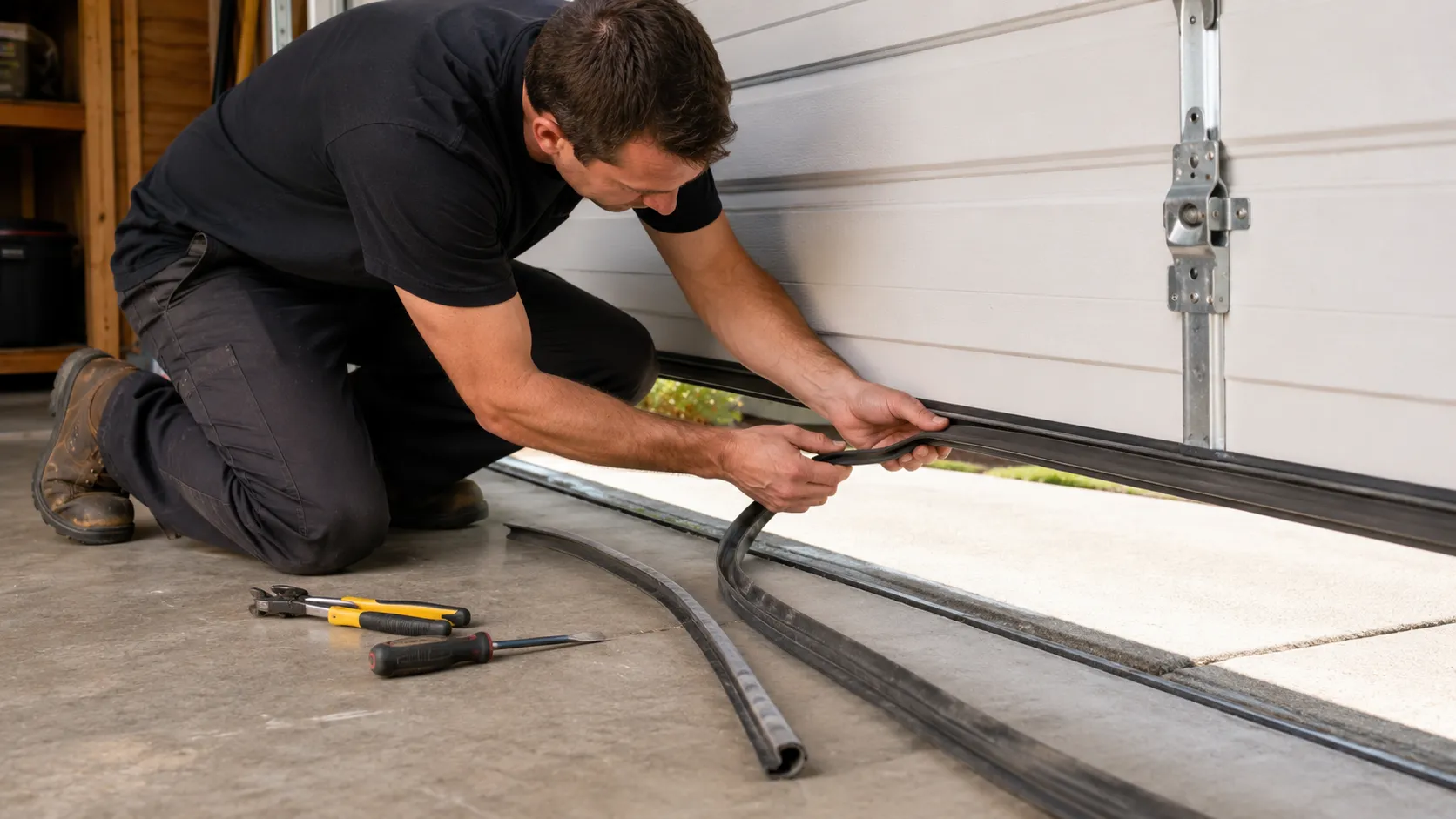
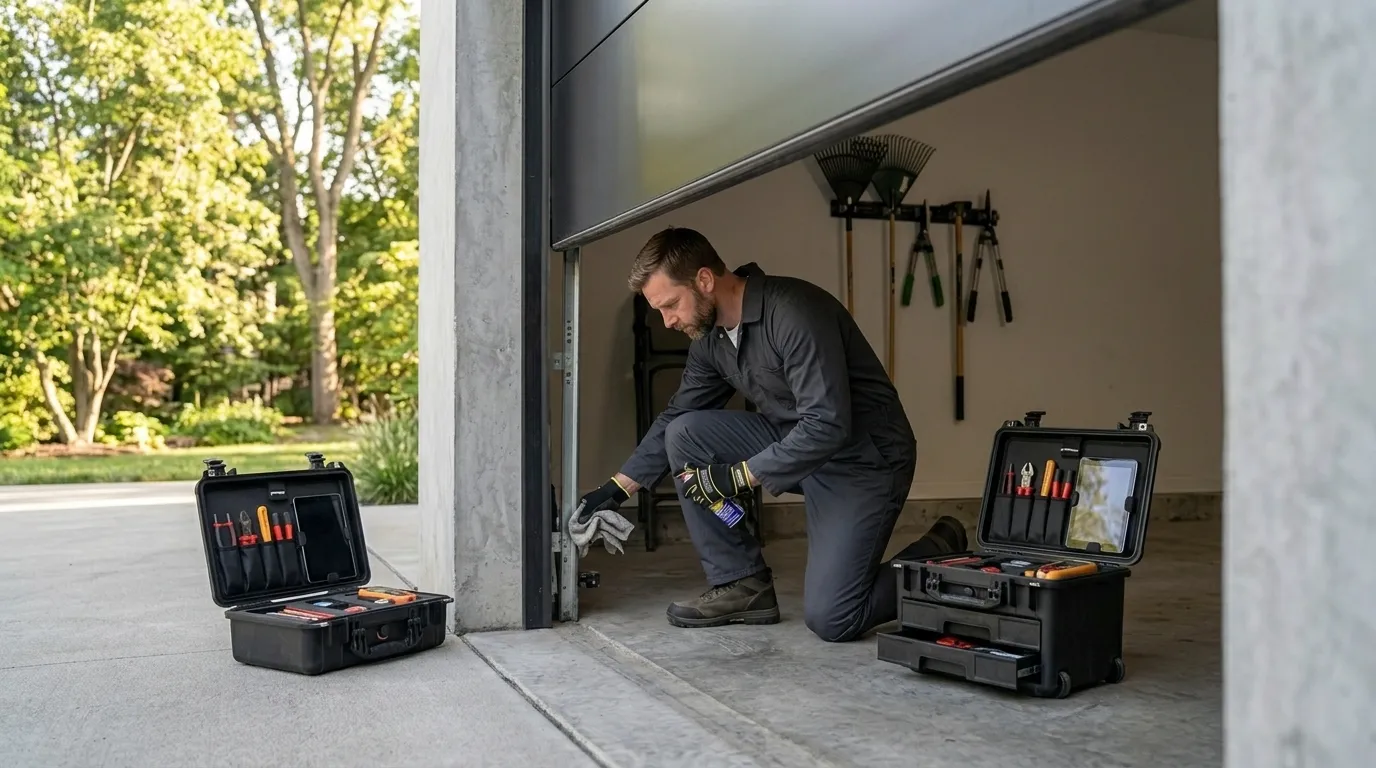
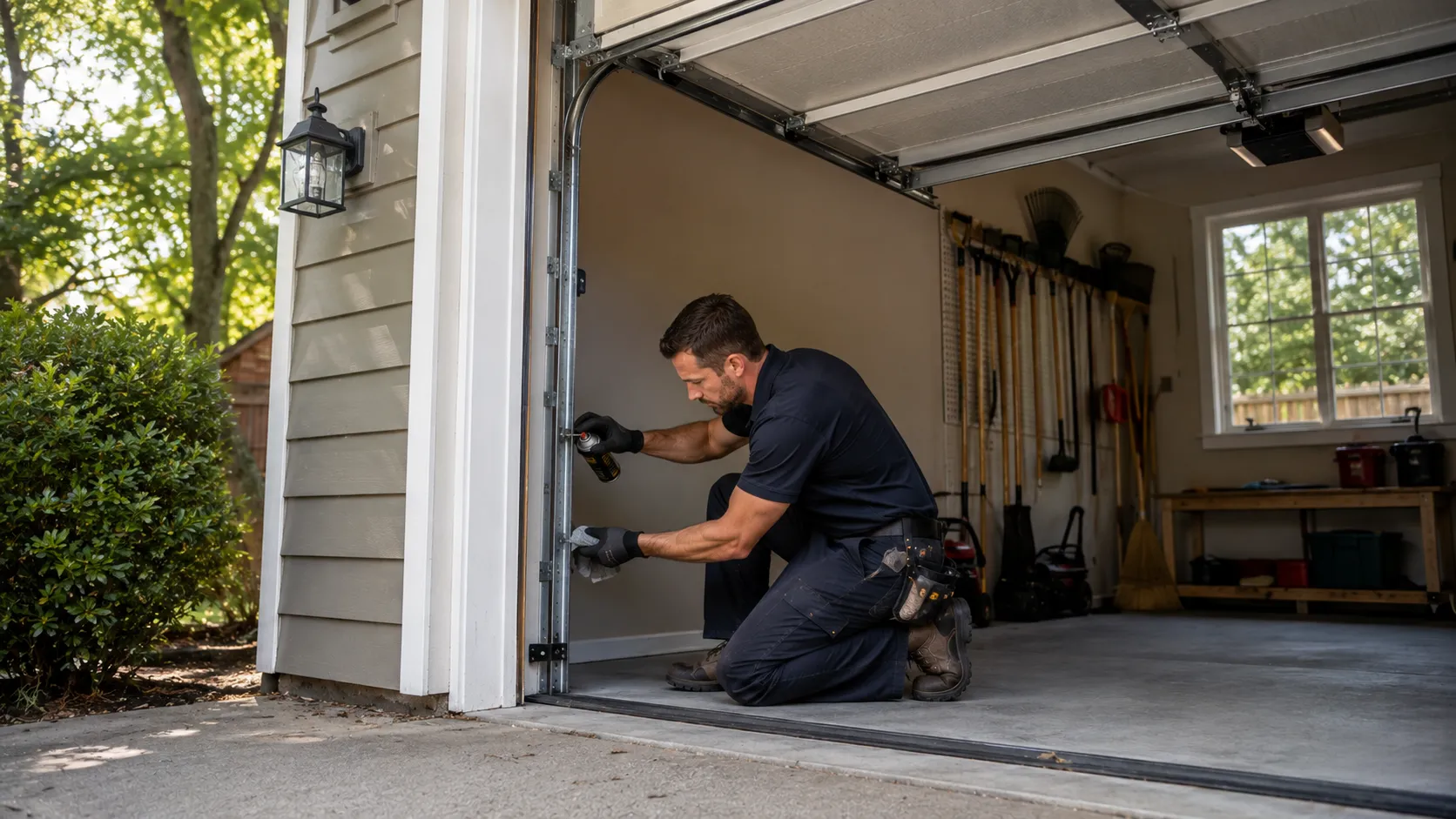
Start at the rollers, because a house built in the stretch this town's stock comes from almost always shipped with steel rollers on steel track, not nylon. Steel-on-steel is where a lot of grinding and rattling comes from, and it gets louder, not quieter, as the metal wears. Run the door by hand partway (power off) and listen for where the sound changes - a rhythmic clunk every few feet usually means a bent track section or a roller that's flat-spotted, not the spring.
A single loud bang, usually paired with the door refusing to move afterward, is almost always a broken torsion spring, and that's not a lubrication job - that's a same-day call. A high-pitched squeal that comes and goes with temperature is often just a dry hinge or roller stem, and that one you can fix yourself with the right lubricant before it becomes anything else. What you're listening for is location and pattern: top of the door versus bottom, constant versus intermittent, getting worse over weeks versus showing up out of nowhere.
That distinction is what separates a five-minute fix from a hardware replacement, and it's worth ten seconds of standing still before you assume the worst.
The Situation
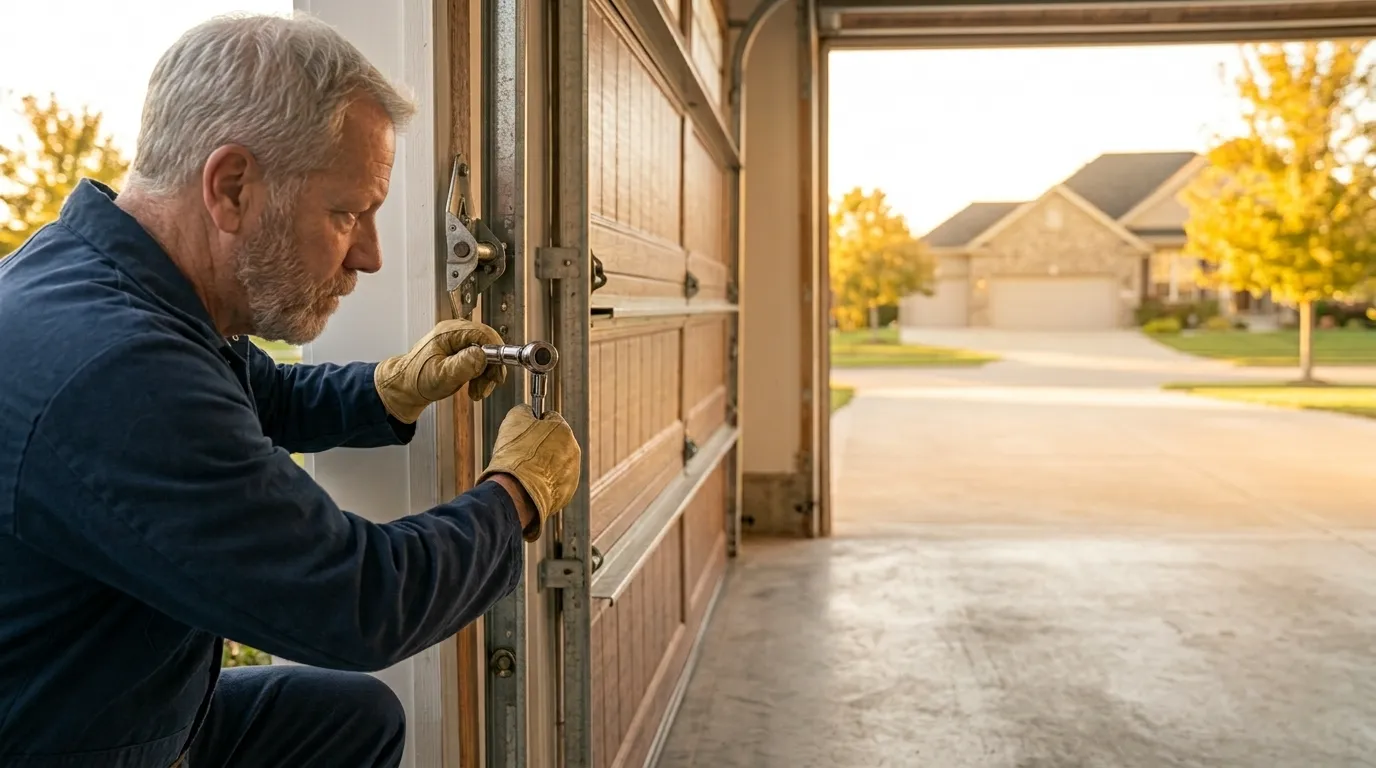
Across the roughly 97,000 owner-occupied houses in this part of the Fox Valley, the door stock skews heavily toward that same 1980s and 90s construction window, and household income here runs a median of $109,064 - high enough that a lot of these houses carry insulated steel double-car doors rather than lighter single panels. Insulated sections weigh more, which means the torsion springs sizing them were calculated for that extra weight from day one. When a spring on one of these heavier doors starts to go, the sound and the failure mode are more sudden than on a lighter single door - less gradual creak, more abrupt bang.
That matters because a homeowner who's used to hearing about garage door trouble from a friend with a smaller single-car door may not recognize how fast a heavier insulated double door can go from noisy to stuck. We won't pretend every noisy door needs a truck out that day - plenty resolve with lubrication and a tightened bracket. But on the heavier doors common to this stock, a new noise is worth checking sooner rather than later, because the failure when it comes tends to be immediate rather than a slow decline you can plan around.
Season by Season
Late fall through winter is when this town's doors talk the most, because the climate here runs into the severe end of the cold band and that's exactly when steel hardware contracts and clearances change. Expect the first cold-snap noises in November - track brackets settling, springs sounding stiffer on the first cold morning after weeks of mild weather. Deep winter is when a fatigued spring is most likely to actually let go, since cold steel is more brittle than warm steel and the extra tension needed to lift a heavier door in the cold is the last straw for hardware already near the end of its life.
Spring thaw brings its own sound: moisture and temperature swings can make a garage floor shift slightly, which throws track alignment off by a fraction of an inch - enough to produce a scraping sound that wasn't there in January. Summer is the quiet season here, mechanically speaking, which is also the best time to get ahead of a spring or roller that's been complaining since winter, before the next cold stretch turns a manageable noise into a door that won't open at all.
How We Can Help
Garage Door Repair
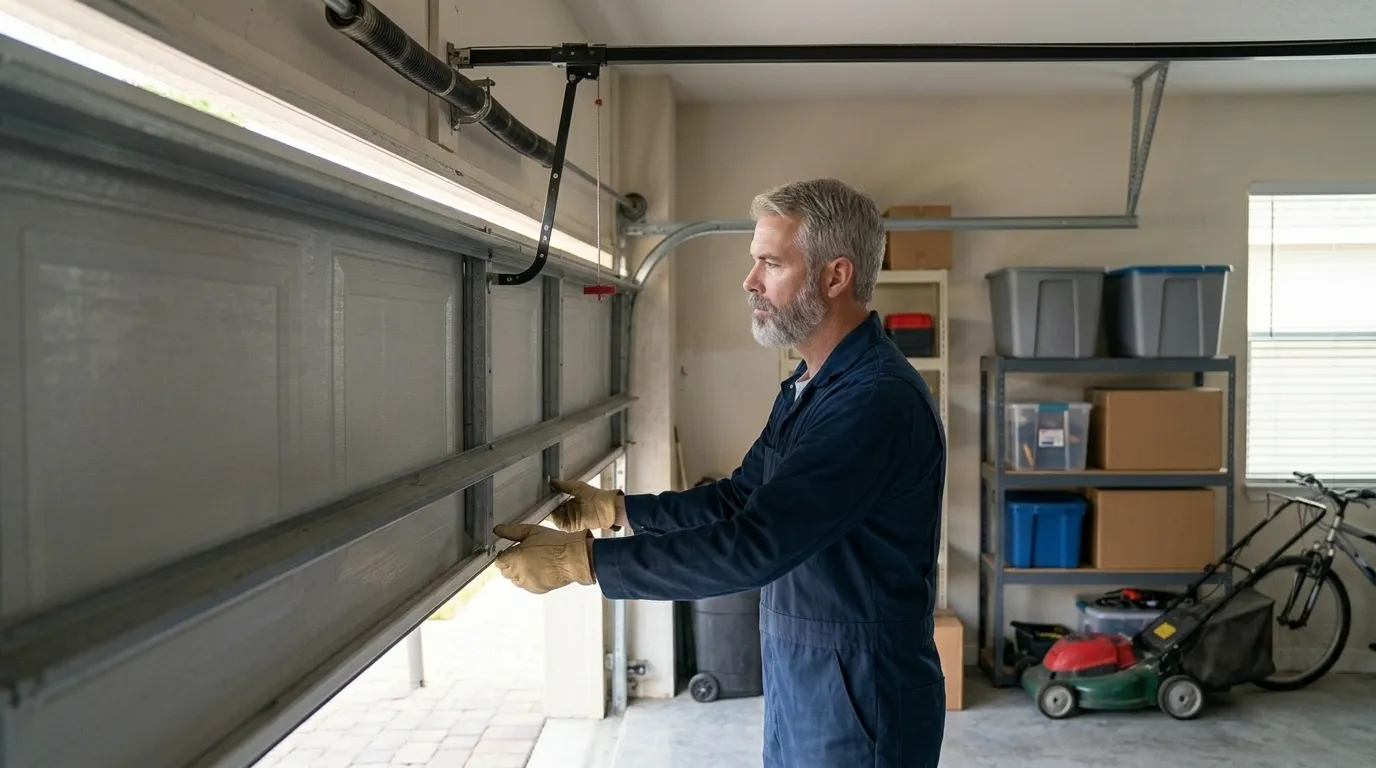
Springs, cables, tracks, rollers, and openers fixed by a tech who explains the problem before touching anything.
Learn more →
Garage Door Installation
New sectional doors sized and installed for the housing stock actually built in this area.
Learn more →
Garage Door Service
Tune-ups, lubrication, and safety checks that catch a small problem before it becomes a service call.
Learn more →Frequently Asked Questions
Why does my garage door only make noise in the winter?
Cold contracts steel. Track brackets, hinges, and springs that have a little play in warm weather tighten up or lose alignment when temperatures drop into the severe cold range this area sees, so noises that never happened in July show up the first hard freeze of the year and often get worse through deep winter.
Is a loud bang always a broken spring?
Usually, yes, especially on the insulated double-car doors common in houses built in this town's 1980s-and-90s window. A single loud bang followed by the door refusing to move is almost always a torsion spring letting go. If the door still moves after the bang, it's more likely a bracket or track issue.
My door just squeals a little - do I need to call someone?
Not necessarily. A squeal that changes with temperature is often just a dry hinge or roller stem, which you can usually fix yourself with the right lubricant. Call if the sound turns into a grind, a clunk that repeats every few feet, or a bang - those point to worn steel rollers or a failing spring.
How old does a door have to be before noise means real trouble?
A lot of the hardware in Oswego is original to houses built between 1958 and 2003, with the typical house dating to around 1986. Hardware in that age range - roughly thirty to sixty years old - has usually outlived its rollers and is approaching the end of life for its original springs, so new noise on an old door deserves attention sooner than on a newer one.
Have a Door That Needs a Second Opinion?
Call and describe what it is doing - we will tell you what it likely is.