
Oswego Garage Door Guide
Is Your Oswego Garage Door Worth Repairing, or Time to Replace?
Oswego houses built between 1958 and 2003 often have original doors and hardware that predates modern code. Here's what's worth repairing, and what isn't.
- Licensed & Insured
- Same-Area Service Calls
- Upfront Pricing
How Local Conditions Play In
Most houses in the Oswego service area went up between 1958 and 2003, with the median landing around 1986, which puts a lot of original torsion hardware right at the edge of its service life. A spring or opener installed when a house was built in the mid-80s has had close to forty winters of cycling on it, and this area sits in a cold-severe climate band, so a torsion spring rated for a milder region gets cycled harder here every winter. Cold makes steel brittle and grease stiff, and it's usually the reason a marginal spring finally lets go on a January morning instead of a mild October afternoon.
That combination - an aging house and a hard winter climate - is the whole reason "is it worth fixing" is even a real question here instead of an easy yes. On a newer door with a five-year-old opener, you fix the part and move on. On a door that's been through three decades of Illinois winters, you have to ask whether the next part is going to fail in six months anyway.
What to Look At First
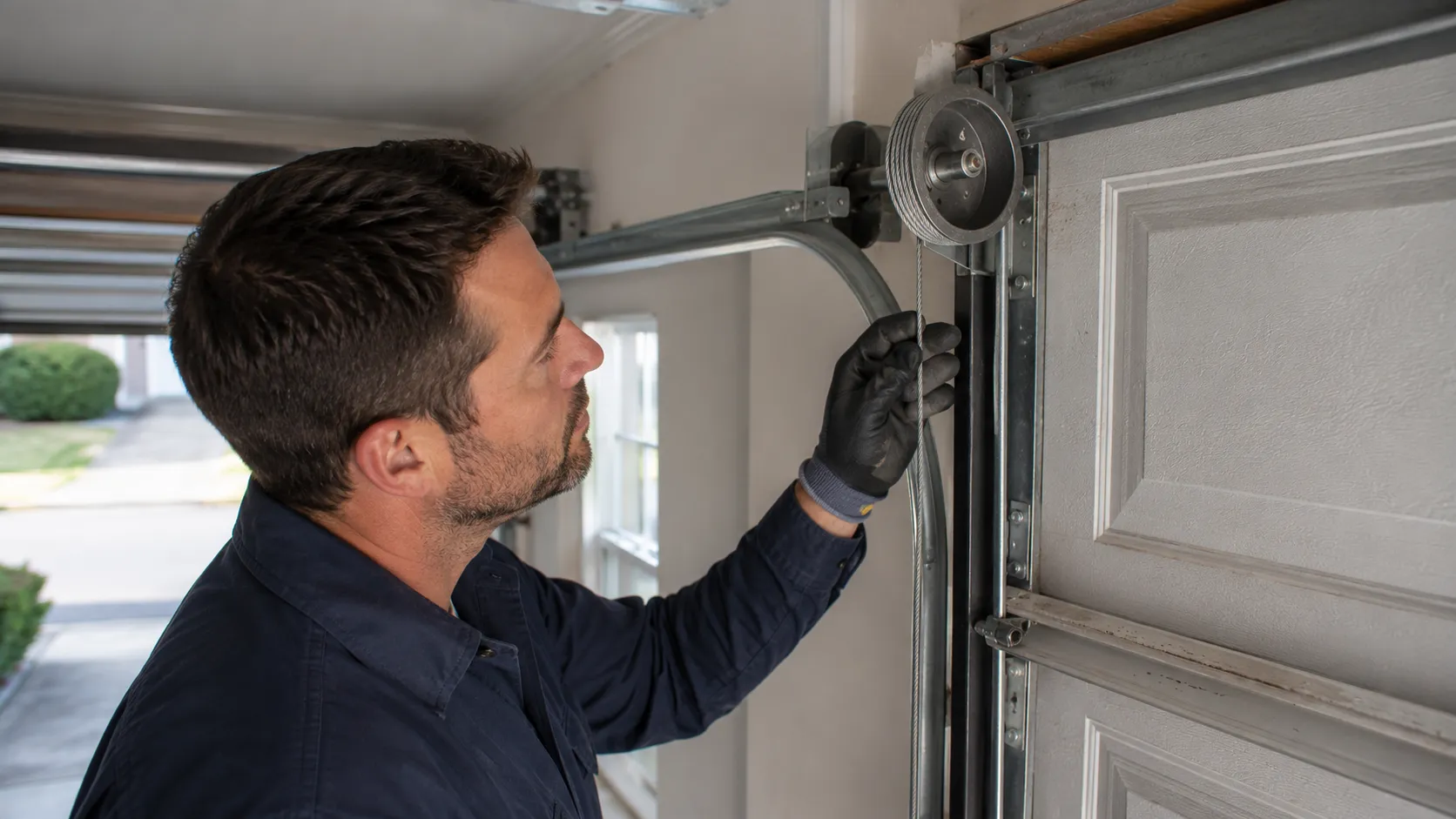
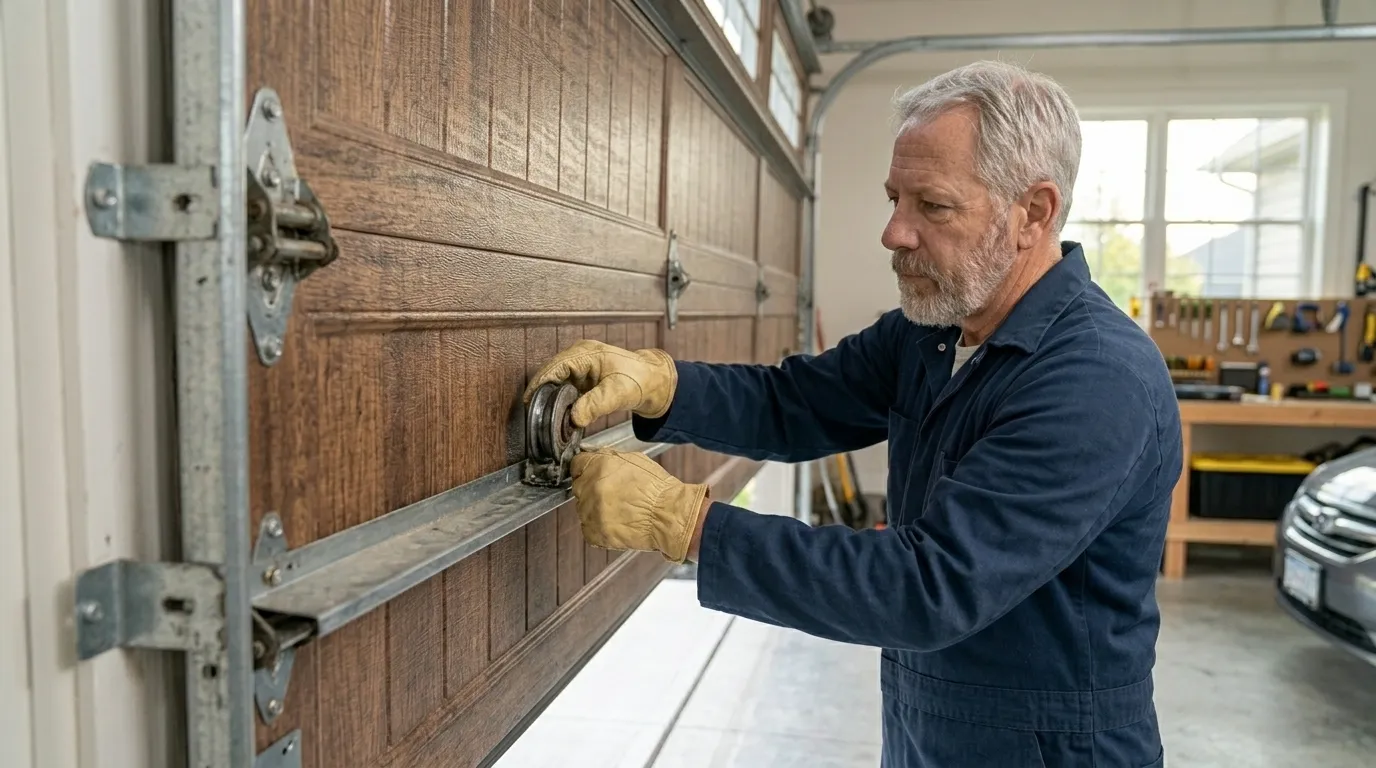
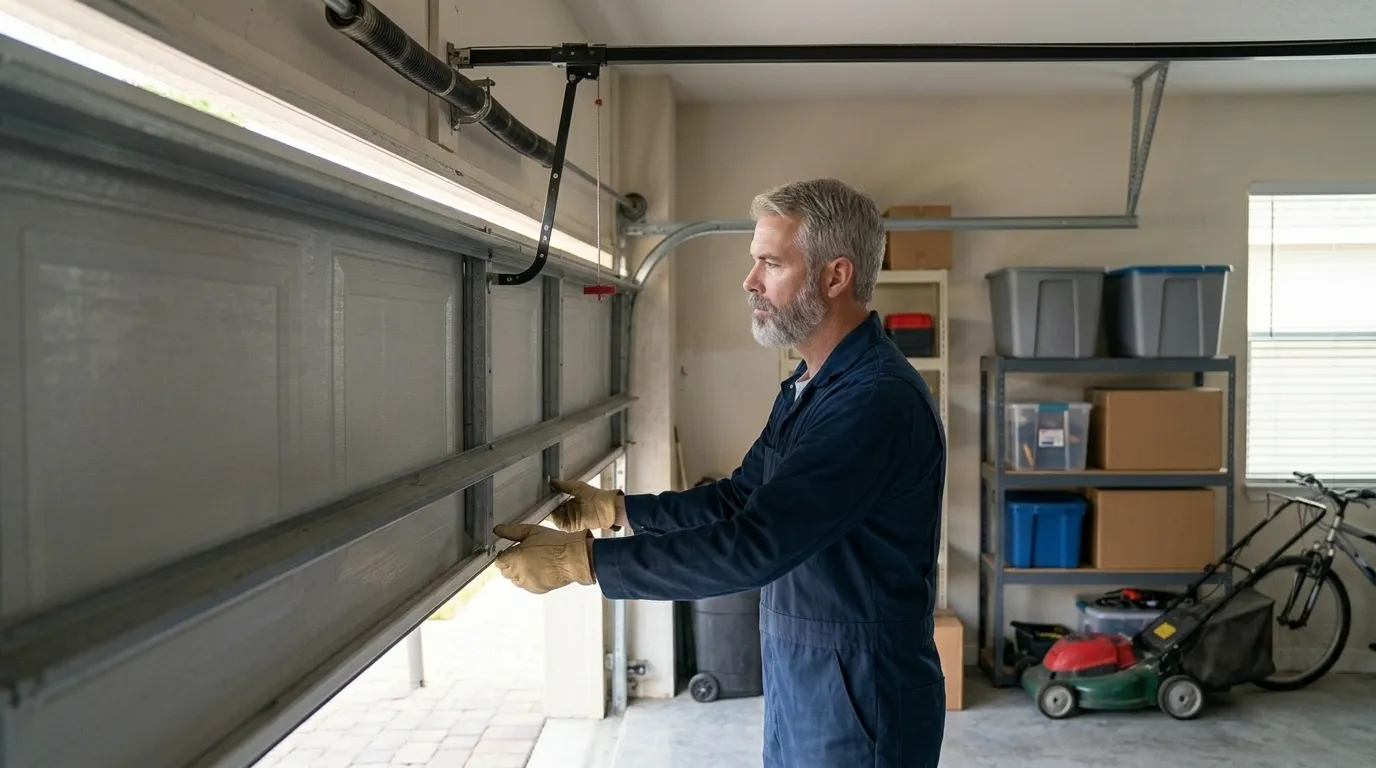
Start with the springs, not the panel. If the door is original to a house from the 60s through the 80s, chances are the torsion spring is the first thing that gives out, and swapping it is usually worth doing on its own - it's a contained job with a known cost. Next look at the track and rollers.
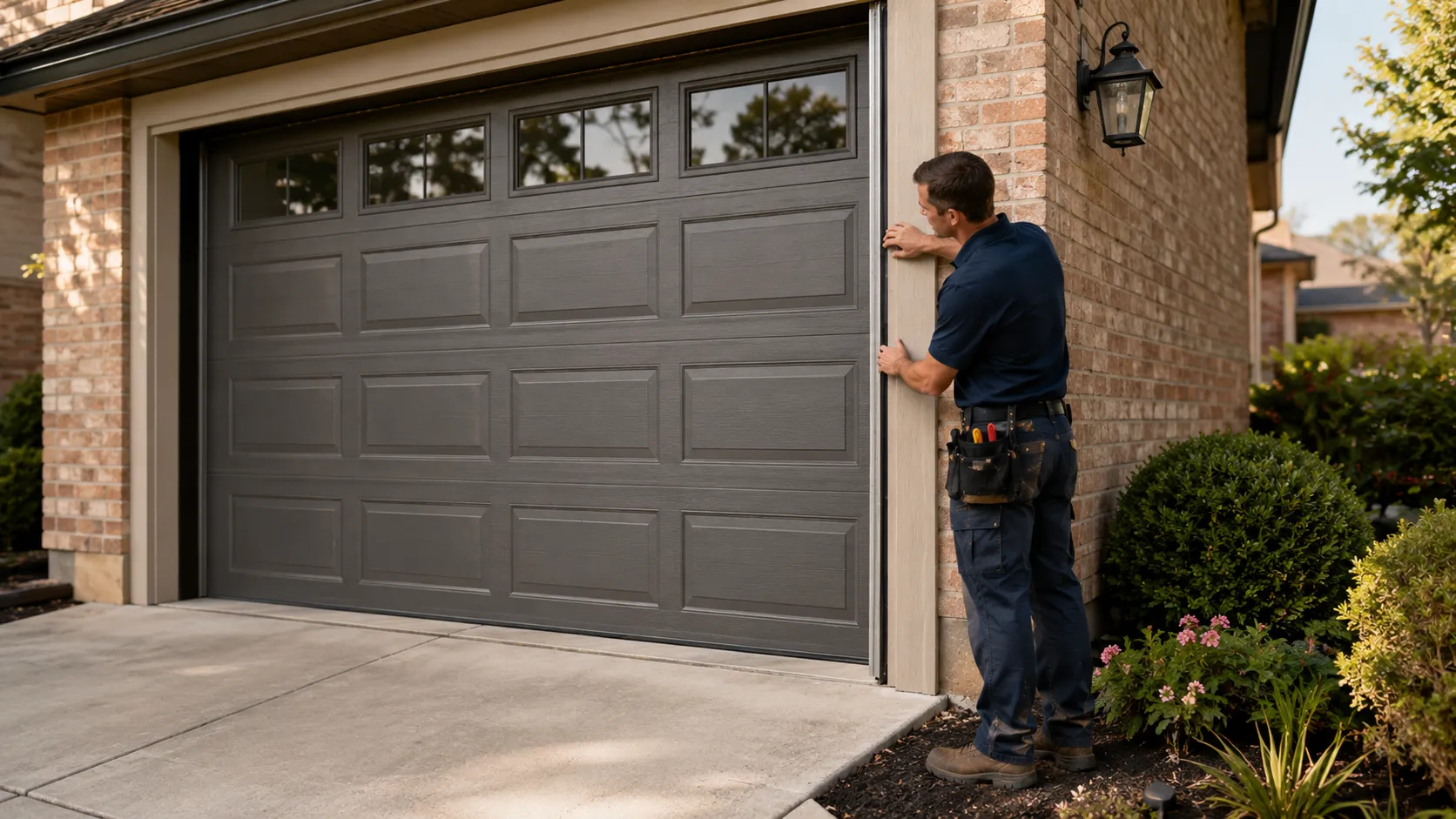
Steel rollers on an older door rattle and wear the track edges over years of cold-weather cycling; plastic or nylon replacements are cheap and often solve noise complaints without touching anything else. The panels themselves are where the math changes. Across the 32 named areas that make up this stretch of the Fox Valley, the bulk of the housing stock is 1980s and 90s construction, and doors from that era are often steel sandwich panels - fixable if only one section is dented, not worth patching if rust has gotten into the seams on more than one panel.
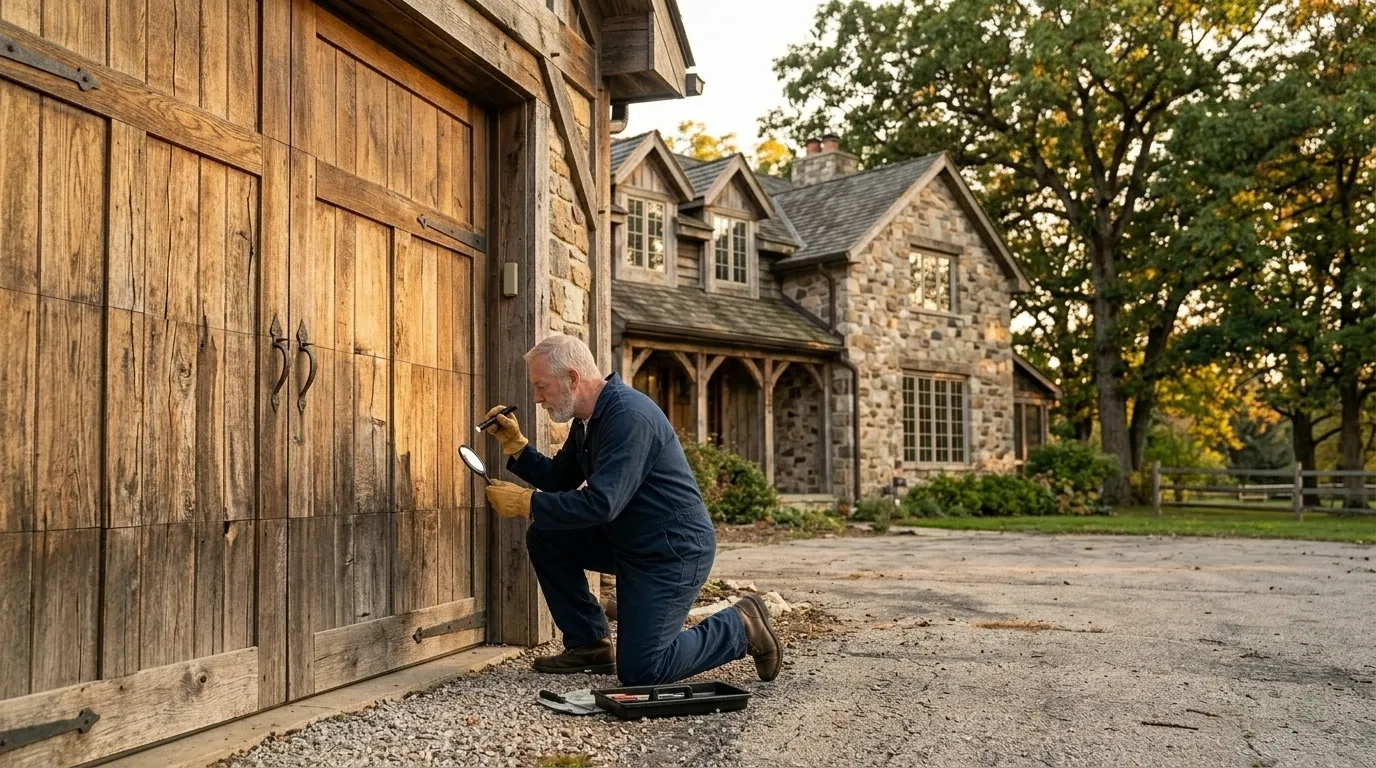
Check the bottom panel first; that's where moisture sits longest and where we see the most rot on older doors.
The Situation
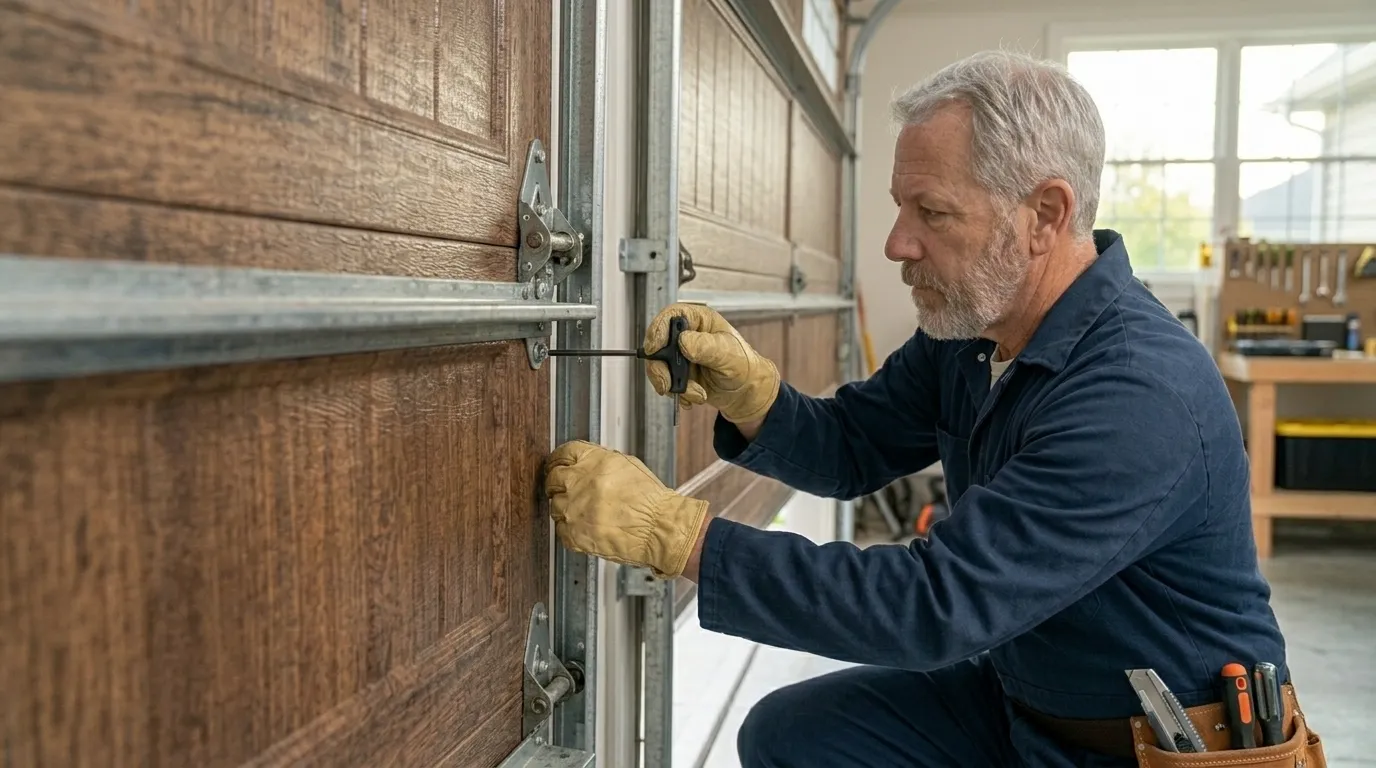
With 96,932 owner-occupied houses out of 175,642 households in this service area, a large share of the doors we look at are original to homes built before 2003, and owners are usually deciding between a repair that buys a few more years and a full replacement that resets the clock. At a median household income of $109,064, most owners here can afford full replacement when the math says replacement wins, but plenty still want the older door fixed if it holds up, and that's a reasonable call when the springs and track are the only things wrong. Where we draw the line: if the opener is original to a house from the 60s or early 70s, parts for it are often no longer made, and chasing a repair on a discontinued unit isn't a good use of anyone's money.
Replacement makes more sense there than a repair that might not hold. We'll tell you straight when that's the case instead of billing for a fix we don't trust.
Season by Season
Winter is when an older Oswego door tells on itself. Cold-severe conditions stiffen lubricant and shrink metal, so a spring that's been marginal all year usually breaks on the coldest stretch, not the warmest. That's also when weatherstripping on a decades-old door shows its age - brittle vinyl cracks and lets cold air and salt spray in under the bottom panel.
Spring and fall are the better time to catch a spring before it snaps, since a technician can hear the extra strain in the opener motor before the coil actually lets go. Summer humidity is easier on hardware but hard on wood-panel doors from the older end of the 1958-2003 range, where swelling and sticking on the track is common. None of this is exotic weather - it's just what four decades of ordinary Illinois seasons do to hardware that was never meant to last that long in the first place.
How We Can Help
Garage Door Repair
Springs, cables, tracks, rollers, and openers fixed by a tech who explains the problem before touching anything.
Learn more →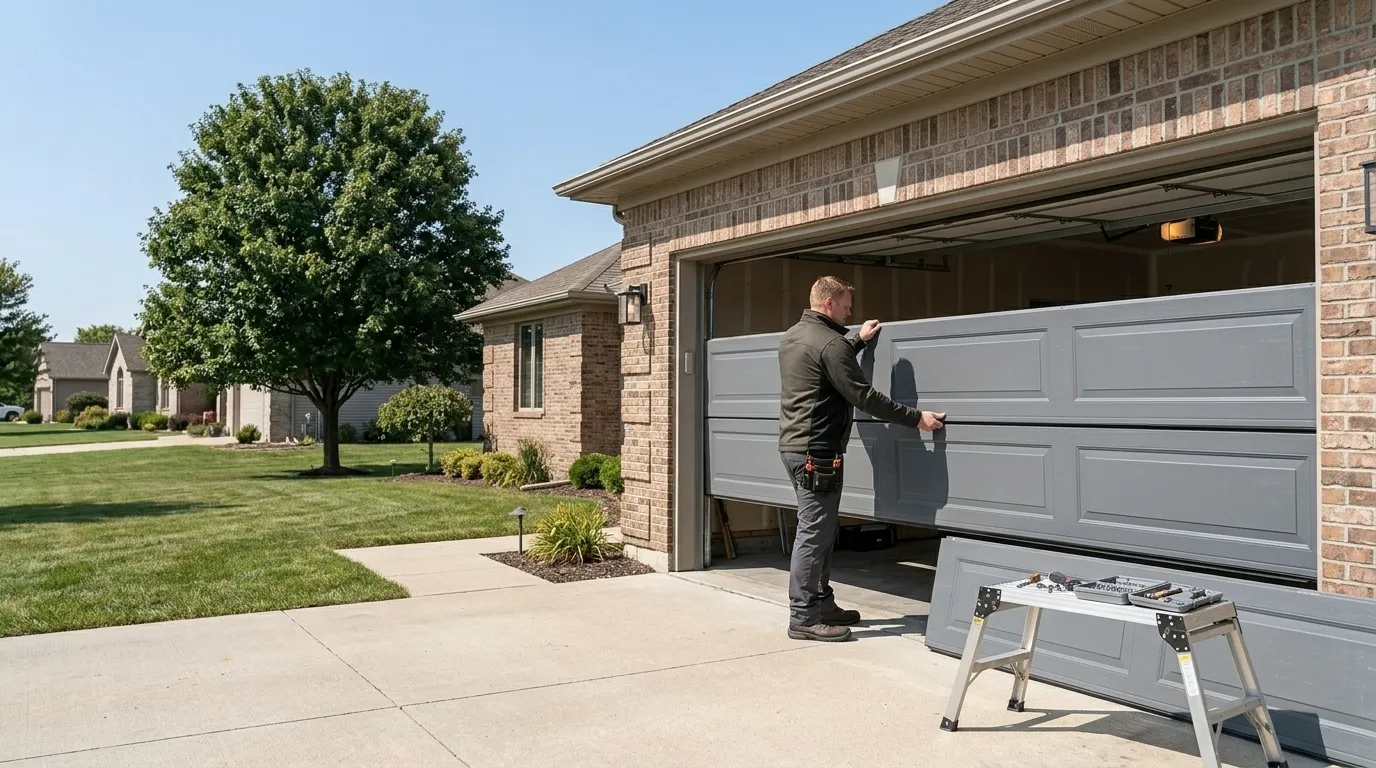
Garage Door Installation
New sectional doors sized and installed for the housing stock actually built in this area.
Learn more →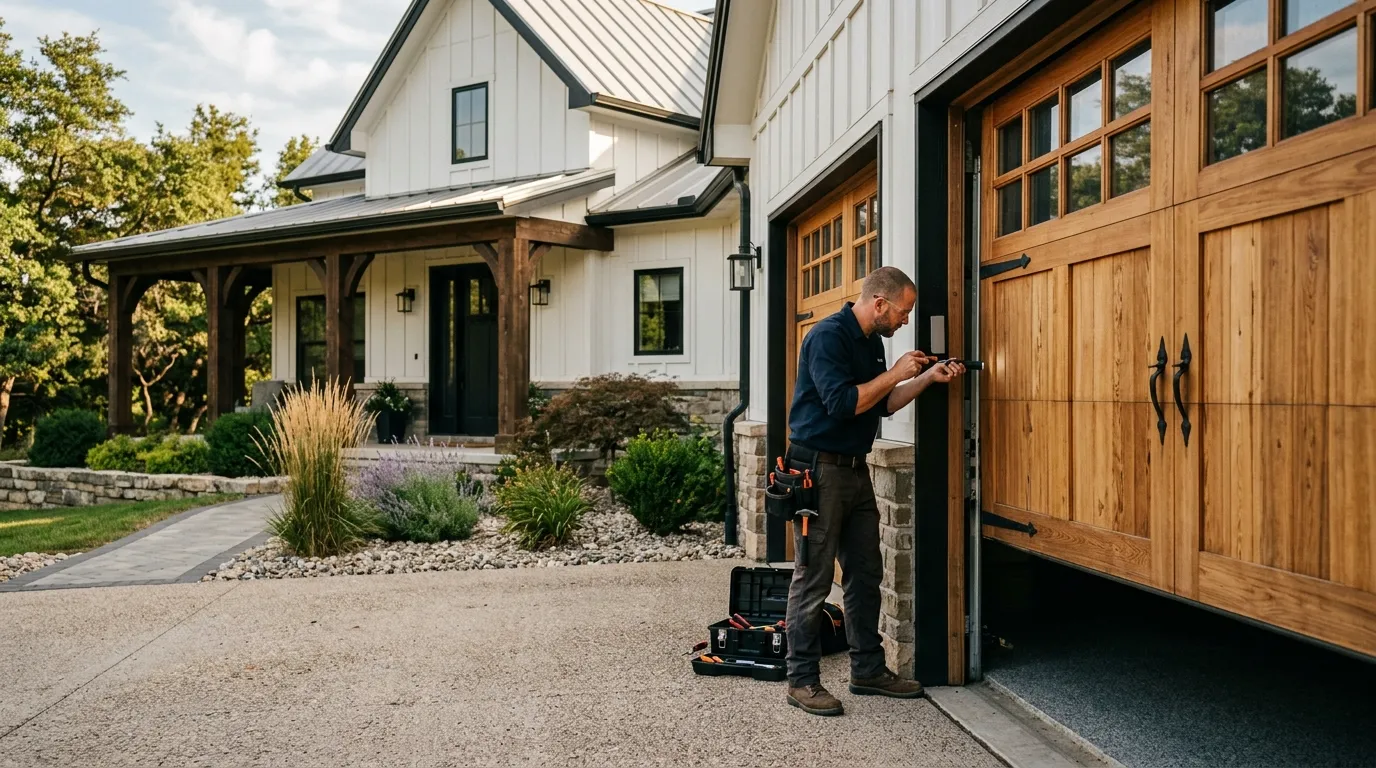
Garage Door Service
Tune-ups, lubrication, and safety checks that catch a small problem before it becomes a service call.
Learn more →Frequently Asked Questions
My house was built in the 1980s - is the original spring still safe to use?
Not usually. Torsion springs are rated for a set number of cycles, typically somewhere around 10,000, and a door original to a 1980s Oswego house has usually blown well past that. Combined with cold-severe winters putting extra strain on the coil, we'd expect that spring to be near or past its working life regardless of how it looks.
Is it worth fixing a dented steel panel on an older door?
If it's one panel and the steel hasn't rusted through, yes - a single panel swap is a contained repair. If rust has spread along the seams of more than one panel, which we see often on doors from the earlier end of the 1958-2003 housing range, patching one spot just delays a replacement you'll need soon anyway.
Do you replace opener parts on very old units?
We will if parts exist for it, but openers original to houses from the 60s and early 70s are often discontinued, and we won't bill you for a repair we don't expect to hold. In that case replacement is usually the more honest answer.
Have a Door That Needs a Second Opinion?
Call and describe what it is doing - we will tell you what it likely is.