
Service
Garage Door Service for Oswego's Older Housing Stock
Cold-weather garage door repair for Oswego's 1958-2003 housing stock. We fix stuck doors, dead openers, and worn springs built for a different decade.
- Licensed & Insured
- Same-Area Service Calls
- Upfront Pricing
The Symptom
The door gets heavy in January. It opens partway and stops, or the opener strains and reverses itself halfway down.
Sometimes it just sits there making a grinding noise and going nowhere. Homeowners usually notice it first on the coldest morning of the year, right when they need to leave for work.
This isn't random bad luck. In Oswego, most of the doors we get called out on were installed when the house was built, and most of these houses went up between 1958 and 2003, with a heavy concentration in the 1980s and 90s. That means a lot of torsion springs and openers are pushing three, sometimes four decades of Illinois winters.
Steel fatigues. Lubricant gums up in the cold. A spring rated for a certain number of cycles doesn't care how gently you've used it - it just wears down, and it tends to let go on the coldest day, not the mildest one, because cold steel is stiffer and takes more force to move.
If your door has gotten noticeably harder to lift by hand over the last year, that's the same failure showing up before the spring actually snaps.
What Causes It Around Here
Two things stack on top of each other in this town. First, the age of the housing.
With most homes dating to the 1980s and 90s, a large share of Oswego's garage doors are running original or first-replacement hardware that predates a lot of the corrosion-resistant coatings and better opener sensors that are standard now. Second, the climate band here is classified as severe cold, which means real freeze-thaw cycling every winter, not just a handful of cold snaps.
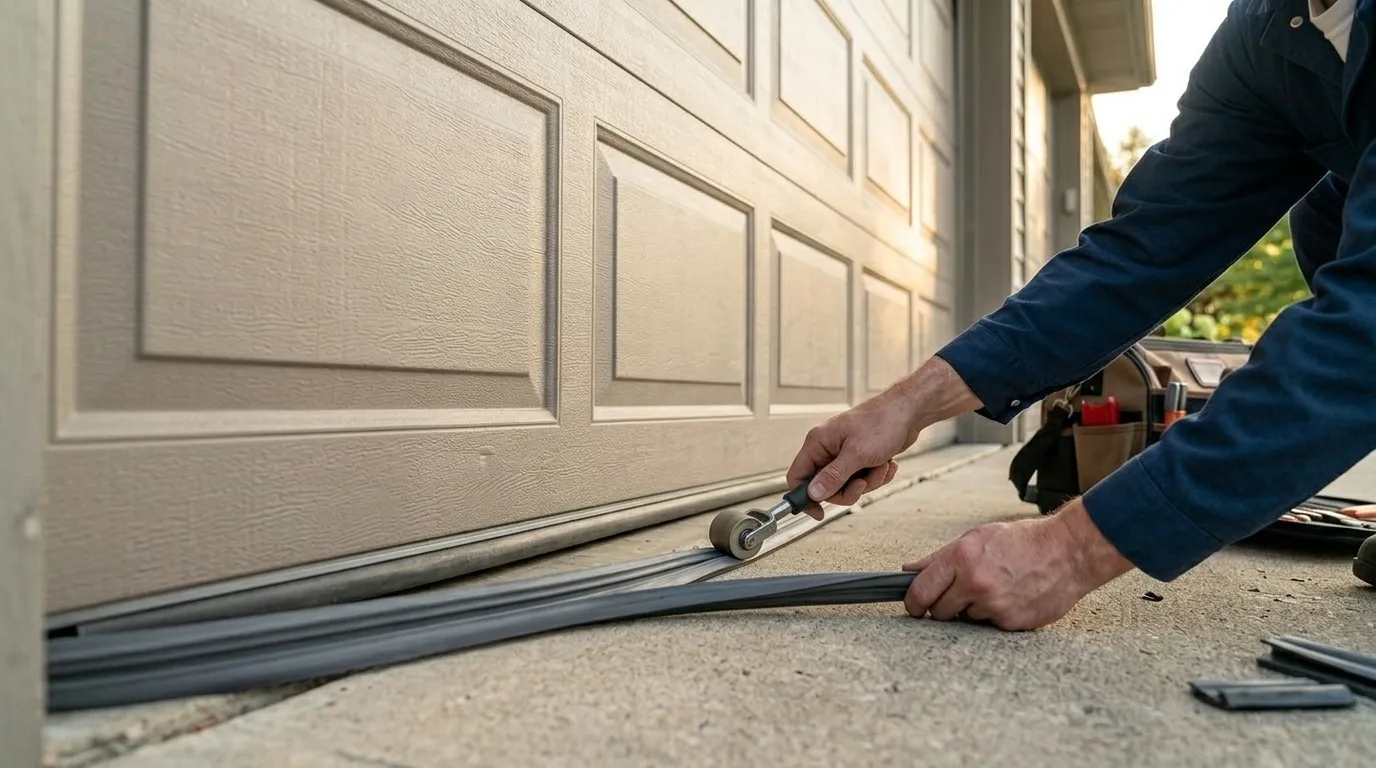
Cold steel contracts and gets brittle at the microscopic level where a spring has already been stressed by years of cycling. Old grease thickens and stops doing its job right when the door needs it most. Weatherstripping from that era wasn't built with the sealing standards used today, so cold air gets into the track channel and stiffens everything further.
None of this is a manufacturing defect - it's just what happens when 1980s-built hardware meets another Illinois winter. We see the same pattern across the older sections of town, not the newer builds.
How We Fix It
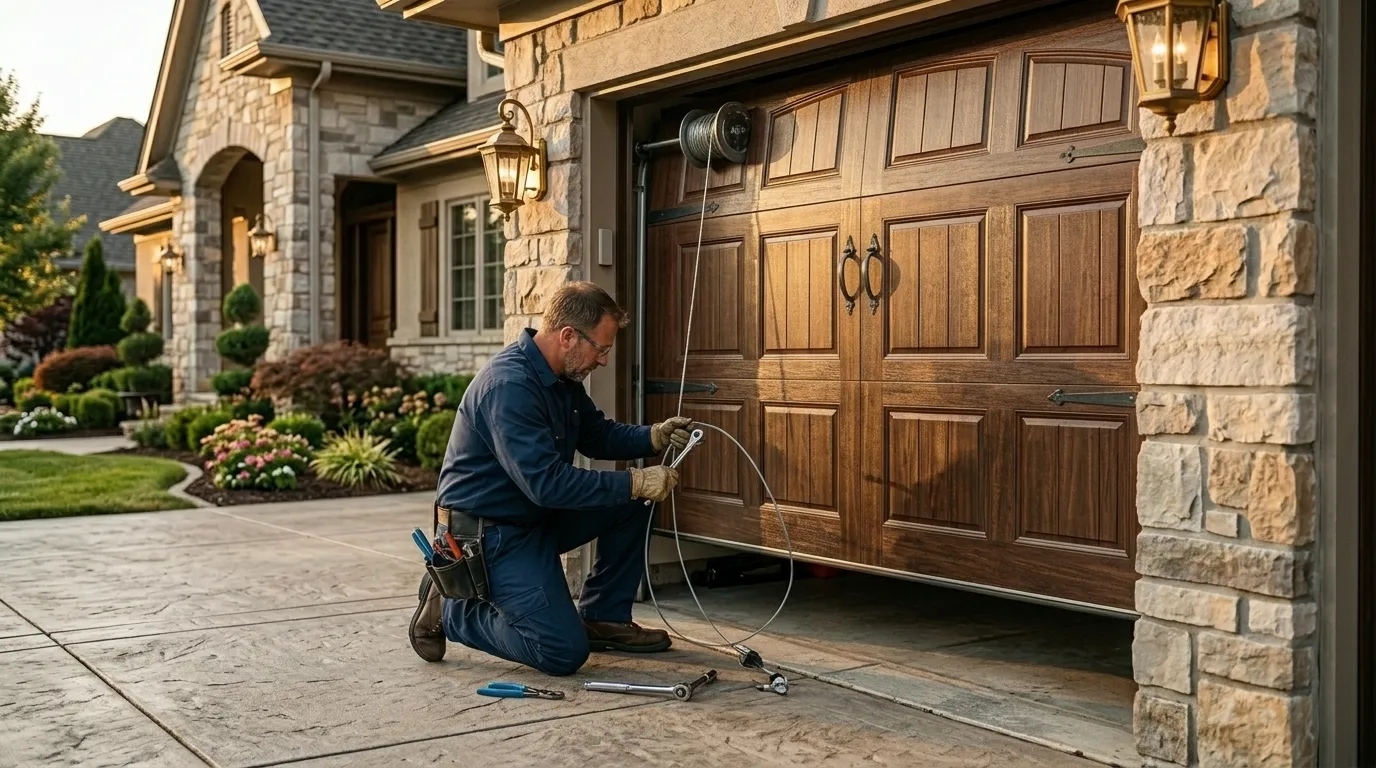
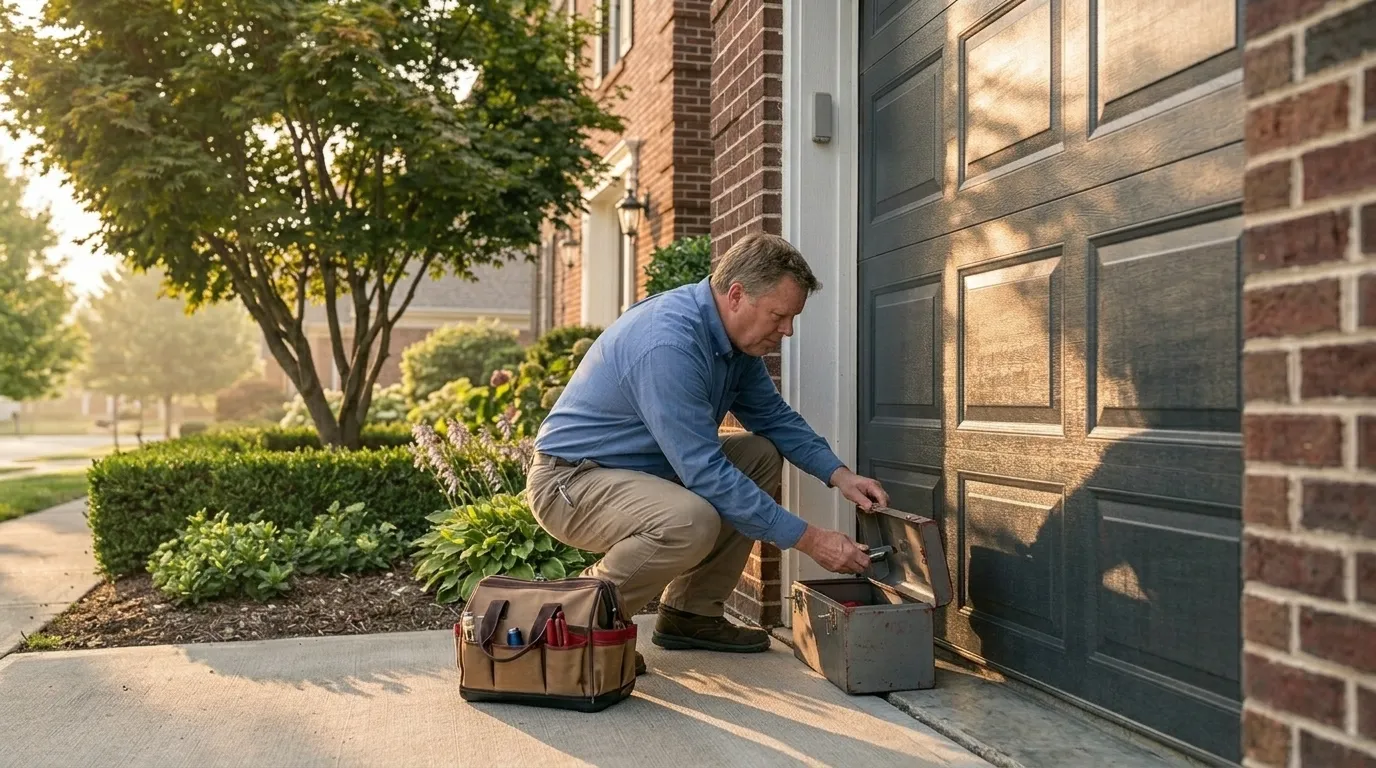
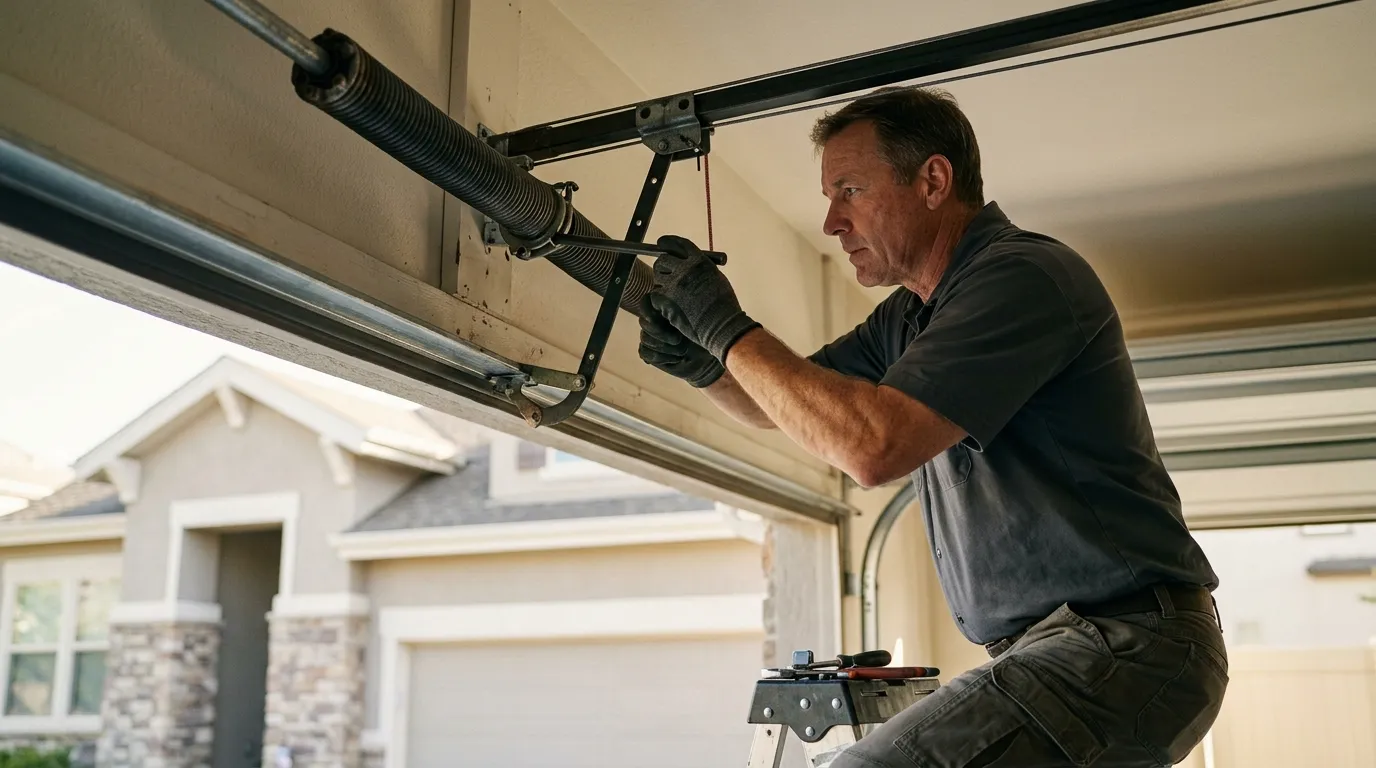
For most stuck-in-the-cold calls, the fix starts with the spring. If it's original to a house built in the 1980s or 90s, we replace it rather than patch it - a spring that old has usually used up most of its rated cycles even if it hasn't snapped yet. We check torsion balance on both sides, not just the one that's obviously failing, since original installs from that era often paired springs and one side is usually not far behind the other.
We also inspect the opener's force settings and sensors. A lot of the reversing-halfway problem isn't the door at all - it's an opener compensating for the extra resistance of a stiff, cold-hardened door and misreading it as an obstruction. Rebalancing the door mechanically usually fixes that without touching the opener itself.
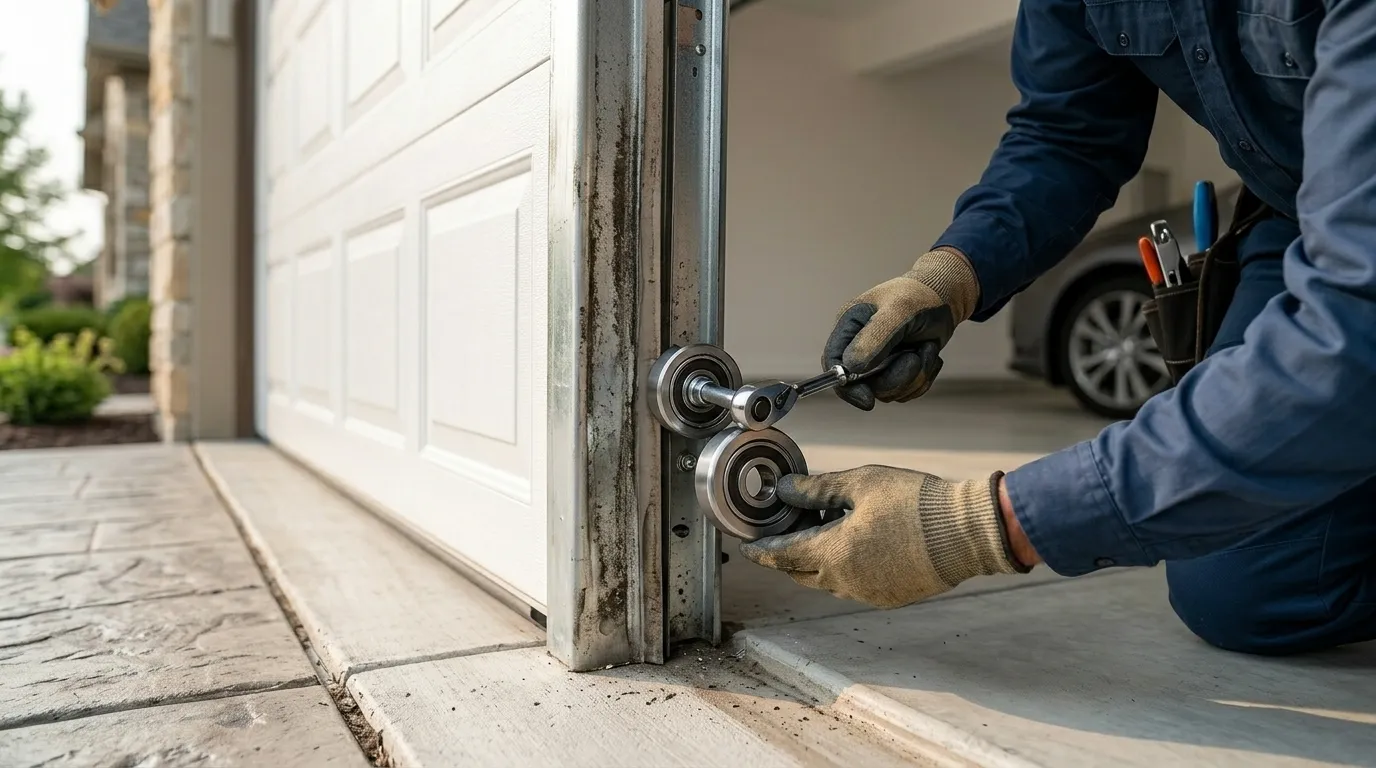
Last step is the track and rollers - cold makes old rollers brittle, and a worn roller riding in a track that's picked up rust over the decades is what causes the grinding noise. We clean, align, and replace rollers where needed rather than just spraying lubricant and calling it done.
The Complications
Not every job is a straightforward spring swap. Some Oswego garages from the 1958-2003 build window used door widths or track configurations that aren't common sizes anymore, and matching panel color or profile on a partial replacement can mean a longer wait on parts than a same-day fix. We'll tell you upfront if that's the case rather than promising a part we don't have on the truck.
There's also a point where repair stops making sense. If the door itself has warped panels, delaminated insulation, or a track that's rusted through in more than one spot, patching the spring and rollers just delays a bigger failure. On a door pushing 35 or 40 years old, we'll be straight with you about whether you're fixing it or replacing it - throwing new hardware on an old, tired door isn't a good use of your money.
One more limitation worth naming: we diagnose and fix the mechanical system, not structural garage issues like a settling slab or a sagging header. If the door's problem is actually the opening it hangs in, that's a different trade.
Why Oswego Calls Us
What Happens When You Call
Call or Request a Quote
Tell us what the door is doing and roughly how old the house is - that alone points us toward the likely part before a truck leaves.
On-Site Diagnosis
A tech checks the spring, cables, tracks, and opener in person and tells you plainly what is actually wrong.
Straight Price, No Surprises
You get a number before any work starts. It covers parts and labor, nothing added after the fact.
Fixed the Same Visit
Most repairs are done in one trip. If a part needs sourcing, we tell you that upfront instead of guessing.
Talk to a Technician Before You Book
Describe what the door is doing and get a straight answer on what it likely needs.
Jobs Like Yours
Recent work from this service line.
Other Ways We Can Help
Frequently Asked Questions
Why does my garage door only act up in winter?
Cold steel is stiffer and old lubricant thickens, so a spring or roller that's already worn from years of cycling has to work harder to move the door. In Oswego's severe cold climate, that extra strain is usually what pushes an aging spring from weak to broken.
My house was built in the 1980s - is the garage door original?
Often, yes, or it's a first replacement from years back. A lot of Oswego's housing dates from 1958 to 2003, and if nobody's mentioned replacing the spring or opener since move-in, there's a good chance it's original hardware nearing the end of its rated life.
Can you match my door's panel style if I only need part of it replaced?
Sometimes. Older panel styles and colors from the 1980s-90s aren't always in current production, so a partial match can take longer to source than a same-day repair. We'll check availability before we start and tell you honestly if a full replacement makes more sense.
Is it worth repairing a 35-year-old garage door or should I replace it?
Depends on the door. If it's just a spring or roller issue, repair usually makes sense. If panels are warped, insulation's failing, or the track's rusted in multiple spots, you're better off replacing rather than patching an old door piece by piece.
Need Garage Door Service for Oswego's Older Housing Stock?
Call now for straight answers on cost and timing.