
Service
Broken Garage Door Spring? Here's What's Actually Going On
Torsion spring failure follows a pattern in this area's 1958-2003 housing stock and severe cold winters. Here's why it happens and how we fix it right.
- Licensed & Insured
- Same-Area Service Calls
- Upfront Pricing
The Symptom
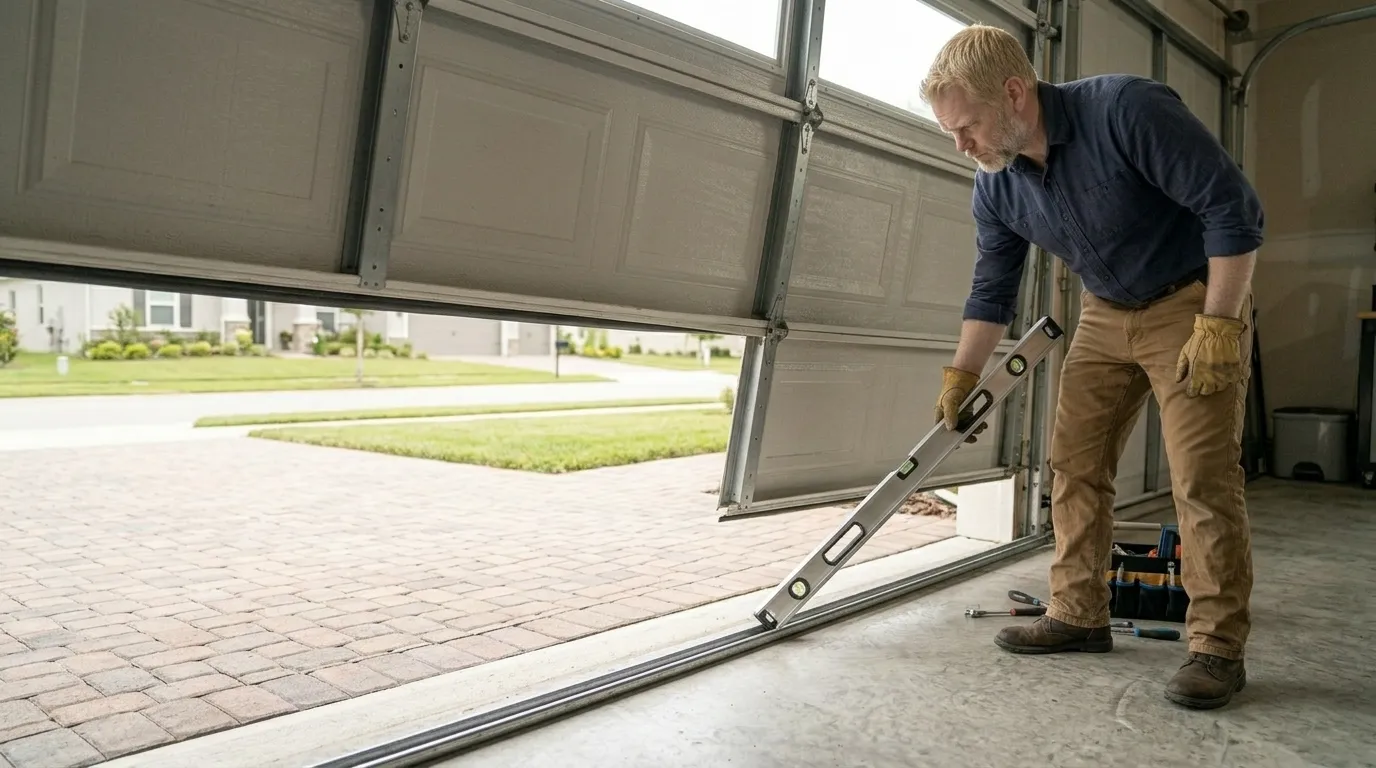
The door feels like it's fighting you. It won't lift past a foot or two, or it slams down faster than it should when you close it.
Sometimes there's a bang first - a sharp crack from inside the garage, usually early morning when the metal is coldest. After that, the opener strains, grinds, or just gives up and reverses.
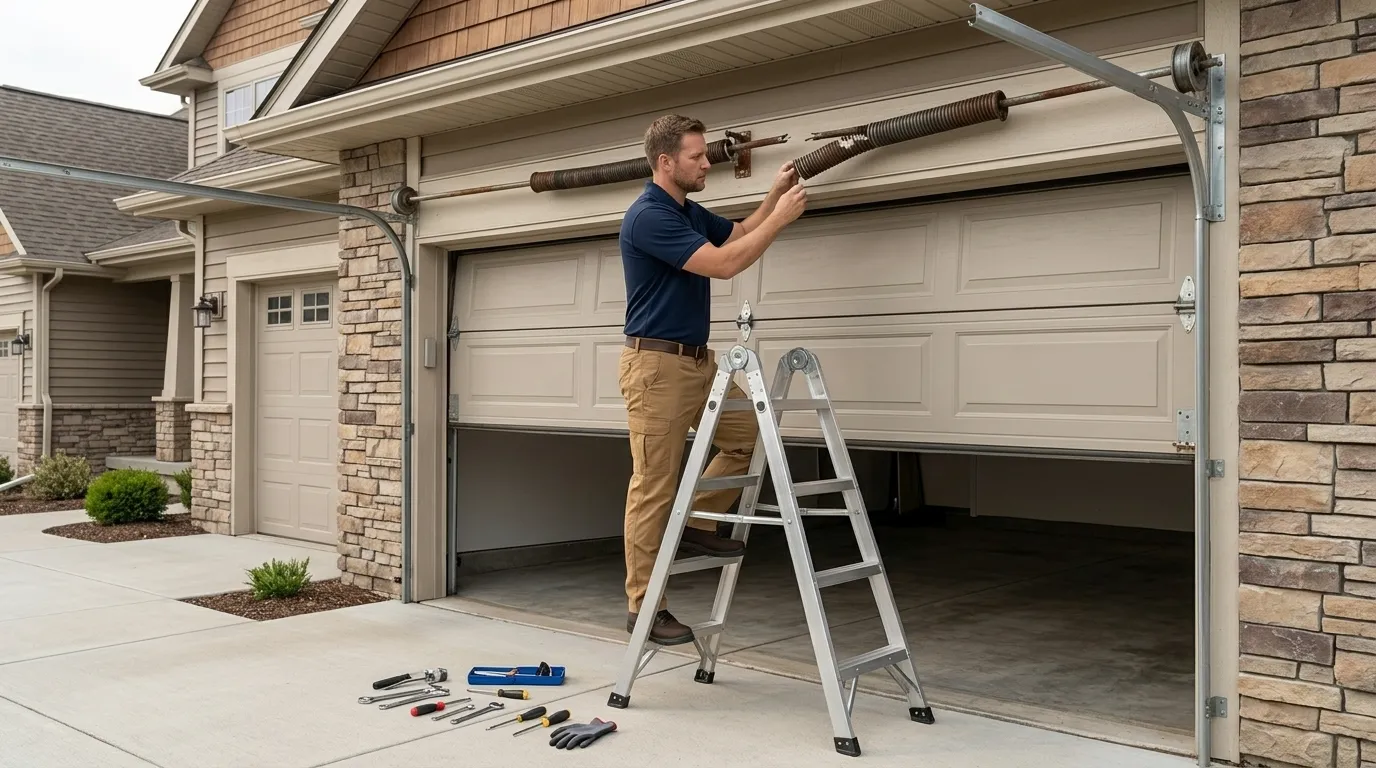
That sound is a torsion spring letting go. The springs mounted above the door do the actual lifting work - the opener just tells the door when to move, not how.
When one snaps, the door's full weight, often over a hundred pounds on a double door, lands entirely on the opener and the cables. Nothing about that is designed to hold long term.
Some owners notice it coming first: the door drifting down on its own, a gap that used to close flush now sitting open an inch, a spring with a visible gap where the coils used to touch. That's a spring stretching out before it breaks, and it's the point where a call actually saves you money instead of costing you an emergency fee for an evening visit.
What Causes It Around Here
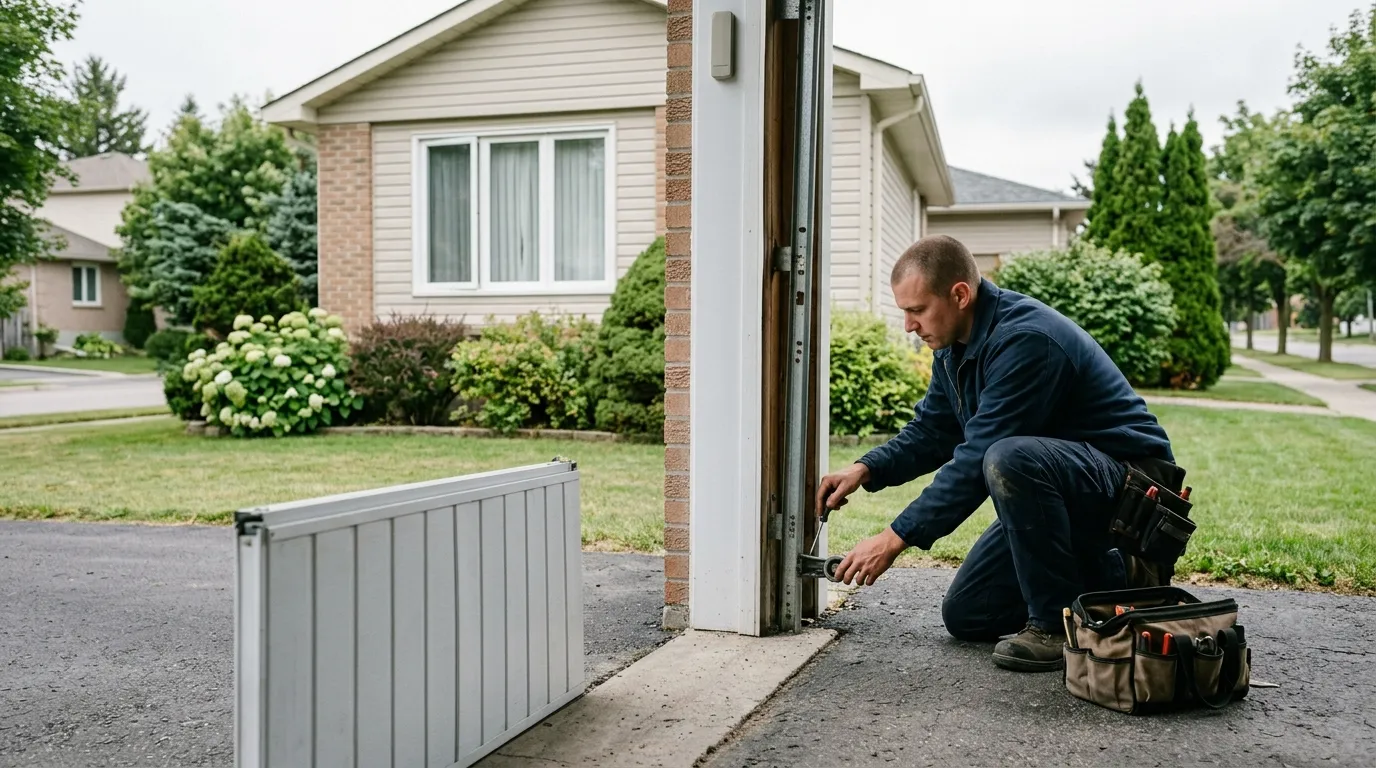
A torsion spring is rated for a number of open-close cycles, usually somewhere between 10,000 and 15,000 depending on the wire and the door weight it's carrying. It doesn't fail because of one bad day - it fails because it finally hits that number.
Most houses in this area went up between 1958 and 2003, with the median build year landing around 1986, and the bulk of the stock across the area's 32 named subdivisions dates to the 1980s and '90s. That means a lot of original springs, installed when those houses were framed, are now thirty-plus years into a part that was never meant to last that long in the first place. Whole blocks built in the same construction wave tend to have springs failing in the same few years.
Cold makes it worse. This area sits in a severe cold climate band, and steel behaves differently at 10 degrees than it does at 70.
Metal contracts, lubricant thickens, and a spring already near the end of its cycle count is more likely to snap on a cold morning than a mild afternoon. That's why the calls cluster in winter - it's not that garages get used more, it's that the metal has less give left when it's cold.
How We Fix It
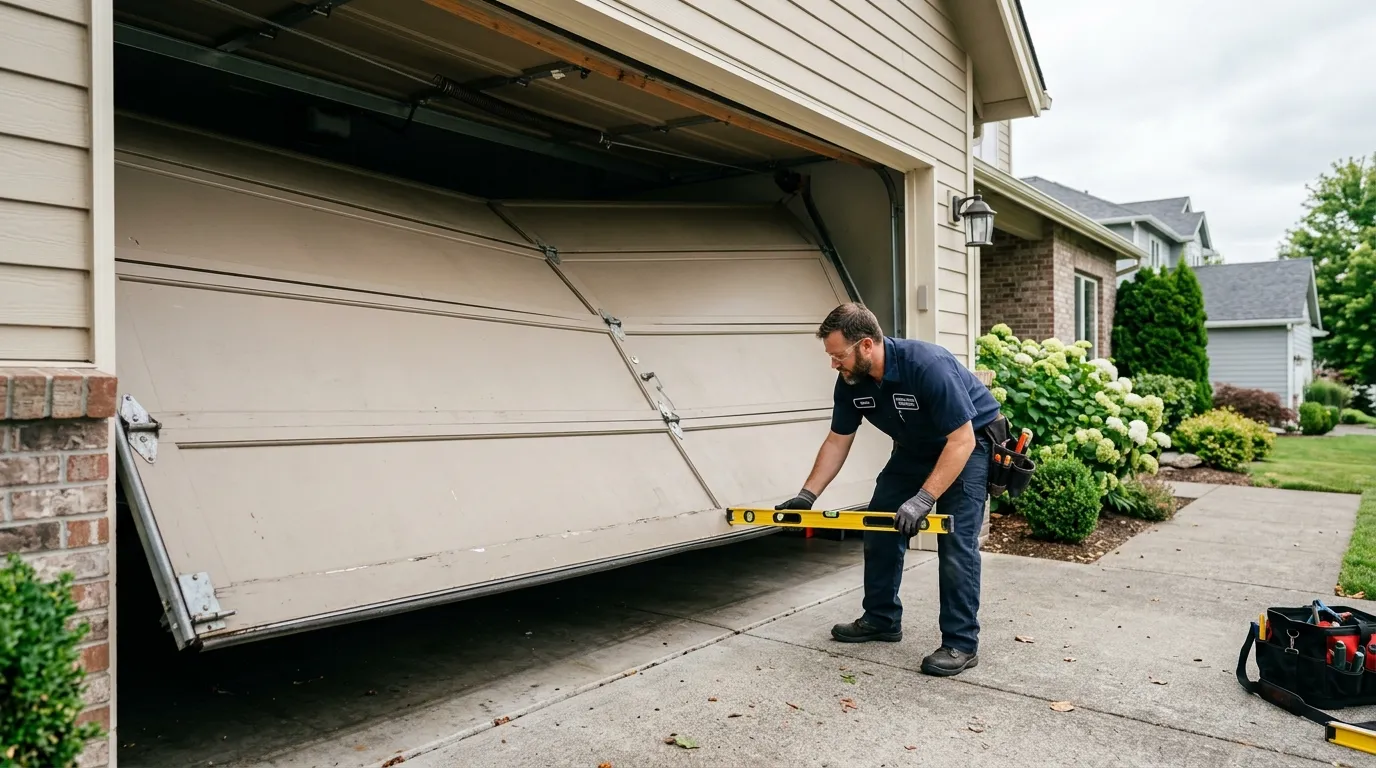
We replace torsion springs in pairs, not one at a time, even if only one broke. The second spring is running the same cycle count and the same age - it's close behind, and mismatched springs put uneven tension on the shaft, which wears the bearings and the opener faster.
Before we touch anything, we measure the door: height, weight, and how many turns the existing springs were wound to. Wire gauge and spring length aren't universal - a spring sized for a lighter door won't lift a heavier one for long, even if it physically fits on the shaft. We size to the door in front of us, not to whatever was on the truck.
We also check the drums, the cable, and the center bearing while the door is unloaded, since that's the only safe time to look at them closely. If a cable is frayed or a drum is cracked, we'll tell you before we close the job out, not after.
One limit worth saying plainly: high-cycle or extended-life springs for unusually heavy insulated doors sometimes aren't something we carry on the truck that day. If your door needs one, we'll tell you up front instead of installing a standard spring that won't hold.
The Complications
A broken spring rarely travels alone. The cable on that side often takes a hit when the spring lets go suddenly, and a cable that's frayed or kinked needs replacing at the same time - riding it out on a damaged cable is how a second failure happens, usually while the door is halfway up.
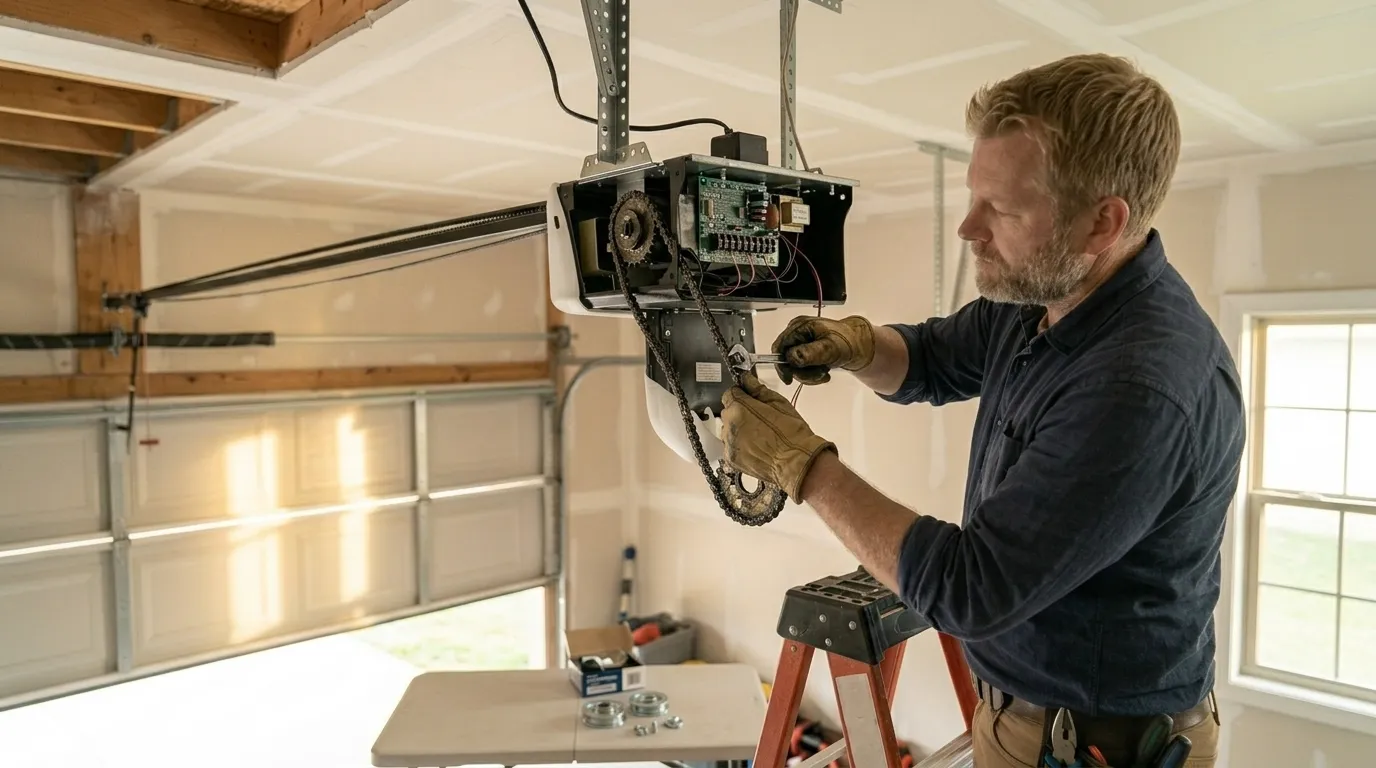
The opener takes damage too. If the door's been lifted by the motor alone for even a few cycles after a spring broke, the gear set inside the opener can wear out faster than it should. That's not always obvious right away - it shows up as a slower or noisier opener a few months later.
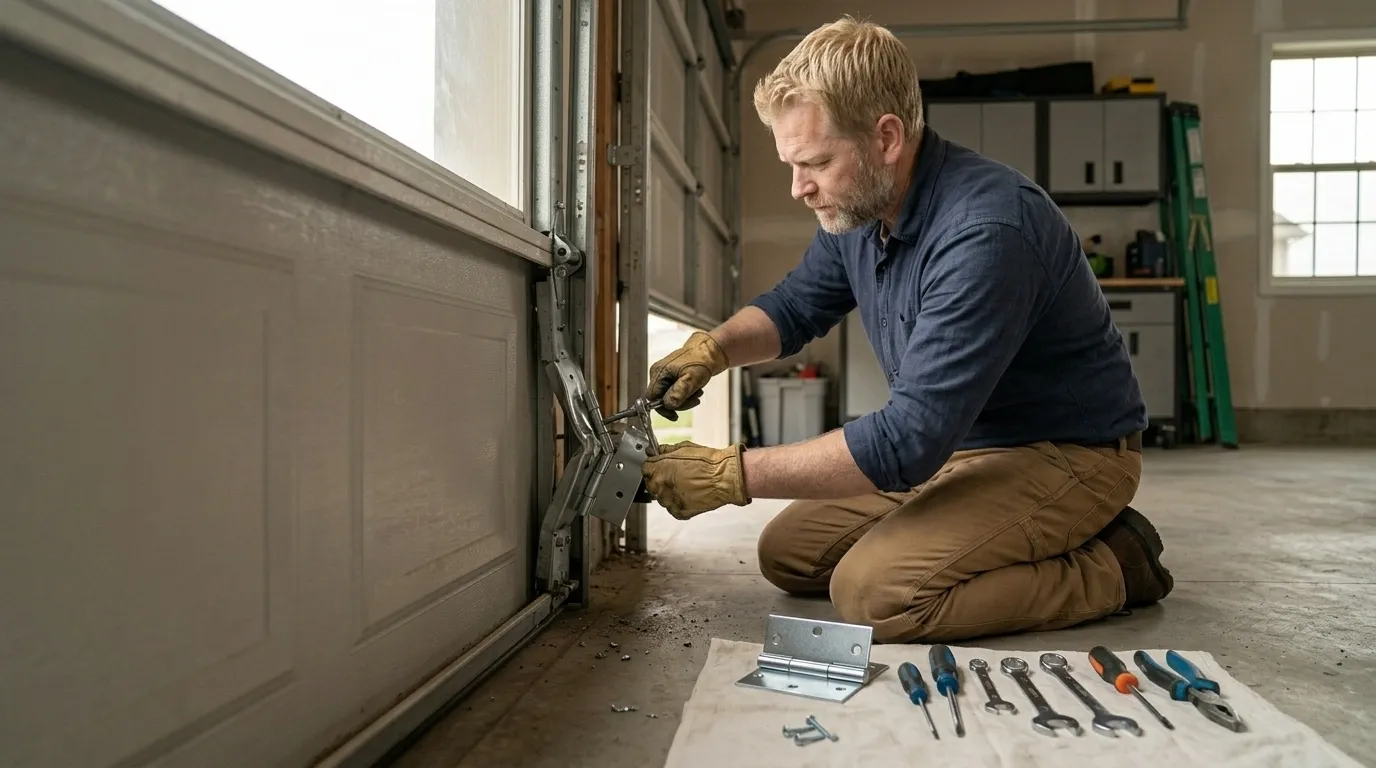
Older torsion setups sometimes have a bent shaft or a worn center bearing, especially on doors installed decades back when a different spring size was standard. We'll flag that during the repair rather than force a new spring onto hardware that's already out of alignment - that's a bigger job, and it's worth knowing about before we start rather than discovering it mid-repair.
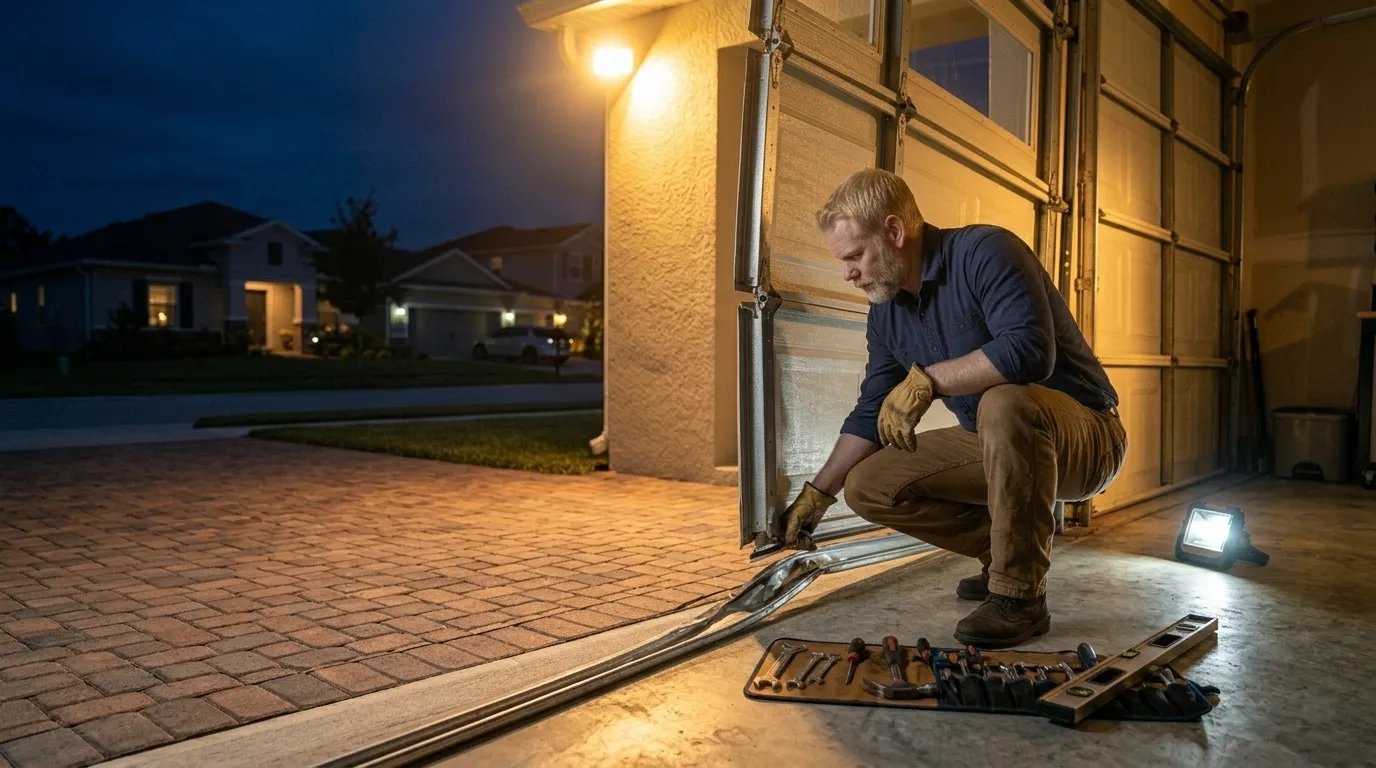
And if a door has been running on a failing spring for a while, the track can shift out of plumb from the uneven strain. That's a separate adjustment, not something a spring swap fixes on its own.
Jobs Like Yours
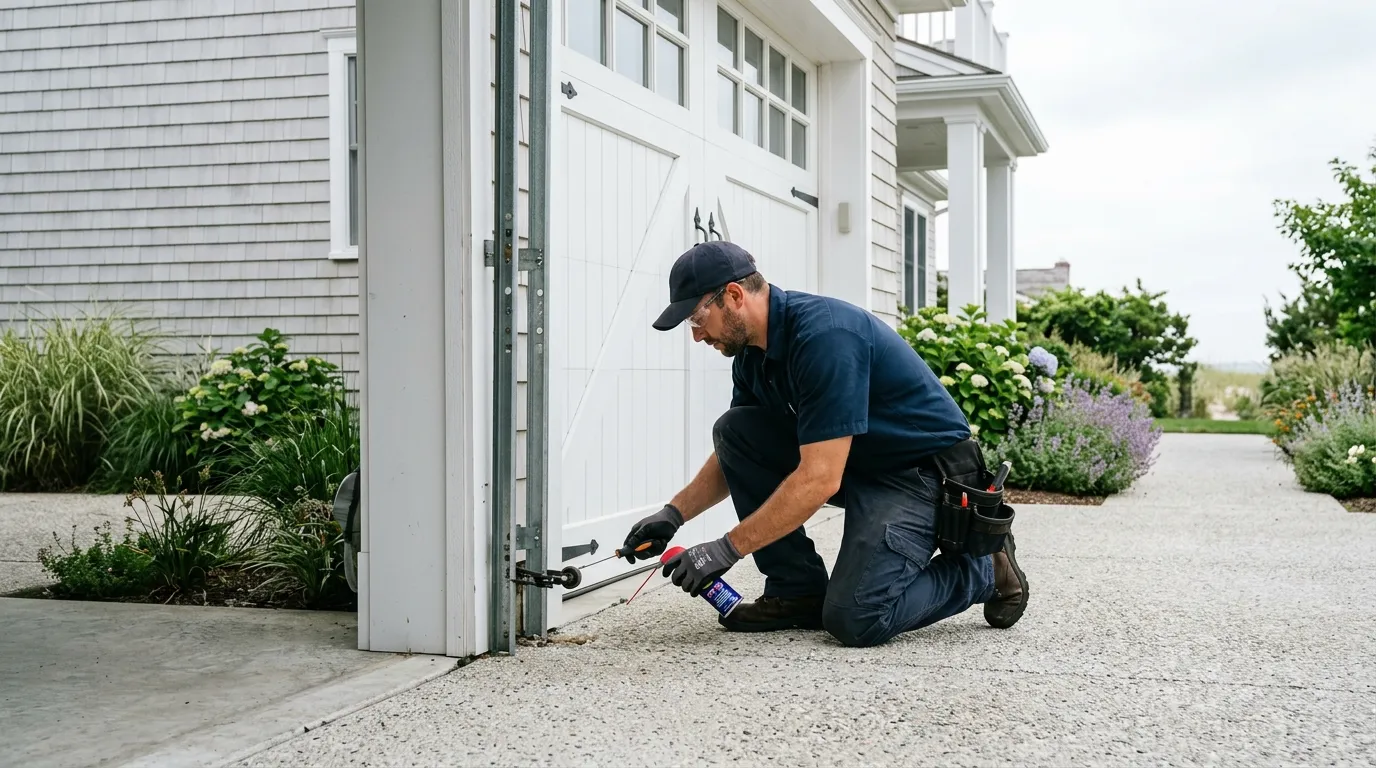
Recent work from this service line.
Talk to a Technician Before You Book
Describe what the door is doing and get a straight answer on what it likely needs.
Why Oswego Calls Us
What Happens When You Call
-
1
Call or Request a Quote
Tell us what the door is doing and roughly how old the house is - that alone points us toward the likely part before a truck leaves.
-
2
On-Site Diagnosis
A tech checks the spring, cables, tracks, and opener in person and tells you plainly what is actually wrong.
-
3
Straight Price, No Surprises
You get a number before any work starts. It covers parts and labor, nothing added after the fact.
-
4
Fixed the Same Visit
Most repairs are done in one trip. If a part needs sourcing, we tell you that upfront instead of guessing.
Frequently Asked Questions
Why did my spring break in cold weather specifically?
Steel gets less flexible as it gets colder, and a spring near the end of its cycle life has the least flexibility left to spare. In this area's severe cold winters, that combination is what tips a worn spring from stretched-but-holding into snapped. It's usually not a coincidence of timing - it's a spring that was already close to done.
Can I just replace the one spring that broke?
We don't recommend it. Both springs carry the same age and cycle count even if only one gave out. Replacing just the broken one leaves mismatched tension on the shaft, which strains the bearings and the opener and usually means a second call within a year or two.
How do I know if it's the spring or the opener?
If the door is heavy to lift by hand with the opener disconnected, it's the spring. If it lifts easily by hand but the opener struggles or reverses, the problem is in the opener or the track, not the spring. That hand-lift test is the fastest way to tell before anyone comes out.
Is a spring repair something I should try myself?
No. Torsion springs are under heavy tension and a spring that lets go while someone is winding or unwinding it can cause serious injury. This is one of the few garage door jobs where the right tools and the right technique matter more than saving a service call.
Need Broken Garage Door Spring? Here's What's Actually Going On?
Call now for straight answers on cost and timing.