Service
Garage Door Opener Repair for Oswego Homes
Opener won't respond, reverses, or grinds? We repair garage door openers across Oswego's 1958-2003 housing stock, built for the cold snaps that break gears and sensors.
- Licensed & Insured
- Same-Area Service Calls
- Upfront Pricing
The Symptom
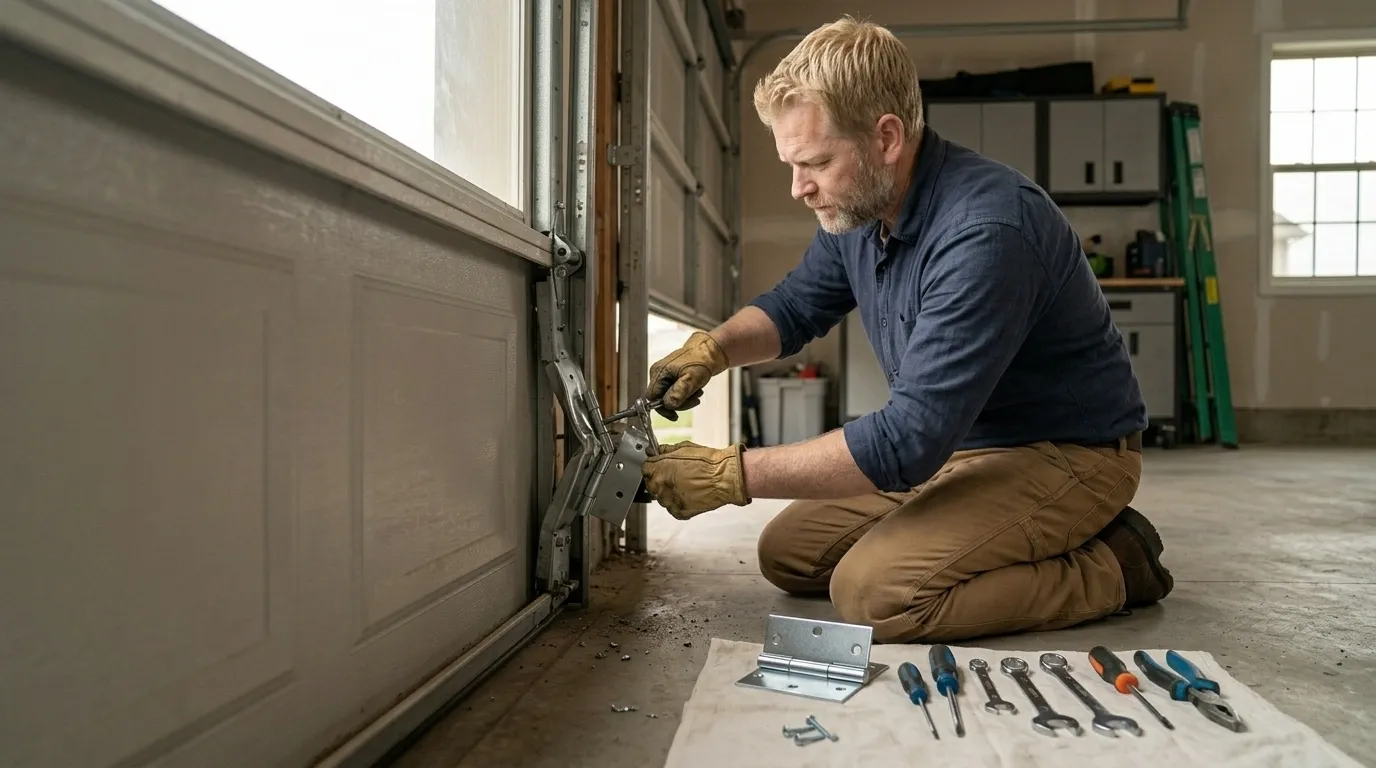
Your opener hums but the door doesn't move. Or it moves partway and reverses. Or you push the remote and nothing happens at all, though the light still comes on.
Sometimes it's a grinding noise from the head unit, or the door drifting down a few inches after it looks closed. These are opener problems, not spring problems - the door itself usually still balances fine by hand once you pull the release cord. That distinction matters, because a bad capacitor or stripped gear costs a lot less to fix than people expect once they've already imagined a full door replacement.
Across the towns we cover - Oswego, Boulder Hill, Montgomery, Yorkville, and the rest of this corner of the Fox Valley - this exact complaint is one of the most common calls we get, and it clusters hard around certain eras of house. If your opener is original to the house and the house went up any time from the late 1980s through the early 2000s, you're in the window where the drive gear or logic board is due, or overdue.
What Causes It Around Here
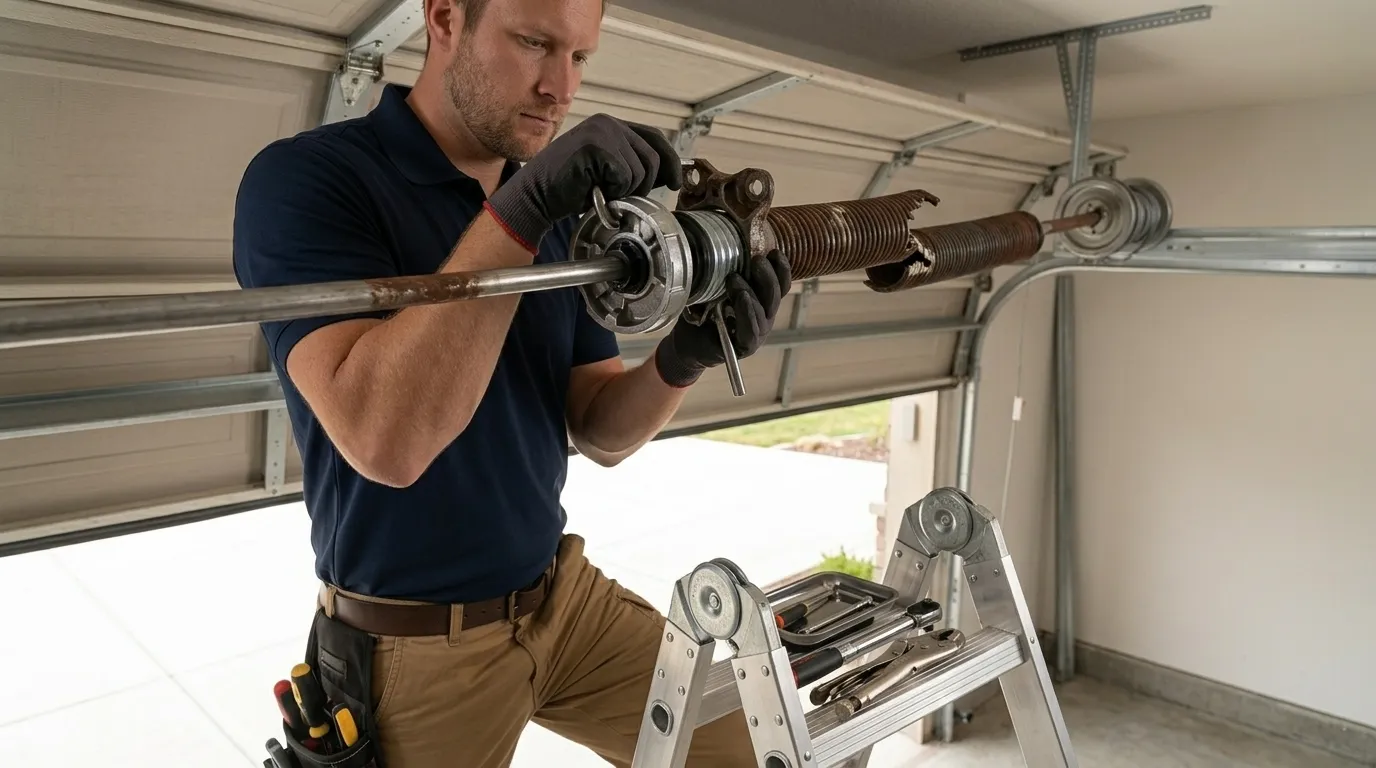
Most houses in this service area were built between 1958 and 2003, with the median landing around 1986, and the bulk of the stock across the 32 communities we serve dates to the 1980s and 90s. That means a huge share of openers out there are either original units from that build wave or first-generation replacements installed 15-20 years ago - both are past the point where belts crack, gears wear round, and circuit boards start failing intermittently before they fail for good.
The other factor is climate. This area sits in a cold, severe winter band, and openers take that harder than most homeowners realize.
Cold makes chain and belt drives stiffen, grease inside the gearbox thickens and slows the motor, and the repeated freeze-thaw cycle through a Midwest winter works on wire connections and safety sensor alignment. A sensor that's off by a fraction of an inch after a hard freeze will read as an opener fault even though the opener itself is fine - which is why diagnosing the actual cause matters more than swapping parts.
How We Fix It
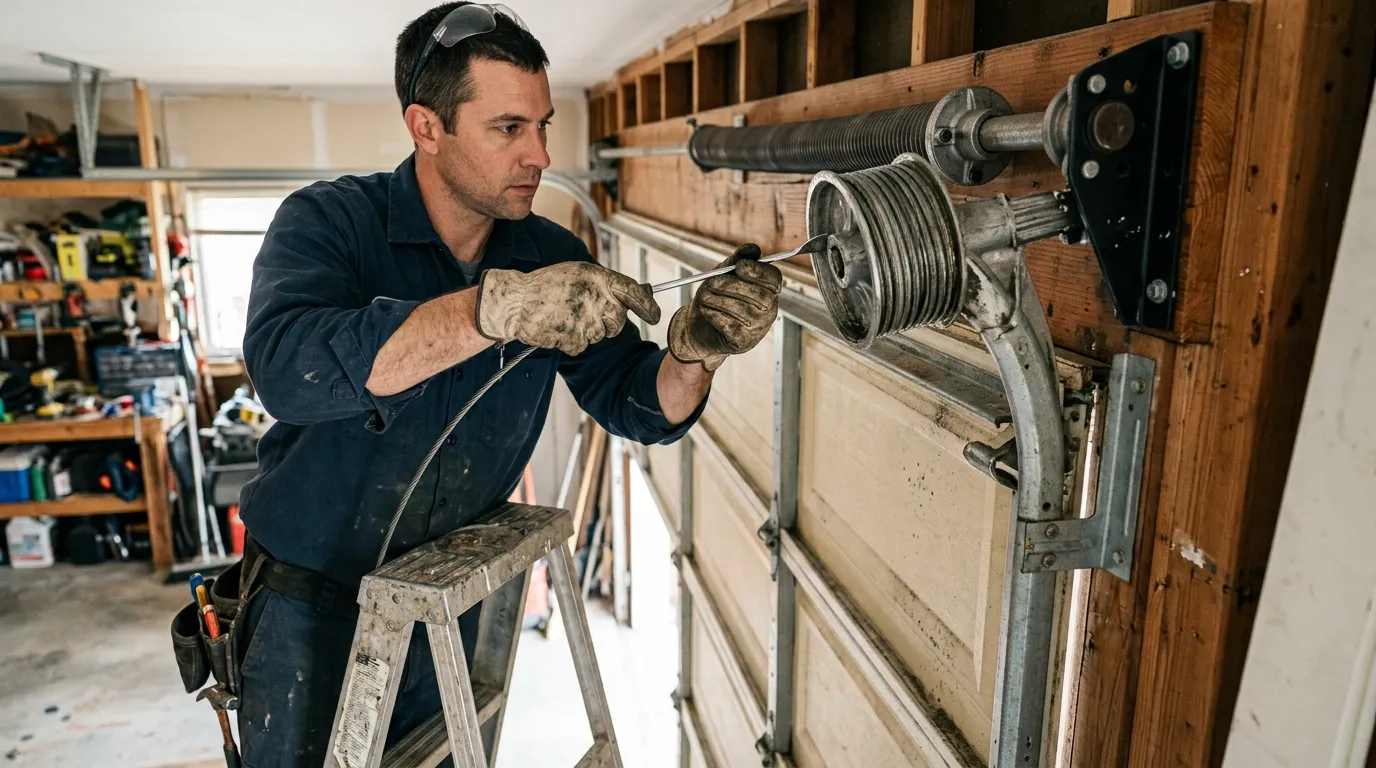
We start at the header unit and work outward: motor, capacitor, drive gear, circuit board, then the safety sensors and track alignment. A lot of "the opener is dead" calls turn out to be a $20 part - a stripped plastic drive gear or a failed capacitor - rather than a full unit swap. We check those first before we ever talk about replacement.
If the logic board has failed on an older unit, or the motor windings have burned out, replacement is usually the more honest answer than a repair that won't hold. We'll tell you which one you're looking at and why, not just quote a number. For sensor issues - the ones that show up as "door won't close" - we realign and reseat the eyes and check the wiring where it runs along the track, since that's where cold-weather wire fatigue tends to show up first.
The Complications
Not every opener is worth repairing. If the unit is old enough that parts are no longer made for it, or if you've already replaced the board once and something else has gone, we'll say so instead of chasing it with more parts. That's a limitation we're upfront about - we don't stretch out a dying opener's life just to bill another visit.
With household incomes across this service area running well above the national median, a lot of homeowners here default to full replacement rather than nurse along a 20-year-old unit, and for some units that's the right call. But we've also seen plenty of openers with 15+ years on them that just needed one part. Across the roughly 97,000 owner-occupied houses in this area, garage doors get used daily - it's not a once-a-week appliance - so wear shows up faster here than the calendar age of the opener would suggest.
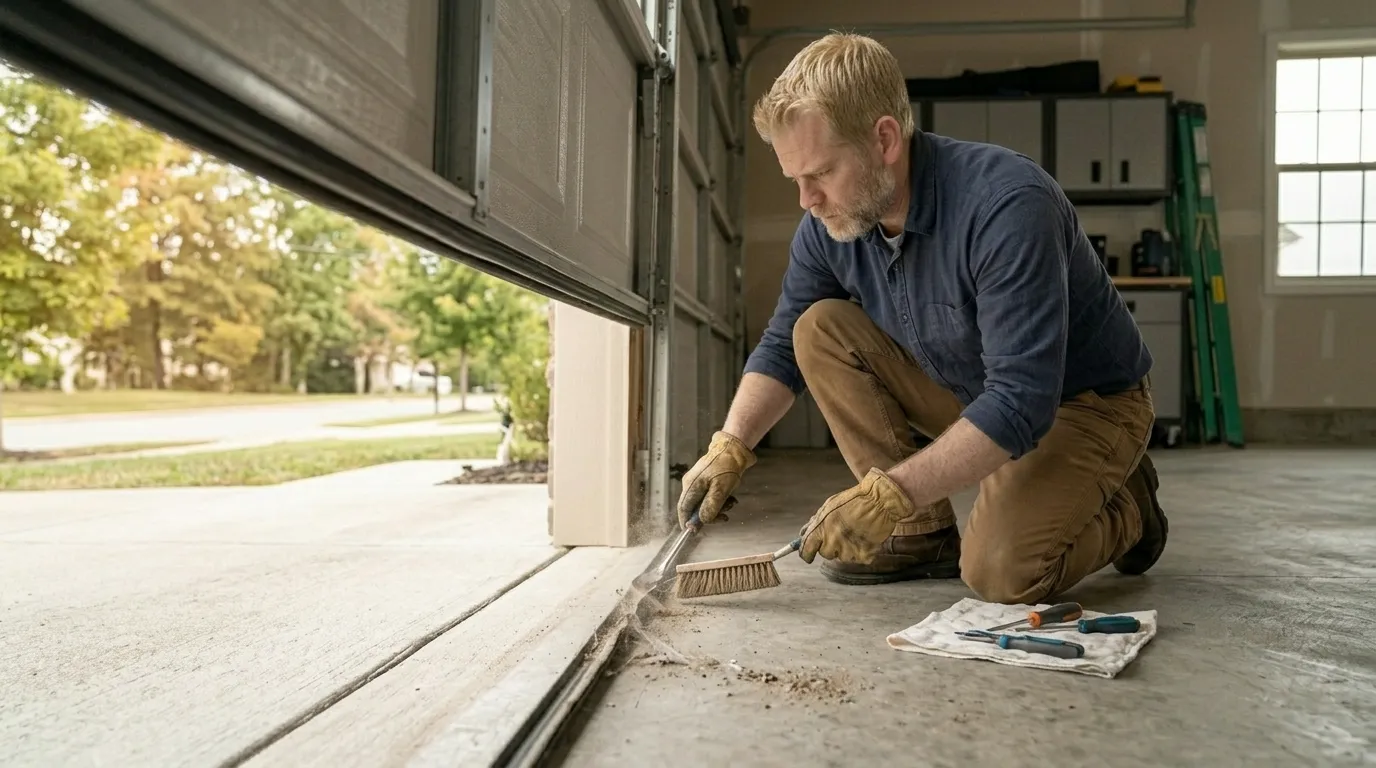
Jobs Like Yours
Recent work from this service line.
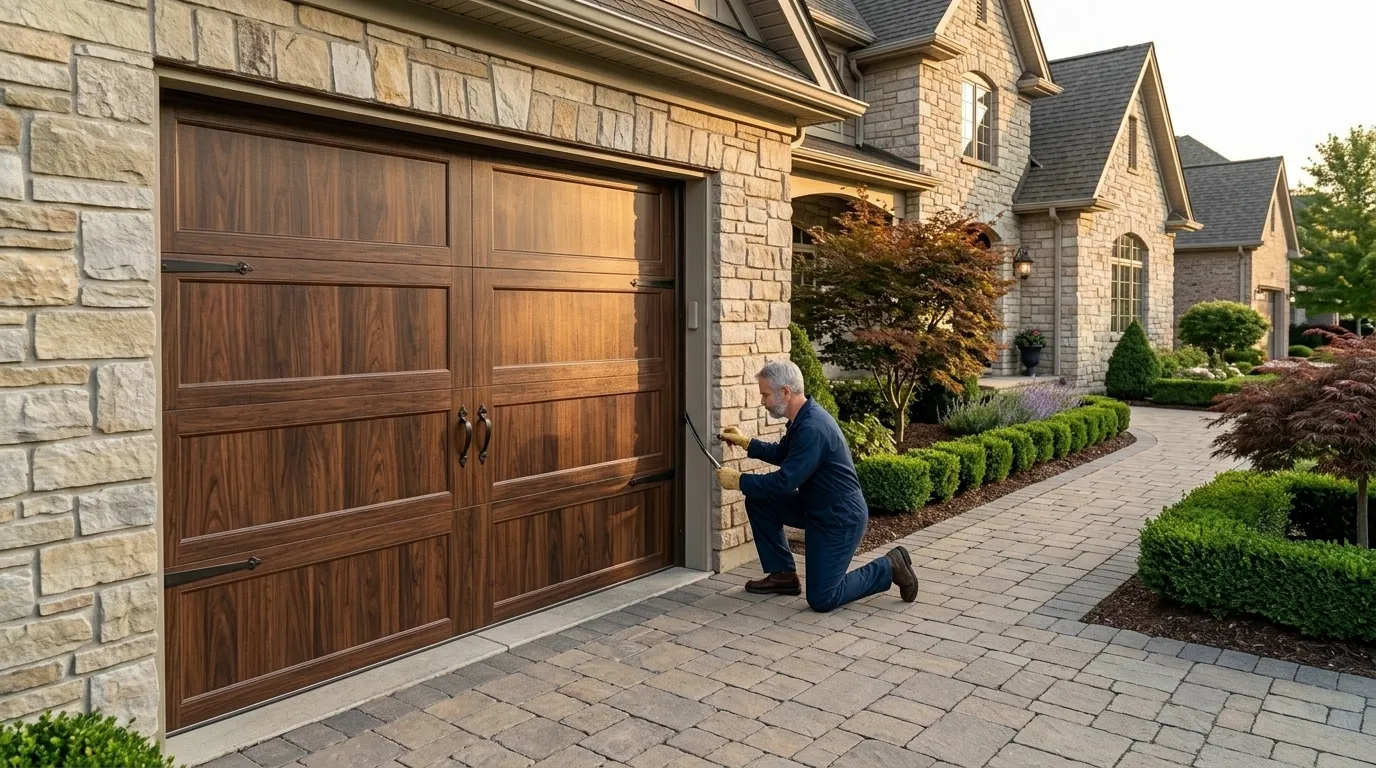
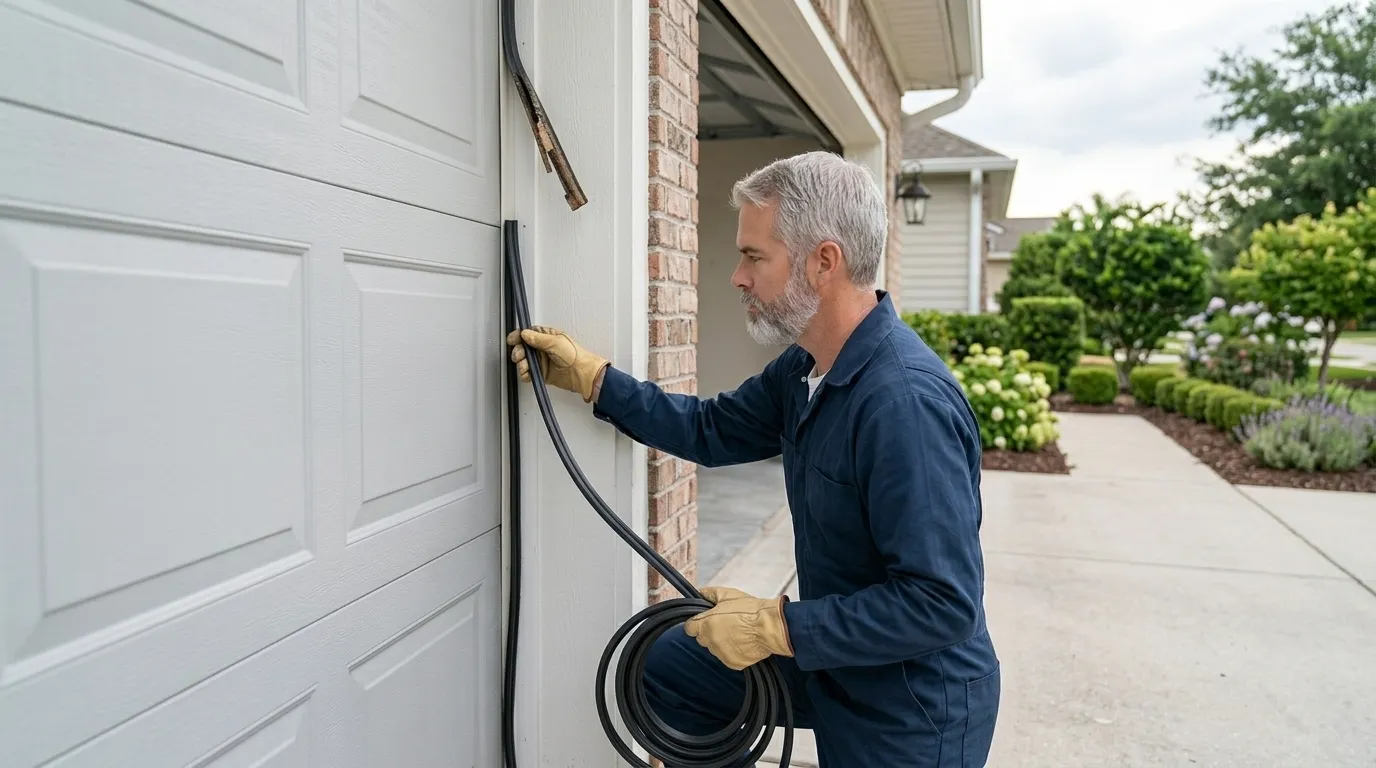
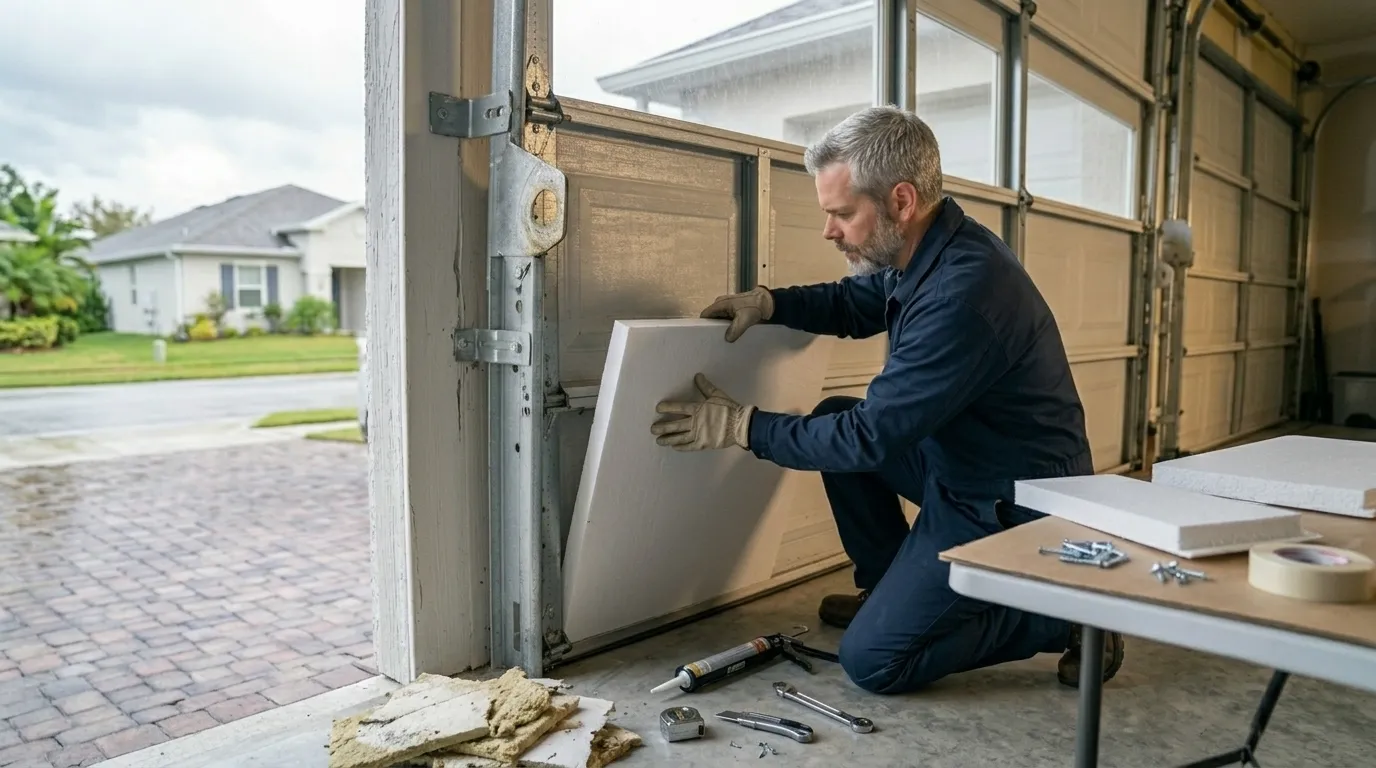
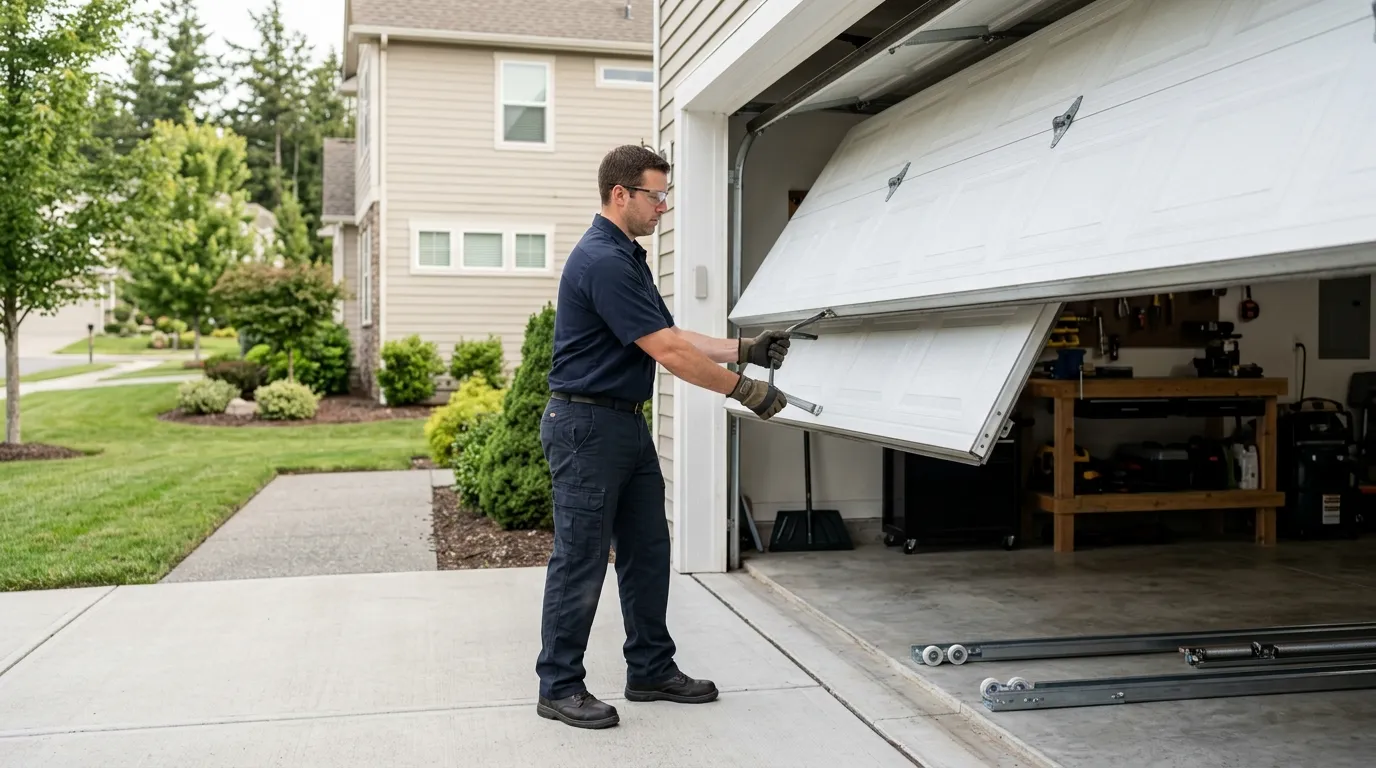
Talk to a Technician Before You Book
Describe what the door is doing and get a straight answer on what it likely needs.
Why Oswego Calls Us
What Happens When You Call
-
1
Call or Request a Quote
Tell us what the door is doing and roughly how old the house is - that alone points us toward the likely part before a truck leaves.
-
2
On-Site Diagnosis
A tech checks the spring, cables, tracks, and opener in person and tells you plainly what is actually wrong.
-
3
Straight Price, No Surprises
You get a number before any work starts. It covers parts and labor, nothing added after the fact.
-
4
Fixed the Same Visit
Most repairs are done in one trip. If a part needs sourcing, we tell you that upfront instead of guessing.
Frequently Asked Questions
Why does my opener only fail in winter?
Cold thickens the grease in the gearbox and stiffens chain or belt drives, so the motor works harder to move the door. It also shifts sensor alignment slightly as brackets and framing contract. This area sits in a cold, severe winter climate band, so that seasonal strain is a regular pattern, not a one-off.
Is my opener too old to repair?
Depends on the part that's failed and how old the unit is. A stripped gear or bad capacitor is usually worth fixing on any unit. A failed logic board on an opener installed when the house was built - commonly the 1980s or 90s here - is often the point where replacement makes more sense than repair.
Do you fix the opener or just replace it?
We check the motor, capacitor, drive gear, board, and sensors first, and repair whatever's actually broken. We only recommend full replacement when the part that failed isn't worth fixing on its own or isn't available anymore.
Need Garage Door Opener Repair for Oswego Homes?
Call now for straight answers on cost and timing.